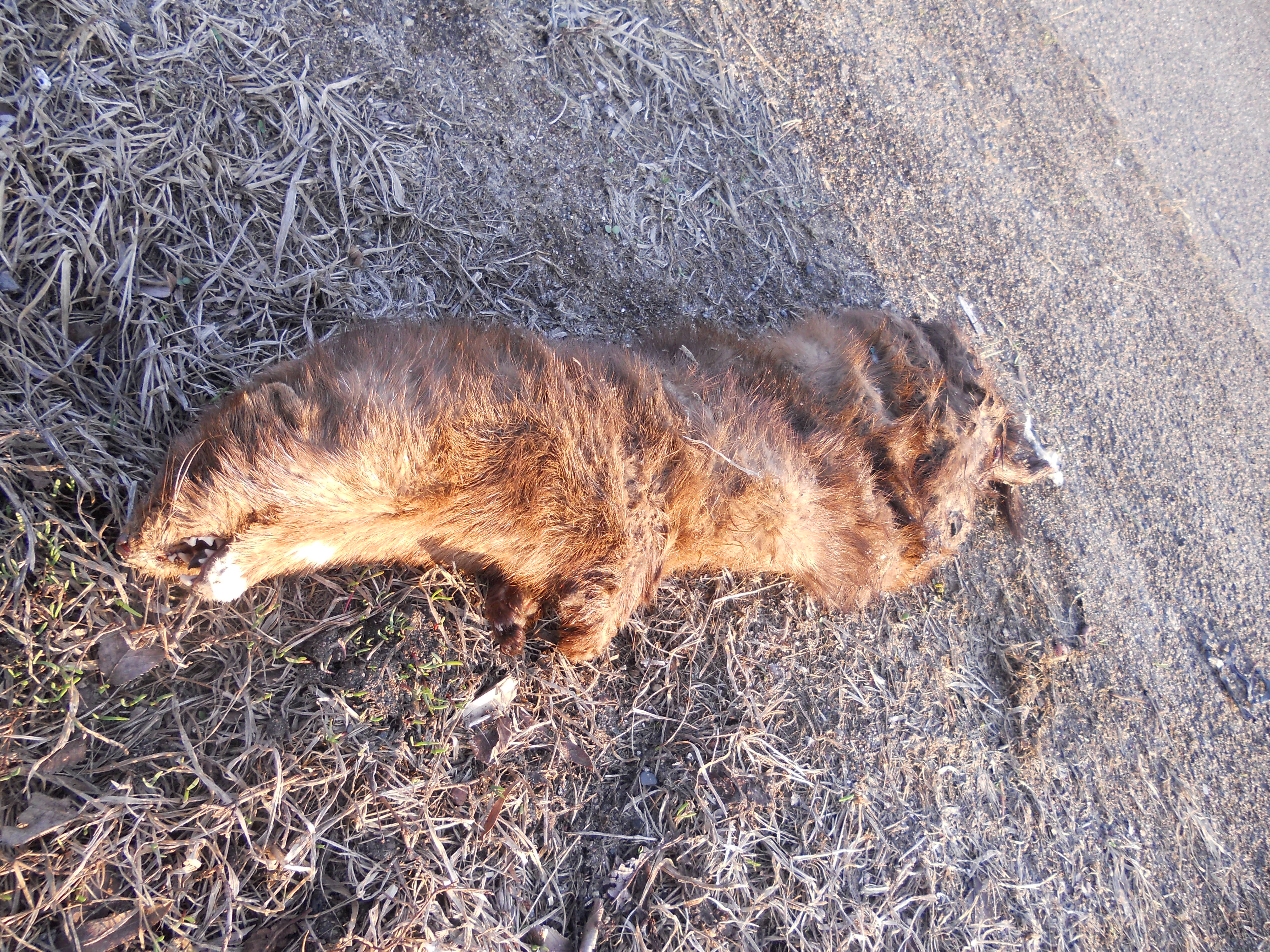
I found a road-killed mink.
In life the animal Mustela vision is fierce, killing muskrats, squirrels, fish and waterfowl to eat and share with mates and young. You get an idea of its predatory dentition from the picture.
But here it lay dead and rotting. My book says mink are vulnerable to poisoning because the aquatic food chain tends to concentrate certain pollutants. But, "the most serious and permanent harm," my book says, was wrought by "stream channelization, wetland drainage, and dam construction."
In other words the current era is not favorable to the mink (and is probably hostile to many other predators too).
But the day was otherwise so beautiful and it outshined the sight of sad dead things. Already the great egrets are back. The frogs are chorusing, the big winter-surviving toads are hopping about and the tiny purple and white violets have emerged.
And look there ! Under the mink a contingent of beetles is laboring hard to make the mink into its own food and offspring. This has the effect of dispersing the previously mentioned pollutants, allowing them more time to degrade elsewhere, and reducing the danger they pose to other wildlife, to plants and to people.
Let us all be like those swarming beetles, taking the bad with the good, always helping to build a better future for our larvae to squirm around and feed in !
Mammals of Minnesota by Evan Hazard, 1982
 pseudoisaac