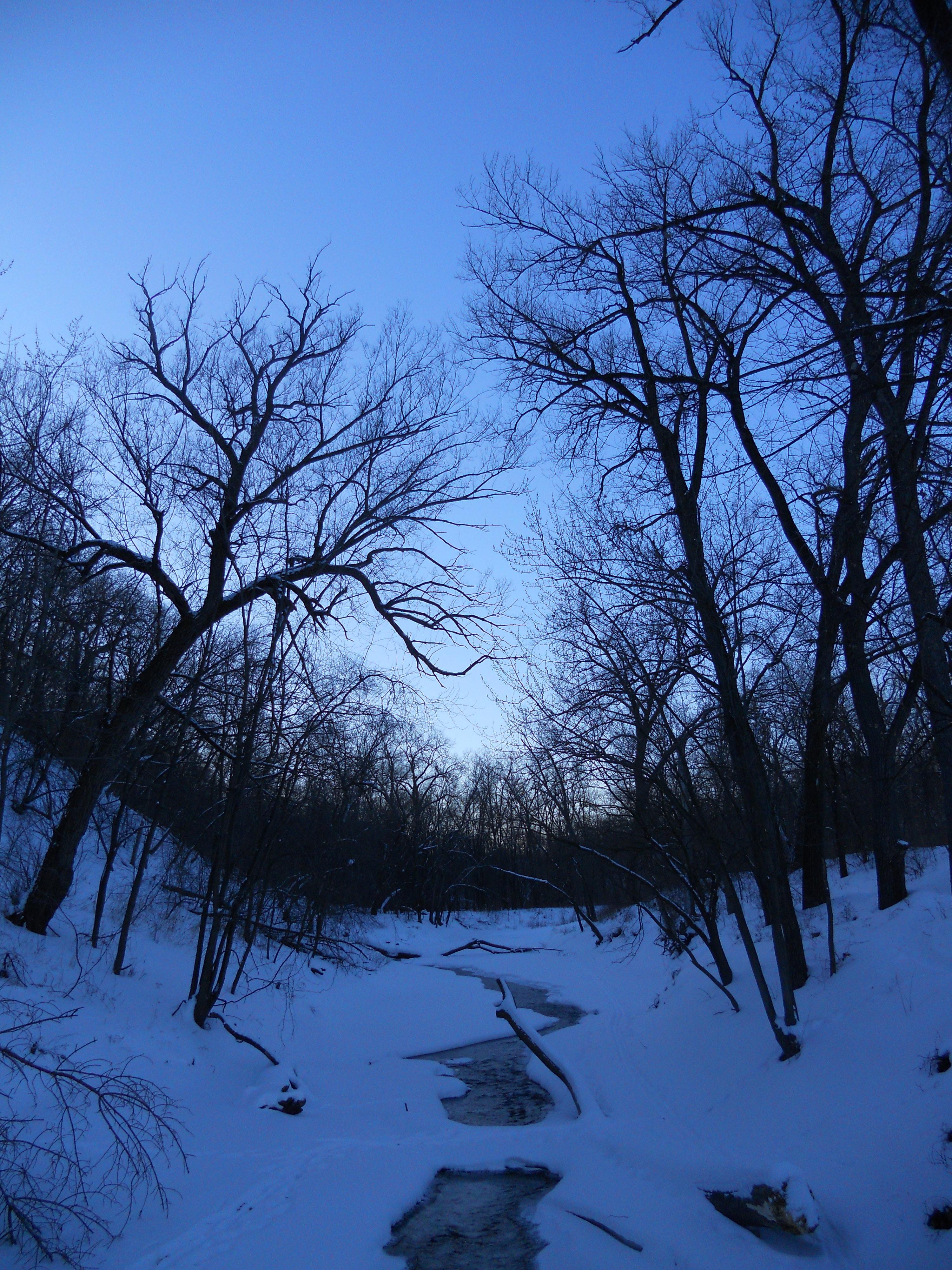
Just a week ago an absurdly large amount of snow fell in Minneapolis. All night Friday, all day Saturday, and all day Sunday the wet slop accumulated, causing hassle and physical inactivity and at least one death. The rate of snowfall kept almost everyone indoors for the entire weekend.
The storm was a blow to the psyche because of the time of year. As if to mirror events in the atmosphere, my aunt had died just a few days prior. She had entered hospice two weeks before that after doctors confirmed aggressive ovarian cancer. Having undergone many spine surgeries, she was aware of the rigors and uncertainties that medical treatment poses for an 82 year old. She weighed her options and decided to go with comfort care, knowing that this meant declining all attempts to treat the cancer.
I think she made the right choice. As a result my family had a chance to say goodbye. As with my great aunt Betty’s death in 2006, I abided by a “good death,” or as close as you can get to one. My uncle updated Joanne’s CaringBridge journal with compassionate, detailed statuses and reflections. I learned about their early relationship, read some vignettes from their marriage, and heard the clear voice of my uncle, who I normally only chitchat with at family gatherings. It’s amazing how you see deeper into one person through their relationship with another.
Once hospice started, Joanne’s two children, grandchildren, husband, and hospice nurse made her comfortable and provided a few easements and delights. She received a parade of visitors in her downtown condo overlooking Washington Avenue in Minneapolis. The room was filled with flowers, many of which were yellow, which was her favorite color. She got her hair cut and had the walls covered with art from her two small grandchildren. Two of those paintings wound up in the funeral pamphlet. On her last-ever car ride, she drove by the church where her funeral service would be, and remarked that “death could be glorious.”
As the days went on the mix of pain medications was adjusted, but the general trend was to up the dose. This meant more sleepiness and shorter visits. We learned that pain meds can be delivered by courier, on demand from the hospital. As this continued, Joanne became weaker. But she still spent evenings reading the many cards and online comments that came in.
Although she was warned that hospice could continue for weeks or months, Joanne died only 19 days in. It happened in the morning, the day after I visited to say goodbye. I am so glad I got in there beforehand. When I saw her she was lucid and as sharp as ever but extremely sleepy. She apologized for nodding off. She told me about her system for sending cards for birthdays and holidays. I knew all along she had a system! She told me she outsourced the stamping and mailing part to her husband. She sent 30-40 cards per month to her many loved ones and contacts throughout the world.
She and I agreed she didn’t want to die in a hospital intensive care unit, with needles and catheters coming out of her and strangers pounding on her chest at the end. I recalled Betty’s courage and I reflected on the several strong matriarchs in my family. We remarked on the vile weather. I assured her she was not missing much by being indoors.
My last card to Joanne mentioned my favorite hunting dog of theirs, Bjorn. I wrote about how she helped me move in at the beginning of sophomore year of college. How she prepared pheasant for us and warned us not to bite down on a pellet from the lead shot. I mentioned the several interesting people she had introduced me to. Many of her associates from around the world visited them.
My older sister lived with Joanne during my sister’s pregnancy. During this time Joanne was commuting to South Dakota for her job as a director of a regional nonprofit. Even in her 60s and 70s she was inexhaustible. She had three motors humming constantly: one for family, one for career/business and one for her friends and contacts. I find this type of person to be exhausting. I wonder if my uncle, a quiet soul, ever felt the same. But people from their generation didn’t divorce like we do now. They simply patched it up and made it work.
My sister once recounted a vignette from that time: Joanne was in the shower. The phone rang. Instead of ignoring it or calling back, she jumped out of the shower and bounded down the hall naked in order to answer it in time. Joanne was not the type to let life happen to her. Nor to just roll over and die.
The funeral service was in a church. It was very Lutheran, which is what Joanne wanted. She reveled in Norwegian and Lutheran culture. Her husband is the same way, running a hobby farm in South Dakota. He told me once that if I wanted to understand my ancestors, I should read “Giants in the Earth” by Ole Edvart Rølvaag. Joanne was born in Minneapolis but had deep appreciation for her not-so-distant Norwegian immigrant roots.
I saw her in her coffin one last time. Dead for a week and a half, her face looked too rounded and the flesh was failing against gravity. The skin had minute superficial wrinkles despite whatever preservative fluid the mortician had introduced underneath. At visitations like this, I acknowledge the decedent and then move along because I want to preserve the living face in my recollection. My uncle from a few years back was too yellowish and dehydrated. My great aunt’s hair was too done up and her face was too painted with unnatural makeup.
After seeing her I skipped the lines to greet my uncle and Joanne’s two children. There were dozens of people lined up to greet them and offer condolences. My other sister and I agreed that kind of thing is exhausting for the immediate bereaved: you relive the emotions one after the other after the other, with some people approaching you in tears, some more cheerily. All of it unpredictable, repetitive, and exhausting, as they search your features in an effort to be appropriate while displaying and concealing their own mix of emotions.
The service was fine. The impressive part was the reading written by her husband and the glorious organ music that she had selected for the end. I wish there had been more of that. I helped carry the coffin to the hearse. Feeling its great weight was quite welcome. Death is not always a light thing that you shuffle like a pamphlet or arrange like cut flowers. It was good to lift at the end of the coffin and to shove it forcefully onto the hard metal railings of the hearse.
I skipped the lunch in the church basement. Later the extended family gathered at Joanne’s son (my cousin) and daughter-in-law’s house for a more private visiting and talking. We mostly just caught up with each other’s lives and watched the antics of the children. I reflected on how my other aunt was becoming more and more frail but without a diagnosis of any kind. My grandma, who was too senile and frail to attend, is stable but almost 100 years old. My mom is in her 70s with Alzheimer’s dementia and requires benzodiazepines to get through long events like this.
After a few hours, my uncle was the first to leave this gathering. I watched him walk out to his car, to return home alone after more than 50 years marriage. It is true that a person’s death is more the affair of the living than of the dying one.
I don’t know where to go from here. With the thing done, the cards to my uncle will slow to a trickle. The weather has improved. We reached 60 F and sunny on Saturday. Today it is 70 F. This Saturday is Joanne’s burial outside a tiny town in South Dakota. All there is now is to take care of each other. To be there for the next death with no regrets about how we treated each other. To uphold a piece of Joanne’s tireless love, mentorship and affirmation. And to exult in the season of rebirth for the sake of one who no longer can.
 pseudoisaac