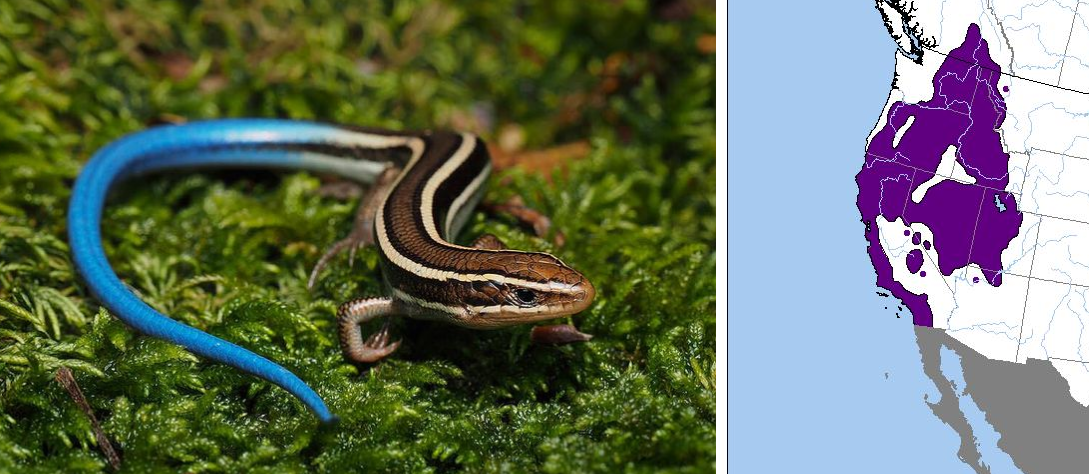
This little reptile has a brilliant blue tail and loves to bask. I found it in Willamette Cove, which is a polluted Superfund site in North Portland where nature is thriving.
Unique blue tailed lizard
The western skink is rare enough in the city not to be mentioned at all in The Nature of Portland, which is a comprehensive guide to the nature and wildlife found here.
The other lizard that I see there on hot summer days is the western fence lizard. These little guys are numerous and wily. They seem to think they are hidden even when they are standing in plain view. The western skink is more furtive and darts away quickly, so all you see is a flash of its blue tail.
Willamette Cove Trail is special
I bike, bird, run and walk the Willamette Cove trail often and I developed a fondness and affinity for it. Because it is an unsanctioned trail, the sketchy entries keep people away. Homeless people leave trash, needles and stolen cars there. They start fires and let their mean dogs off leash to shit and intimidate people. Trains run through and leave plumes of diesel exhaust. Mysterious toxic flotsam washes up onto the shore.
These hazards don’t dissuade me because I can flee if needed. I don’t fear getting raped or robbed since I carry no vagina and nothing of value. I don’t mind the physical hazards such as broken rebar and broken concrete. I know how to get in even when parked train cars block the way and portions are flooded. I feel the attraction of this place where nature has taken over. I like how it shows that given a little space and time, nature will thrive, even in the space where a vast creosoting operation (and other industries) did their work.
Achingly slow progress on remediation
However, I regret that many people can’t or won’t enjoy the trail and the cove because of these risks and barriers to access. I came across an “update” on the government efforts to clean up the area and make it a safe, accessible space for recreation. It is full of euphemisms for non-action such as “characterized,” “evaluated,” “commented,” “considered options,” and “recorded a decision plan.”
A regional government agency bought the stretch of land in 1996 with the intent of making it a green space for people to visit. Roughly 25 years of emails, reports, and meetings have gotten us small, incremental improvements. I worry that another 25 years of these ineffectual activities will keep people out of this green space. Governments fear lawsuits from people injured by un-reclaimed industrial junk and toxics. What they don’t see is all the people who aren’t out there enjoying the space. All the people who might be birding, running, hiking there if not for the many years of delays.
North Portland is starved of accessible green space. In dozens of visits over many months, I occasionally saw crews of 2 or 3 people surveying the area and languidly picking up debris and junk from abandoned boats. It’s not enough and it’s not fast enough.
Weigh the risks and check it out yourself
I mention this beautiful unsanctioned trail to other runners and birders. I encourage them to visit and I describe and show how to do so. I point out the risks. And I mention the many small joys they’ll experience as they get their workout and see ospreys, northern flickers, coyotes, hummingbirds, goldfinches, bushtits, jays, chickadees, Cooper’s hawks, cormorants, brown creepers, vultures, red breasted sapsuckers, cedar waxwings, common mergansers, spotted towhees, garter snakes, western fence lizards, and western skinks.
Image sources
https://www.instagram.com/p/BhyjGAxg-ko/
https://fieldguide.mt.gov/speciesDetail.aspx?elcode=ARACH01110
 pseudoisaac