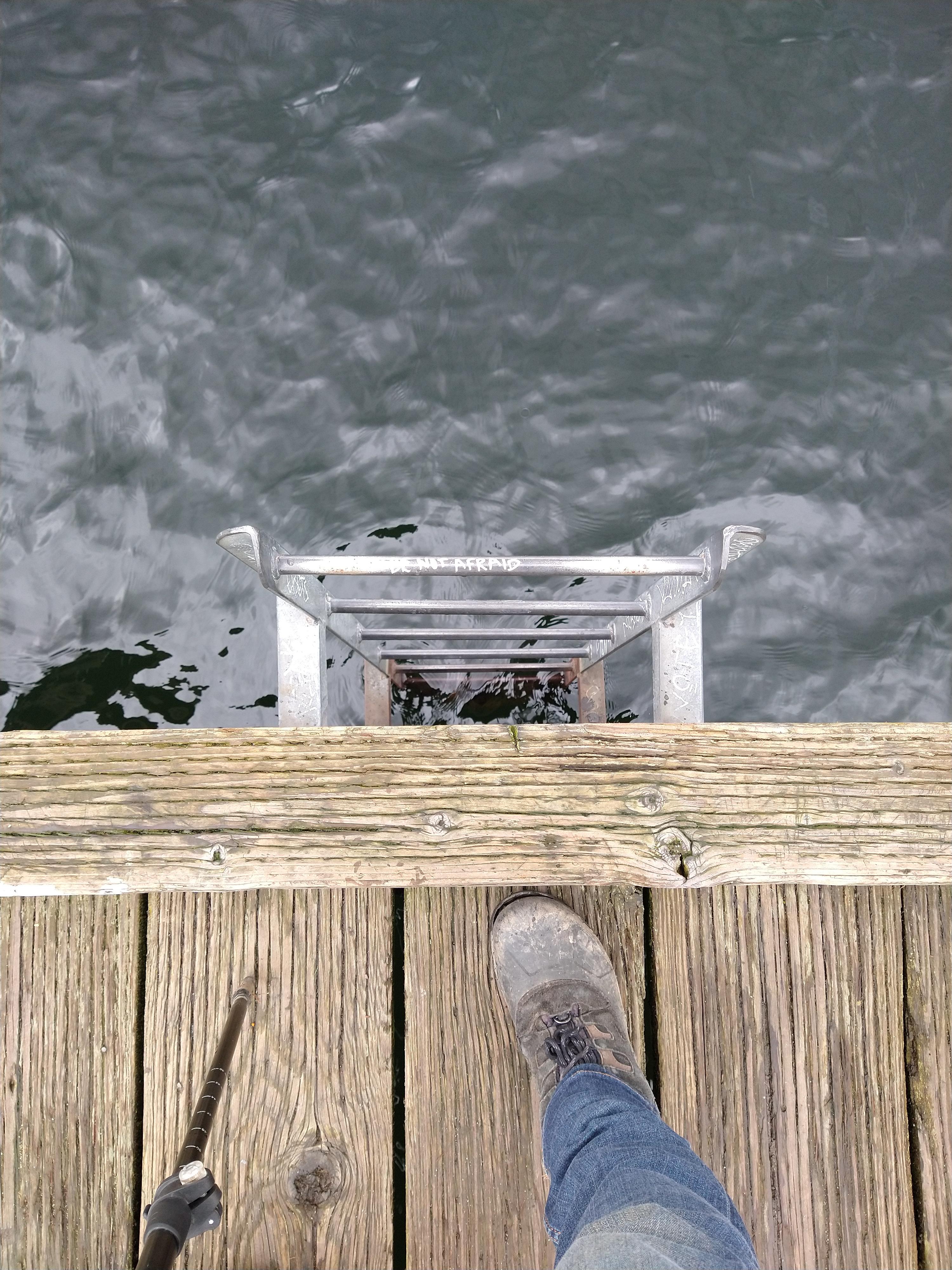
Today’s mindfulness class

Each week I participate in a free mindfulness class run by an anxiety clinic. It’s a wholesome practice and it’s part of my commitment to mental wellness and knowledge and mastery of the mind. I also do it because I started it and simply because I said so. I follow a mindfulness app run by a neuroscientist (this helped break down my skepticism of this whole realm) and my aspiration is for my practice not to be totally solo.

I like the idea of a “depth year” where you go deeper into your existing interests and pursuits while ignoring the many new things that pop up. For me this means re-reading old but treasured books I own, declining new physical and digital acquisitions and subscriptions, and overall doing a smaller number of highly valued activities more regularly.

A difficult emotion exercise

After a 20 minute meditation focusing on the breath we started a guided meditation where we confronted a difficult situation or feeling. Everyone walks around with some problem dogging their steps in their daily life like a shadow. When you sit in stillness with your eyes closed, it’s suddenly right in front of you, showing itself in new ways.

Upon prompting I thought about a problem I’ve been avoiding. My thoughts about it are painful not because of the thing in itself, but because of my mind’s recriminations toward me for avoiding it. And my mind’s automatic, mostly baseless, implication of the “kind of person I am” for avoiding this thing that I think I should be confronting. So much hurt and self-blame flows not from what you have done, but from what you think what you have done says about who you are, and about your identity.

During the meditation our guide gently instructed us to place a compassionate hand on ourselves. Perhaps a hand over the heart. Or two hands over our shoulders. I hesitated. I decided to skip that. No one would know, after all, since our eyes are all closed. But I gave in and put a hand over my heart in a physical gesture of compassion toward myself.

And it felt good. I immediately felt the warmth through my shirt. Then a feeling of its significance followed the physical sensation. The thought that I miss touch occurred to me. Then emotion about this lack followed. Then more thoughts about my ambivalent attitude toward touch (I would never let a priest or religious figure touch me in some dumb ceremony, and I tend to avoid demonstrative displays with family. Yet something is missing).

The next part was also uncomfortable: saying “I love you” to yourself. The guide did not make us say it out loud (I might have balked). But still. This discomfort made me grapple with the idea that I lack self-esteem, which I always thought I had in abundance. But I tend to “cite” points that show I have not lived up to this or that exacting standard that I “should” be meeting effortlessly.

All in all this was a whopper of a mindfulness exercise and I think I would not have been impacted so much if we three (me, the guide, and one other consistent participant) had not created a circle of trust and habituation that led us to explore emotion and psyche in a space like this.

Poem about tending a garden

The guide shared a poem written by a monk about tending a garden he had inherited where some trees were dying and some were thriving. The dying ones did not destroy the garden, but in a way enhanced it. Tending the garden closely and effortfully had its rewards. And letting growth run rampant and lead to a state of elegant decay also had its rewards.

We talked and related this to ourselves and our own lives where we tend to a garden of our own experiences, some of them running riot and some being chopped down or shaped effortfully. The overall garden changes, sometimes for the better and sometimes for the worse, and sometimes in ways that can’t be called good or bad. And its overall quality does not depend on an individual tree or even on the gardener.

The author of the poem, sadly, had recently died.

Other participant

There is another guy who has been there every time. I do observe him and I wonder what brought him there. I sometimes see him stroking his thighs and stretching a lot, perhaps as a self-soothing behavior. He has a tendency to ramble instead of bringing his comments to a crisp close. But his comments are cogent and appropriate and today he disclosed a lack of “authenticity” when he extended compassion to himself. Which was a specific and personal way of putting it. Interestingly, seeing his fidgeting helps me to practice stillness and avoid moving about like that in a way that suggests discomfort or a desire to be elsewhere. But we seldom talk about diagnostic labels. We are there as part of a shared pursuit looking at core problems of the mind head on.

The guide

Our guide is a smart young woman with dark hair, bangs and a ponytail. The bangs are not tidy and one or two wisps of hair are often askew across her forehead. She has a gentle voice and gentle eyes (I’ve never seen her full face because we’re all masked). I noticed that the poems she shares are hand written in her notebook instead of being read from a phone. Today she wore more color instead of her all black like usual (I sometimes suspect a person who wears all black, every day, is going through a phase and is therefore impressionable). She is thin and sits cross legged or neutrally in a chair with stillness and poise. She guides us with subtlety and attentiveness. I believe she has an advanced degree in psychology and must do some interning before practicing independently.

Where do I get a woman like this? I think I follow the traditionally female pattern of being quite taken with (falling for) someone of the opposite gender who displays elan and effectiveness within their domain. This might be because of repeated exposure to this person in a fairly intimate setting.

My show and tell item: a photo from my walk there this morning

I walked two miles from my North Beacon Hill neighborhood to downtown Seattle to join the group today. I saw many things, including a huge dead rat in the middle of the sidewalk with its tail halfway bitten off, a crow bowing its head like a knight to prompt its companion to preen it on the middle of its upper back, and a blazing sun turning to moderate rain and back again.

But the thing that caught my eye was a sticker on the bridge over the highway that said, “YOU ARE THINKING ABOUT THIS RIGHT NOW.”

The sticker was correct, I was thinking about it. I thought of the hundreds or thousands of people who walked by that sticker and thought of it, just as the sticker said. I shared this photo to continue some of the discussion we had had on how even an inanimate object can command one’s attention and hold it, especially if you do not practice awareness. An object can do this and so can an event, a careless word, a crazy shouting homeless person, a thought, memory, feeling or sensation. Attention can be scattered, diffused and misdirected without the choice of any one self. Awareness of where attention is directed and of thought itself brings one back.

More Seattle fun

I love this city. I moved here at the beginning of February. Each day since, I have found some small joy that reinforces my conviction that I made the right choice.

Art crawl in the Georgetown arts district

Each month the many galleries and studios in this compact brick industrial area open their doors and let you see how they make great stuff.

An artist named Nicola Beeson created the below bird/lettering/flower piece. It seems like it was crafted to go after my heart, with a barn owl and everything.

I checked out the studios and also caught a performance. A Tacoma heavy shoegaze (?) band played and I took in the vibes while enjoying the smiles I can now see thanks to the lifting of the mask mandate.

Active nature restoration

On my first visit to the city as a tourist I stumbled across lovely Expedia Beach and biked through it. When I moved here I reached it on foot and was stunned at what I saw. It’s so goddamn nice. This beach was profiled today as part of a trend of actively restoring nature:

“For cities, restored nature helps increase equitable access to parks, something they can’t address as aggressively as they would like without private support. Coastal parks help make waterfronts less susceptible to rising water and storm surges.”

And:

“The same change is expected at the Expedia campus. As perennials and beehives slowly establish themselves, the environment will begin to stabilize, and a large section of the campus will become self-maintaining, if not self-sustaining.”

In Seattle I stumble into beautiful places a lot.

Dynamic weather

I keep waiting for the vile weather people warned me about. But almost every day has been nice. I am accustomed to the stagnant, polluted, lingering gray of a certain large Oregon city. But in Seattle, as a running partner explained to me, the weather coming in over Puget Sound changes fast. Even rainy gray days are punctuated by occasional sun. And I am often out there to catch it.

The one recent exception was when an “atmospheric river” arrived and dropped moderate rain for many hours. And I had to drive in it. But this week another atmospheric river was forecast, and the NWS weather page looked gloomy and gray, but the days were pleasant and mostly dry. There is some kind of disconnect between the wet forecast and the dry days I am seeing.

Birding and enjoying nature in Seward Park

Some nature observations

Sadly one of those turtles I found sunning themselves in shallow water turned out to be dead. Others of its kind are doing OK and I see them on sunny days.

A hundred or more coots are gathered in a dense flock every day offshore.

Several great blue herons stand much of the day on a dock. Some of them spook when a bald eagle comes by.

Varied thrushes, Anna’s hummingbirds, spotted towhees, and a number of mergansers, goldeneyes and grebes are there every day. Today I saw a grebe with a huge catfish that I think will satisfy him for the day (if he managed to swallow it).

A group of elusive (to me) otters lives there and I will keep my eye out for them and see them eventually.

A visual and emotional association with music

I was watching those herons the other day while reading my book and listening to my little bluetooth speaker. There was a moment when one of the great birds squawked (a very hoarse, deep, guttural call). It was raising the alarm that a bald eagle was swooping in too close.

I looked up and realized that several other herons were perched in a doug fir nearby. I had not noticed them because the dense firs looked almost black against the sky and hid the herons. The huge birds left their branches and circled and swooped until the eagle left. I looked up at this spectacle just as Rachmaninoff’s piano concerto #2 was swelling darkly and intensely and then taking an airy and light turn. And it happened just as I looked up after a long period with my head down, face in the book.

And I thought to myself how this moment was perfect and could not be replicated. Yet there are many more to come, and they seem to happen every day in this new city, where I am engaged with life and very happy.

I’m giving up on “A Little Life” by Hanya Yanagihara

When do you put a novel down, and when do you continue despite not liking it?

I put down “A Little Life” after reading one quarter of it. I picked it up after I found it highly recommended by New York Times readers and critics in a best-of list.

The blurb that drew me in went like this:

“At the core of this gutting novel about four male college friends is a heart-wrenching question: Can a person ever recover from unspeakable trauma? The story focuses most intensely on Jude, a lawyer who has suffered a string of horrific events.”

I should have taken the blurb seriously. Why would I sign up to be “gutted?”

I slogged through the first parts that introduced child molestation and hinted at more child molestation, rape and torture to follow. I then found out what else was in store from an article:

“Trauma theory finds its exemplary novelistic incarnation in Hanya Yanagihara’s “A Little Life” (2015), which centers on one of the most accursed characters to ever darken a page. Jude, evidently named for the patron saint of lost causes, was abandoned as an infant. He endures—among other horrors—rape by priests; forced prostitution as a boy; torture and attempted murder by a man who kidnaps him; battery and attempted murder by a lover; the amputation of both legs. He is a man of ambiguous race, without desires, near-mute where his history is concerned—“post-sexual, post-racial, post-identity, post-past,” a friend teases him. “The post-man, Jude the Postman.” The reader completes the list: Jude the Post-Traumatic.”

For me, the article the above quote came from was more worthwhile than the book. It criticized the “trauma plot”:

“The trauma plot flattens, distorts, reduces character to symptom, and, in turn, instructs and insists upon its moral authority. The solace of its simplicity comes at no little cost. It disregards what we know and asks that we forget it, too—forget about the pleasures of not knowing, about the unscripted dimensions of suffering, about the odd angularities of personality, and, above all, about the allure and necessity of a well-placed sea urchin.”

Again, why read this? I look back on another novel focused on abuse and victimization, “The God of Small Things,” which featured child molestation, but also police torture, incest, spousal abuse, inter-cast violence, murder, and so on. But that novel had the virtue of being much shorter.

About the photo

“Be not afraid” written on a ladder on a dock on Lake Washington, Seattle

Seattle anxiety specialists meditation class

I joined a mindfulness meditation group put on by an anxiety clinic. The clinic itself seems to be overwhelmed with demand for psychotherapy. But this free weekly class only has one or two participants. This suggests an underutilized path to getting the help and connection that people need so badly nowadays.

The leader

The leader is a smart, gentle psychology intern. She welcomes you in and offers tea. She reminds me of the hosts of the Anxiety Slayer podcast: calm and methodical, and ready to bring precise tools to bear in cutting off the head of anxiety and hacking at the limbs.

We sit. We walk. We hear a poem.

For the practice we sit through a guided meditation. This might involve a body scan, a visualization or a sustained focus on the breath. It lasts 20-30 minutes.

We get up and do a walking meditation and quietly pace in a circle around the room.

We sit again for a loving-kindness meditation and send thoughts of peace and compassion to a loved one, and then extend that to ourselves and to the world. Sometimes in life you yourself are the person you extend the least compassion to.

I brought my own cloth square to sit on. I like to follow Job Kabat-Zinn’s advice to get on the floor at least once a day.

The leader reads a poem, something for us to contemplate after so much wordlessness. I can’t call it silence, because the windows are open to Seattle’s Third Avenue, where crazed mentally ill drug addicts, sirens and deadly shootings are frequent. The class is free, but somehow I have access to it and those badly suffering people do not.

We have several minutes at the end to voice our own thoughts and reactions

I always share my gratitude up front and at the end to the organizer.

Covid has been going on for so long and I never want to use Zoom again. When I attend an in-person group like this that’s been on hold, I thank the organizer for helping people get what they need: connection, exchange, shared experiences.

I am there to help with my social anxiety. When we discuss, I avoid the temptation to soothe my own anxious brain by filling each moment with more talk. When there is a pause, I take a deep breath and let others think, speak, or do nothing at all.

My desire to make my meditation practice NOT a solo pursuit

I read, write, walk nature paths, and look at birds. I do not need any more solitary pursuits. As I try to better understand the mind, I want others alongside me to hasten my learning and share discoveries. It’s possibly I can even help them.

The monkey brain versus the elevated perspective

There is an automatic, wandering part of the mind that goes elsewhere, follows tangents, generates stories and frequently dominates one’s experience. I shared my appreciation for the Buddhists’ humorous name for this: they sometimes call it “monkey brain.”

I like this label, and I also like the elevated perspective outlined in the book, “Get Out of Your Mind and Into Your Life” and “Why Buddhism is True”: the human mind is extremely powerful and sophisticated, but its automatic verbal relations can lead to suffering if we don’t practice awareness of this thought machinery. I have great respect for the automatic categorizing, predicting, explaining, comparing, worrying and judging. But I want to be aware of these processes and judge from a critical distance whether those processes are useful. Meditation helps me do that.

The evolutionary perspective gives you deep appreciation for the power of the human mind and an equal appreciation for how it can be turned on itself with maladaptive results. Acceptance and Commitment Therapy takes evolution into account and links it to the best of the meditative traditions.

Physical discomfort from sitting

When sitting for half an hour, physical discomfort can arise. When this comes up, you have a choice on how to respond. Consciousness itself does not get anxious or tired or pained. This points to the inherent choice and freedom of consciousness. Viktor Frankl described how the inner choice of how to react is there even when in impossible circumstances. A small thing such as my leg slowly going numb while sitting leads me to reflect on this kind of supreme freedom, one of many pearls that can come up in a half hour of practice.

Labeling psychological content

The most useful and powerful thing I have learned is simply to label psychological content. When I sit for half an hour, it’s amazing what the mind serves up. I travel back in time to distant regrets. I travel forward in time and plan my day, my week, my life. All automatically and before realizing it. I find I can now label a thought, a feeling, a sensation, and a memory, whereas previously this kind of experience would fog over me in a diffuse cloud without awareness.

I especially like the nature metaphors: I like when the leader suggests we sit by the stream of thought and watch the leaves drifting past, without grasping after them or assuming they say something true about us. I picture sitting in a deep forest next to a small stream and watching these leaves with writing on them. One might be a painful memory from work, another might be a regret over my latest online dating rejection, another might be a worry about a call I need to make, and another might be a painful self-judgement about why it’s so difficult for me to make a simple call. I watch each leaf and I slowly develop the skill of cognitive defusion, where I employ the detachment I so value elsewhere in life by acknowledging the thought without being the thought.

I love ACT and pursuing a practice

It led me to meditation and a values-driven life. It instructed me in moving toward valued goals with thoughts, memories and feelings of failure, conflict, disappointment and pain. It has helped me confront my life’s central pattern of avoidance, to stop reinforcing this pattern and to replace it with a deliberately chosen path.

Everything I need for my meditation practice is in “Wherever You Go, There You Are” by Jon Kabat-Zinn.

Everything I need to abandon the futile war with psychological pain and recommit to a values-driven life is in “Get Out of Your Mind and Into Your Life” by Hayes and Smith.

Groups like this mindfulness class provide the third, vital, social component: connecting with people in real life who are making similar discoveries and who speak the language of meditation, mindfulness, and ACT.

About the photo

Coots gathering in large numbers in Lake Washington. Lately they are out there every day in the hundreds, bobbing, diving and squabbling.