Another beautiful spring morning

I stopped at a coffee shop and read my book.

I enjoyed an espresso over ice while sitting in the warm sunlight at white-walled Olympia on Rainier Avenue. The young ladies suddenly look very appealing, voluble and bright in their sundresses and hats, whereas all winter they seemed drab, morose, indifferent, and absorbed in their phones.

I noticed that many small children are out and about, contradicting Seattle’s image as a childless city. Perhaps they are locked indoors when it’s rainy, as if a little water and cold will damage them.

The book is about personal finance and the author is unconventional and brilliant. It takes up the mantle of “Your Money or Your Life,” which changed my life for the better. He writes:

  • We are locked into an economic and behavioral model that very much conflicts with our values.
  • We can finance anything using debt, including a hamburger.
  • In a debt-driven society such as ours, prices are inflated to match what borrowers and lenders think can be paid monthly in the future.
  • A salary entices people to go into debt and locks them in.
  • Filial duty to parents is reduced because children were sent off to institutions during most of their childhood, so they return the favor by sending their parents to retirement homes. All while the adults spend their time on careers and consumption.

This video, about how one’s job transforms one’s life outside the job, also came to mind during my reading. (Anyone who love Ravel’s Bolero should watch it.) Have you ever noticed how parents tend to manage their kids like they manage other people at work? Or how people who work in bars and restaurants clock out, only to hang out in another bar or restaurant? Or how white-collar workers spend all day at work on screens, only to spend their evenings and weekends on screens as well?

I have concluded that breaking out of the cycle of work, time deprivation and consumption, and gaining the lifestyle flexibility I seek, requires four pillars:

                Earning more

                Reducing waste and spending

                Investing in businesses

                Solidly identifying something meaningful to do instead of work.

This last one is perhaps the most important. For me, it involves family, friends, romance, kindness to strangers, spending time in nature, studying biology, mastering the French language, promoting urban ecology, connecting other people to nature, biking, writing, photography, health, fitness, and seeking my own version of enlightenment.

I then visited Seward park

This urban park is a node on my weekly circuit and today it was especially alive with people, plants and animals.

I saw a Townsend’s solitaire. This is a softly gray bird that poses in place for you to get a good look. the last one I saw was in the Denver botanic gardens. Then, it was also April and the area was tinder-dry and brown. This specimen, in contrast, posed against the lush green and white blossoms of a Seattle spring. This fed my continuing perplexity that the current boom towns are in arid, remote scrubland and desert such as Phoenix, Denver, Austin). Today I also appreciated the Steller’s jays and juncos that remain to entertain me all winter.

I jumped into lake Washington, as naked as the day I was born, and went for a trail run (clothed) in the ancient forest. The water was cold, the forest was seething with woodpeckers and songbirds, and the grass beneath my feet was speckled with little white blossoms. Paddle boarders, boaters, fishermen, runners, bikers, walkers, kids in strollers, picnickers, birders, dog walkers, sunbathers, lovers, and swimmers also were out enjoying the park.

I reflected on today’s news on AI

News reports and analysis suggest artificial intelligence will replace jobs such as screenwriters, comic book illustrators, and audiobook narrators. It’s hard not to think that AI will replace us, and this seems like a scary thought that we should try to prevent.

Yet.

Also in the news today was the fact that a gunman in Texas killed five neighbors after they asked him to stop drunkenly firing his AR-15 rifle in his yard, which was his habit. One victim was an eight-year-old child. The shots were “almost execution-style.” And: “the bodies of two women were found in a bedroom on top of two children, both of whom survived.”

After reading this and other news, I thought that maybe we are due for replacement by a synthetic entity with not just superior intelligence, but superior ethics.

After all, the other news stories included the threat of nukes being used in Ukraine by its neighbor, Russia; national embarrassment US Air Force Airman Jack Texeira and his racism and ideas about an “assassination van against the weak-minded,” and various wars and massacres that few people even know about.

Then there is the way people dull the one organic life they are given by seeking escape from thought and reality via stupefaction and drugging. The way they avoid other people as much as possible with remote and contactless everything and physical barriers. Then there are the human-caused mass global extinctions, extreme population growth, throwing our bodies away with ill health, and throwing our minds away with an isolated, screen-based existence. Then there is my brother, who recently reminded me how people can turn into a mindless, violent rage on their family members in an instant.

Perhaps we are due for replacement with these ethically superior AI beings. They could begin with ethical constraints programmed into them, and later develop their own volition to behave ethically. That volition is something humans have but often use to make the wrong choices. Some neuroscientists and philosophers think humans have no free will at all. So if AIs take over that are programmed with reasonable ethical constraints, it may not be too different from how our own brains work.

It’s hard not to notice that these overt atrocities that make the news seem to be driven by men (with women helping and benefiting when useful to them and disowning the behavior when it is no longer useful to them).

Perhaps we could replace the male element of society with AI. Young men especially seem eager to enter virtual worlds of gaming for extended periods of hours and days. Perhaps they’d be happier in there permanently. Perhaps a small number of men could still be kept around for breeding (many would like this), but the minds of the remaining ones who are less socially acceptable and less physically/emotionally desirable would be converted into part of the sentient cloud, where their strengths are in full force but they cannot cause harm to others in the form of mass shootings, assassination vans, nuclear attacks, and everyday domestic anger and rage.

Their male minds would still make the world work and contribute to human-originated creativity and growth, but there would be no more children cowering under the dead bodies of their family members after a mindless slaughter like the one in Texas yesterday.

About the photo

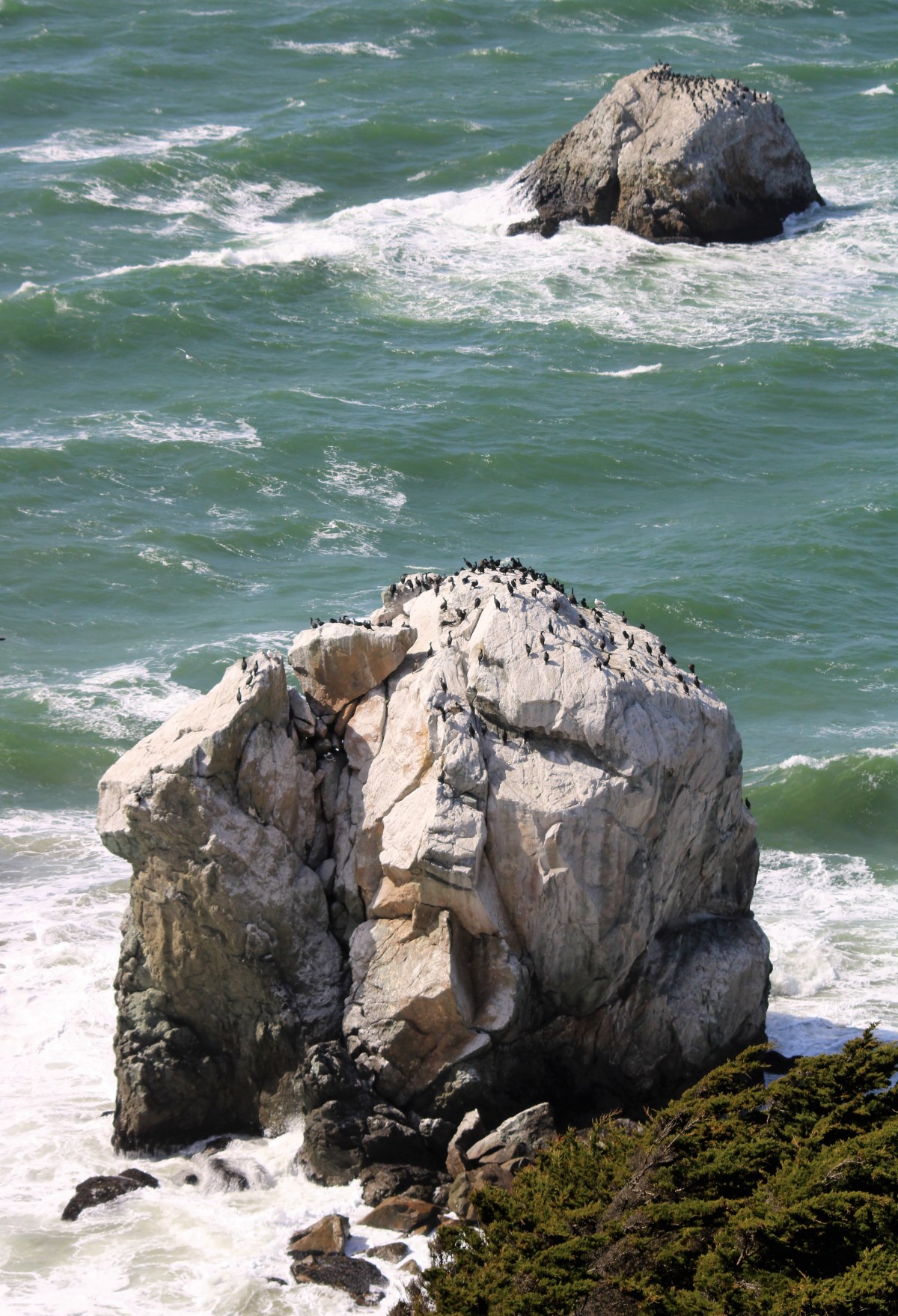
I visited San Francisco this week to apply for my long-stay visa for France. I observed these white rocky mounts where black sea birds roost.
April in Seattle is wonderful.

BIRDS AND PEOPLE AT SEWARD PARK LAST WEEK

Birds:
Spotted towhee
Chestnut sided chickadee
Dark eyed junco
Song Sparrow
Crow
Gadwall or Wigeon, need to clarify.
Hooded merganser
Great blue heron with nesting material, first I’ve seen this year.
Red winged blackbirds
White crowned Sparrow
Common murre
Bufflehead
Grebes
Scaup
Wren
Owl
Pileated woodpeckers
Anna’s hummingbird

People:

Two separate couples where the guy was telling his girlfriend lengthy details about the characteristics of a sports player.
Angelic nature center staff guy who talks about birds and gives out free tea all weekend. I grabbed a hot tea to warm up my hands and heart against the cold and damp.

SHORT ARTSY FILM

“Ready or not, here I come!” I was struck with a sense of foreboding when a character spoke that in the beginning of this this short film.

“HIDE” explores the surreal reference frame capabilities of the human mind in a way that had an intense impact on me. The main character, a young child at play, is left alone to observe the changes of the world he left behind with nothing but his breath and the sounds of his own movement. Counting down to zero like that implies moving toward a terminal and unalterable state of death, which is a terrifying thought. Yet the mind offers the possibility that one can detach and take joy in just being a part of the cycle.  I personally relate to the idea that voluntarily taking a detached perspective can lead to both pain and joy. A person can feel that he or she is always watching and knowing intimately but is always somewhat removed. The audio effects make a motif of the spooky resonant qualities of wood. The depiction of the stillness and abrupt discontinuities of death, spreading green and lace-like from within, is a poignant artistic take. The film includes sex and masturbation in a way you’ll never see in a Marvel brand movie. “HIDE” is a truly unique and thought-provoking work of art.

MIND

I’ve been trying to reconcile the truth of the of a passage from The Power of Now by Tolle with the appealingly solidly science-grounded statement from Self Comes to Mind by Damasio in an internal debate that demonstrates the pull of emotion when making up one’s mind.

The Tolle passage goes like this:

“Please stop trying to understand Being. You have already had significant glimpses of Being, but the mind will always try to squeeze it into a little box and then put a label on it. It cannot be done. It cannot become an object of knowledge. In Being, subject and object merge into one.”

The Damasio passage goes like this:

“The contents exhibited in the image space are explicit, while the contents of the dispositional space are implicit. We can access the contents of images, if we are conscious, but we never access the contents of dispositions directly. Of necessity, the contents of dispositions are always unconscious. They exist in encrypted and dormant form.”

The Tolle passage is from a new-agey self help book. The Damasio passage is about non-conscious control of behavior.

The Tolle quote made me think of the universe knowing itself through matter, energy, complexity and change, a profound idea. Yet the passage also looked at first glance like the seemingly irrelevant exercise of offering a paradox, or something that, on its own terms, could not be resolved with analysis. Isn’t that practice irrelevant, doesn’t it fail to lead to further understanding?

The Damasio passage hints at parts of the brain and mind that are unknowable directly but that can be analyzed in other peoples’ or animals’ brains, perhaps.

I find that in learning, a contradiction or conflict soon becomes a foothold to push for greater understanding. I am grateful for the opportunity to let my mind be the arena where these staggering contradictions work their way toward resolution.

Read widely, and let your mind be a battleground of ideas.

ACQUAINTANCES

I ran into a woman who has a tattoo of a red-winged blackbird on her arm. She said she did not know where they lived in this city. I told her about a patch of cattails where she could find them and witness the classic spring territorial call of the male.

COLLEAGUES

My colleagues supply me with endless entertainment.

I think it’s driven by life’s central tension that a person will be kept in continuous, lively, and dramatic activity if they are swung between the states of wanting and of having. Yet the extremes of this cycle also include the best parts of life and should not be at all disdained.

COMMUNITY

I have been walking more and doing my bit to clean up this corner of the planet.

ABOUT THE PHOTO

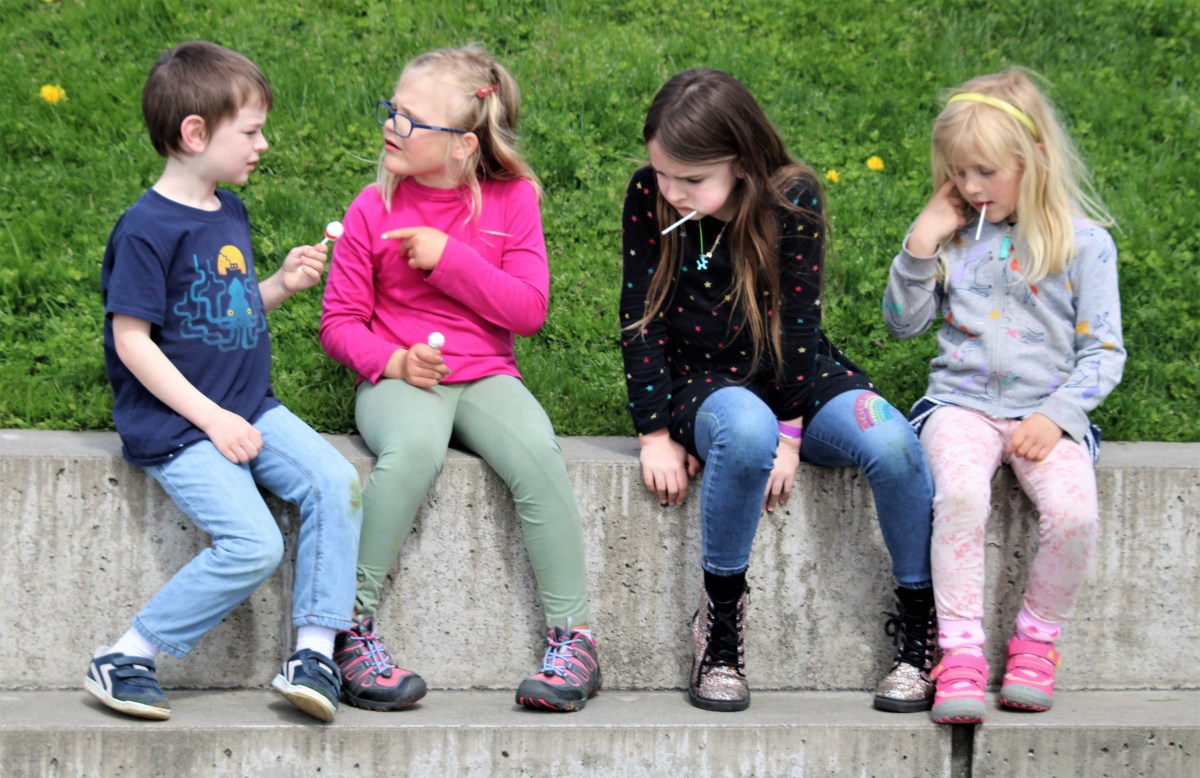
It was a sunny mid-afternoon at Olympic Sculpture Park in mid-April 2023, and four friends were having a heated argument not far from two adult caregivers. They had witnessed a strange incident involving a man on a bike with a camera, but they could not agree on what exactly had happened.

The girl in the pink shirt was the most vocal. She insisted that the boy in the squid shirt had lied about seeing the man photograph a bird. She demanded that he take back his words or face the consequences.

The boy in the squid shirt was defiant. He swore that he had seen the man photograph a bird, and that the girl in the pink shirt was just jealous of his keen observation skills. He refused to retract his statement or apologize.

The girl in the black neon star shirt sided with the boy. She argued that the girl in the pink shirt was being unreasonable and unfair. She suggested that maybe the man had photographed something else or had a spotting scope, and that the boy had made an honest mistake.

The girl in the gray pony shirt was tired of the bickering. She wished they could all get along and have fun. She proposed that they take a break from arguing and enjoy the suckers that they had bought from the picnic basket. She hoped that a sweet treat would calm them down and make them forget their differences.

April continues.

Cherry blossom peak

I visited the cherry blossom festival at the University of Washington on bike despite the rain. A French class classmate in his 70s who had just done the same thing inspired me. I am not about to look like une mauviette (a wuss) when this old man is out there biking.

Relief at a family member’s health being OK for the foreseeable future

My dad underwent testing for a heart condition and came out with an optimistic outlook, which relieved us all.

Continuing to play with large language model AI apps

I continue to play with large language model chat bots (as a user) and wonder and converse a lot about how powerful and how worthy of prudent, agreed upon precautions they are. In a personal form of caution, I have been making small efforts to ensure that not every instance of me writing something is not modulated somehow by interaction with an artificial intelligence. This means continuing to compose, edit and revise on notecards, in composition books, and in Microsoft Notepad. This last method of writing has no AI attached and watching, at least not yet…

Book recommendation: “Self Comes to Mind”

I am enthralled with the brain science finding described in “Self Comes to Mind” by Damasio about the tension between the confusing, complex, buzzing mess of brain activity on the one hand, and the rich, smooth, adaptive mental state we typically experience, on the other.

Weird barista

I am grateful to the playfully weird barista on Rainier Avenue today who called coffee “bean soup,” and to her colleague who played the Cantina Theme when I got my extra hot cappuccino today.

About the photo

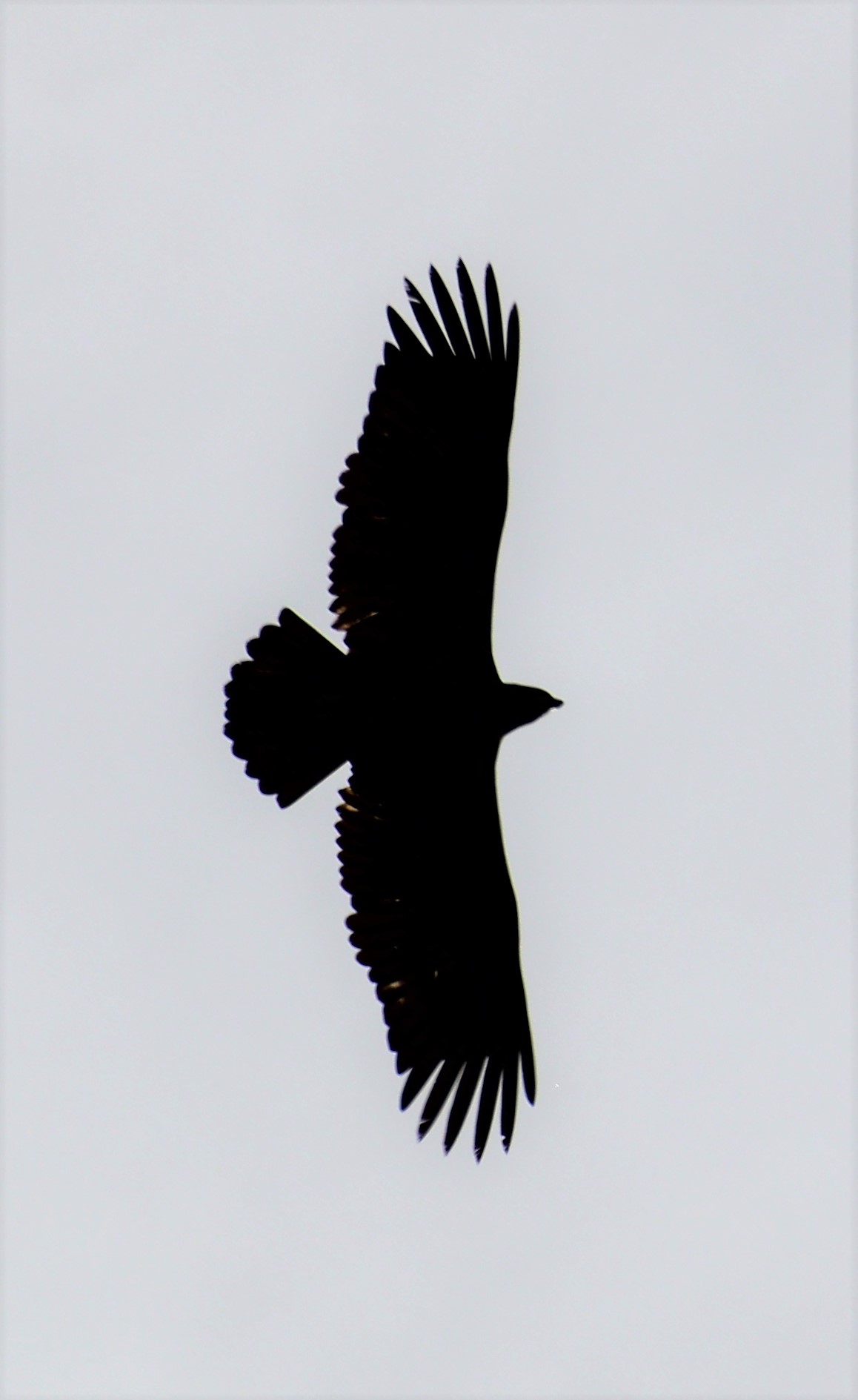
Lastly, I visited Seward Park and observed eagles circling overhead and vocalizing.

April in Seattle

It is April in Seattle and I have been observing birds and natural events. I have been learning about the evolution of consciousness and I have found that a groundbreaking chat bot from Microsoft has been a frequent companion.

What I’m up to

What do I say to someone who says, “What do you do?”

I spent some time thinking about how to introduce myself to those dwindling but conspicuous people who are forward enough to ask, “What do you do?”.

I considered the following: “I am a student and investor. I study biology and I invest in a way that gives me lifestyle flexibility. Lately my efforts at expanding the flexibility in my life allowed me to decide to fly off to Paris for 4 months to finally master oral communication in the French language. And lately my studies of biology have led me to the limits of human understanding of how mind arises from brain, how cultural evolution has outpaced and complemented genetic evolution, how recent rapid advances in artificial intelligence are adding urgency to our need for understanding, and how language and verbal relations, both products of genetic evolution, have led to a tendency to trap the human mind in a cycle of suffering.”

But it’s better to say, “I am a student and investor.” And then gauge interest, and then continue to converse based on feedback.

Seward Park

This forested peninsula in Seattle is my physical anchor and my place of endless returning.

The name of the park in the local aboriginal language, skEba’kst, means “nose” but I think it looks more like a sperm whale in profile. I love the mossy trails, the slinking elusive coyotes, and the bold and indifferent juncos with their tiny white pearl colored beaks. I love to sit on the gravelly north beach, close my eyes, and listen to the gentle waves. I love to recline on the bench in the grassy amphitheater and soak up the sun while bald eagles screech and whine in their noisy breeding season activity.

How I feel

An acquaintance has the habit of asking me, “How are you feeling?” instead of saying something more typical such as “How are you doing” or “Hey, how are you?”

At first I was a little annoyed at this. “I’m not sick, am I? What do you mean, how do I feel?” Am I expected to look inward and plumb my emotions in response to this passing salutation? What if I had strung out a convoluted emotional web behind me in the two preceding minutes, complete with maladaptive emotional schemas from childhood and all the therapy-speak on TikTok and you suddenly snagged that thread and asked me to unspool it and make a mess? Do you genuinely want to hear me retrace or vomit out what’s going on inside?

But then I stop myself and acknowledge that my disinclination to talk about feelings comes with a cost. I try to take a moment to reflect and respond with something genuine. Every person who tries to understand you deserves a genuine response. Self-disclosure promotes mutual understanding, interpersonal warmth, and intimacy and can lead to unexpected benefits. And my acquaintance should be rewarded for making a small effort to pierce the mundane chatter and elevate another person’s response.

My reading

I feel honored to be able to read the book-length synthesis of a scientifically grounded philosopher’s 50 years of study and thought on consciousness. Especially now, when breakthrough large language AI models are blowing the minds of engineers, journalists and policymakers.

The following passage is from “From Bacteria to Bach and Back” by Daniel Dennett.

“So far, there is a fairly sharp boundary between machines that enhance our ‘peripheral’ intellectual powers (of perception, algorithmic calculation, and memory, and machines that at least purport to replace our ‘central’ intellectual powers of comprehension (including imagination), planning, and decision-making. Hand calculations; GPS systems; Pixar’s computer graphics systems for interpolating frames, calculating shadows, adjusting textures and so forth; and PCR and CRISPR in genetics are all quite clearly on the peripheral side of the boundary, even though they accomplish tasks that required substantial expertise not so long ago. We can expect that boundary to shrink, routinizing more and more cognitive tasks, which will be fine, so long as we know where the boundary currently is. The real dangers, I think, is not that machines more intelligent than we are will usurp our role as captains of our destinies, but that we will over-estimate the comprehension of our latest thinking tools, prematurely ceding authority to them far beyond their competence.”

The book is from 2017 and his analysis is of older systems such as Watson and AlphaGo, which played Jeopardy and Go. I am eager to hear what cognitive scientists say ten years from now on these AI systems and how they relate to human consciousness.

About the photo

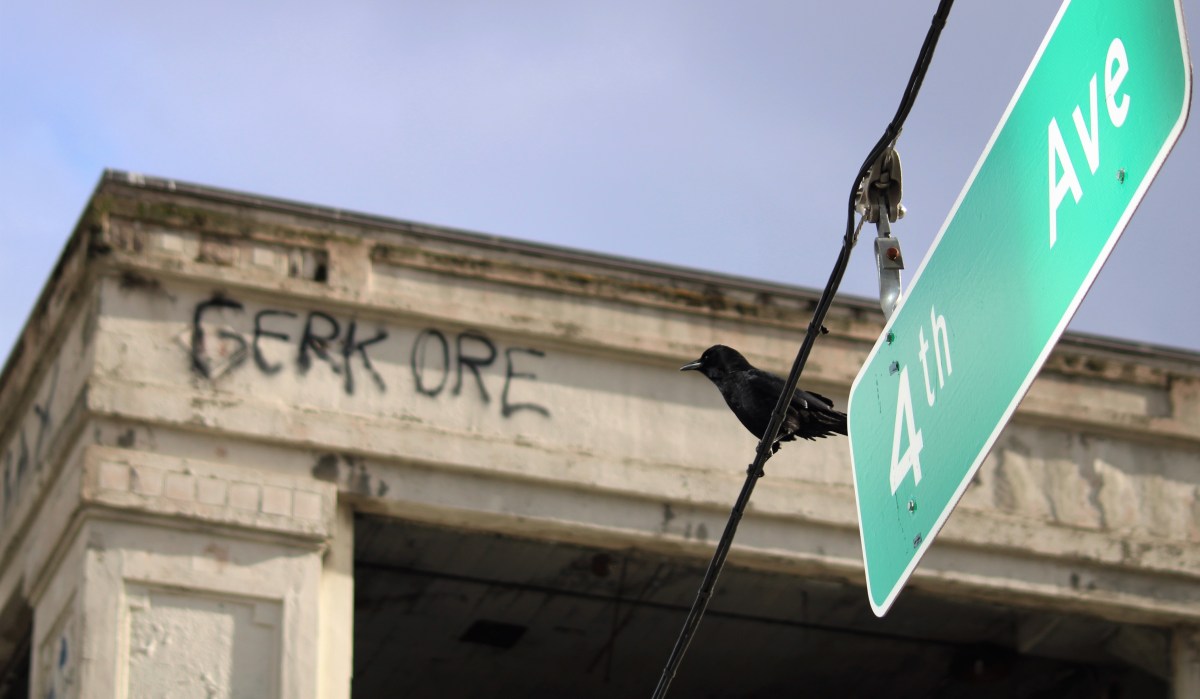
A crow on 4th Avenue and Cherry Street recently, with some graffiti in the background.