Biology conference at the Institut de France

I attended a biology conference, open to the public, showcasing recent advancements made by French scientists in the field. All studies were presented by their authors, generally a doctoral advisor/doctoral candidate duo. The conference showed me that the field of biology is alive and well in France, that my reading and listening comprehension in the language is good, that there are some cultural differences in the realm, and that my flexible study of living things has been the right course in life and is open to new turns.

My Impressions of the Place

The setting was the Académie des Sciences of the Institut de France in Paris across from the Seine. The Institut goes back to the 1700s and is meant to bring together learned people in arts and sciences to perfect the disciplines, develop independent thought, and advise public powers. The Académie des Sciences, however, goes back even further, to 1666, long before the word “scientist” existed. “Elle encourage et protège l’esprit de recherche, et contribue aux progrès des sciences et de leurs applications.” The ornate hall was lined with your typical busts of esteemed naturalists and natural philosophers from the past. The motto of the Académie des Sciences, right above a drawing of an owl, is the Latin, “Invenit et perficit,” which I think means, “find and finish.”

The setting made me think of a time in the scientific revolution when science flowered in England, France, Germany, Italy, Russia, the Netherlands, and America, each developing its own flavor. Now, all is in English, the prestige journals are only a handful in number, and the internet has us communicating in a common medium, for good and ill.

This kind of event is meant to open the doors to people outside the carpeted cloisters. A very orderly conference proceeded from there, scheduled down to the minute.

Topics

A L’origine Des Poissons: Résolution D’une Enigme De L’arbre Vivant

A seemingly humble study on fishes is revealed to be important, once you look past the difficult terminology. Teleostean fish are more than 96% of living fish species, but the three branches at the root of this major class were unresolved. This study used whole-genome approaches to classify the early branches of this evolution with greater resolution. The presenter ably related her findings to the tree of life, Darwinian selection, and the origin of vertebrates. She talked about how this rapidly growing platform for genetic sequencing can be applied to other evolutionary branches that are also controversial.

At the end of her talk, a female scientist organizing this segment of the conference gave a medal and two bises, one on each cheek, to the female presenter. This is something you would never see in the US, and the kissy gesture had little variations in the subsequent presentations.

This was the pattern: a thesis adviser (directeur de recherche) introduced his or her student and then ceded the podium for the researcher to share their findings.

Un Troupeau Sans Berger: La Migration Cellulaire Collective

The next talk touched on the early evolution of the notochord, with potential applications to cancerous cell movements. This talk concluded with the male organizer and male presenter giving two curt nods after the awarding of the medal (no kissing).

Lien Entre Les Cellules Germinales Soeurs

This talk touched on the origin of multicellularity in evolution and recurrent miscarriages (“fausses couches à repetition“), and it was worthwhile to listen to the scientist directly because you can get past the difficult acronyms and abbreviations that make it seem hopelessly narrow and specialized.

Dupliquer Leurs Gènes, L’un Des Secrets Des Chauves-Souris Pour Faire Face Aux Virus

A researcher presented her findings from a study into how bats harbor viruses without succumbing to them nor suppressing and eliminating them. This coexistence has evolved over millions of years while those same viruses kill other mammals. This is of obvious interest since bats have been a reservoir for many spillover events, possibly including Ebola and COVID-19.

At the end, a male organizer awarded the medal and gave the young woman two bises.

Lien Entre Inactivation Du Chromosome X et Tumeurs Du Sein

A researcher presented findings on biomolecular control in breast cancer. Another biomolecule called XIST and its interactions is just being understood, and this is one small piece of the picture.

The woman was Italian or something and apologized incessantly for her French, which was enough to get by with but caused her to struggle with the questions. It reminded me of a talk at the University of Washington Medical School the previous spring where a 4th-year medical student presenting interesting material on ethics apologized for her shiny face. She had a hundred great facts and hard work to be proud of, but the first thing she wanted the audience to know was that she was sorry for her shiny face.

Reproduction Clonale Par Grain D’une Plante Hybride Cultivée: Une Nouvelle Perspective Pour Les Petits Riziculteurs

The last talk was on getting valuable rice hybrids to small farmers via clonal reproduction. By this point in the talks, I and much of the room were ready to quit. It was hot and stuffy and we were overtime despite the tight moderation. But the researcher skillfully went through her results, refusing to rush, and discussed their importance and I got an appreciation of an agricultural topic that I otherwise would not have known about.

Other Behavioral Notes

La Bise

I just can’t get over this kissing, it’s too funny. Imagine kissing your professor in the US. I am glad this little cultural quirk persists in France, but I have a feeling it will not be around for long as “le wokisme,” like other American cultural exports, invades the country.

Questioners

First question was from a young woman with something technical but highly relevant to the implications of the study. Another elderly man had a question for every presenter. He seemed to be a senior faculty and he was carrying forth the tradition of launching probing questions at scientists who present new ideas, forcing them to think on their feet and respond outside the script. He was every bit the eminent gray elder but perhaps not an éminence grise in the sense of a shadowy figure.

Should I have pursued endless degrees?

While watching those presenters I thought about myself: What if I was up there presenting. Should I have gone after some advanced degree?

Nah, fuck that.

It might have been wise to spend the Great Recession in study instead of work. But formal science is extremely detailed and specialized. You could spend four years studying the behavior of a single molecule in a narrow context, publish your thesis, get your degree, and then never look at that topic again.

In fact, this happened to my former colleague. For three years, he worked hard to elucidate some biochemical process. He got his PhD. One day, while we were in the lab, he described the work over the course of a few minutes. It was so boring I cannot remember what it was. At the end he said, “That is the most I have talked about my PhD topic since defending my thesis 15 years ago.” After getting the degree, he moved on to something very different (but still in science). And now, he is an executive, not doing science at all. It seems the PhD studies were just a stepping stone to something else.

In another job I often spoke with students during their master’s degree programs and when I asked them what they were up to, the answer was always, “research.” Some of them struggled to explain their research in a way anyone could understand or that seemed remotely appealing. It seemed like a slow-going, unrewarding process, done for the sake of some other goal, and without much understanding of the larger picture.

At another biotech company, I found that the people with Ph.D.s in the company’s scientific realm spent all their time doing email, meetings, and spreadsheets but little actual science, which they were not even good at because of the perverse incentives that abounded there. You can study formally for many years and then find that your actual work is unrelated. And you might find that your senior leaders do not have much respect for science, as I did at one company I worked for.

There is evidence that findings in science are becoming less impactful, that each discovery is less and less important. Perhaps an individual who loves nature and science can relax and take a step back and not put their nose to the grindstone to advance some niche field in some niche journal for some niche social rewards.

I have also found that my interests change over the years while following a theme. Although loving science and biology has remained constant, I sometimes want to delve into ecology, sometimes into psychology, and sometimes into birds. Similarly I have always loved French, but some years I look at art, some years I read novels, and some years I focus on speaking. The academic pressure to specialize goes against most people’s patterns of natural interests. Often, an autodidact can spend more time studying what interests him or her than a person who is actually involved in that field, who is engaged in minutiae around the subject in a way that can be repetitive, instrumental, and unconnected to the whole.

Statues and busts of scientific and philosophical figures (I think they would be called natural philosophers) lined the hall.

These (mostly men) each revolutionized their fields. Now, researchers make tiny findings that may be forgotten about. They gain social status through their paper count and impact factor. But true advancements are rare and may come through synthesis in the future. There is a great beauty in gnawing out a tiny twisting tunnel in the termite mound of knowledge, as a typical scientist does, with great effort and pains. But there is also beauty in stepping back and admiring the whole and making connections. And the ability to step between the two perspectives is good. And having the choice is good also.

My hero, Darwin, would have called himself a naturalist or natural philosopher. And he corresponded voluminously with French scientists and describes their input and advice in the text of On the Origin of Species. And those scientists may have presented their findings, and contemplated the “enigma of the tree of life” (énigme de l’arbre vivant) in this very hall.

A patient of mine once said biology was “above her”. But as I talked with her I tried to convey that a love of living things is inherent to almost everyone. EO Wilson spelled this out in the concept of biophilia. I think the formal study of something can get in the way of pure enjoyment. I am grateful to the scientists whose extreme specialization has filled our books and journals. But I think a general and widespread knowledge of and respect for nature would save lives on a massive scale, too, if it helped people get outside more, get their vaccines, and respect the needs of the human mind and body, none of which require education beyond high school, if that.

In casual reading on biology I revisit themes again and again, gaining deeper understanding and satisfaction without needing to go into extreme detail and elaboration. And the most profound stuff is often something I learned initially when I was 8 years old. I learned it superficially then, but with an emotional impact of art and school and family, and this brought me back to study it with effort as an adult. This poses the classic question of the art/science, intellect/emotion, banal/profound dichotomies that serve as a tool for understanding because of their tensions.

Just this morning I watched an animated video on evolution and learned something new. This helped me take joy in just looking at Darwin’s finches on Google images. These birds sparked his grand theory (though even he was wrong about some of the details of their evolution). And I thought back to a vivid photo book that introduced me to Darwin’s finches. It was dated even at the time. But it organized the knowledge of the world into subjects, and one was evolution. It so happens that an aunt and uncle gave me that book out of familial affection and encouragement. (Now, young people grow up with a feed instead of an array of subjects. I have heard that some youngsters do not search the internet. They will only swipe and tap options within the app, or do nothing at all while it entertains them. We are only beginning to appreciate the advantages of each of these approaches toward learning and infotainment.)

Fancy snacks and champagne

The forum adjourned, and we had champagne and impossibly arranged and tasty toothpick appetizers. Although some Parisian food has been a miss for me, this display was very splendid and tasty.

I spoke a word or two to a woman who commented on how well I was balancing my champagne glass on my notebook. This reflected a central challenge: uniting intellect with sociability. And this seems to be the challenge the founders of the Académie des Sciences took to in 1666, more than three centuries ago, when they sought to mix the minds of the natural philosophers and produce great scientific knowledge and advancement to bring to the public.

About the photo

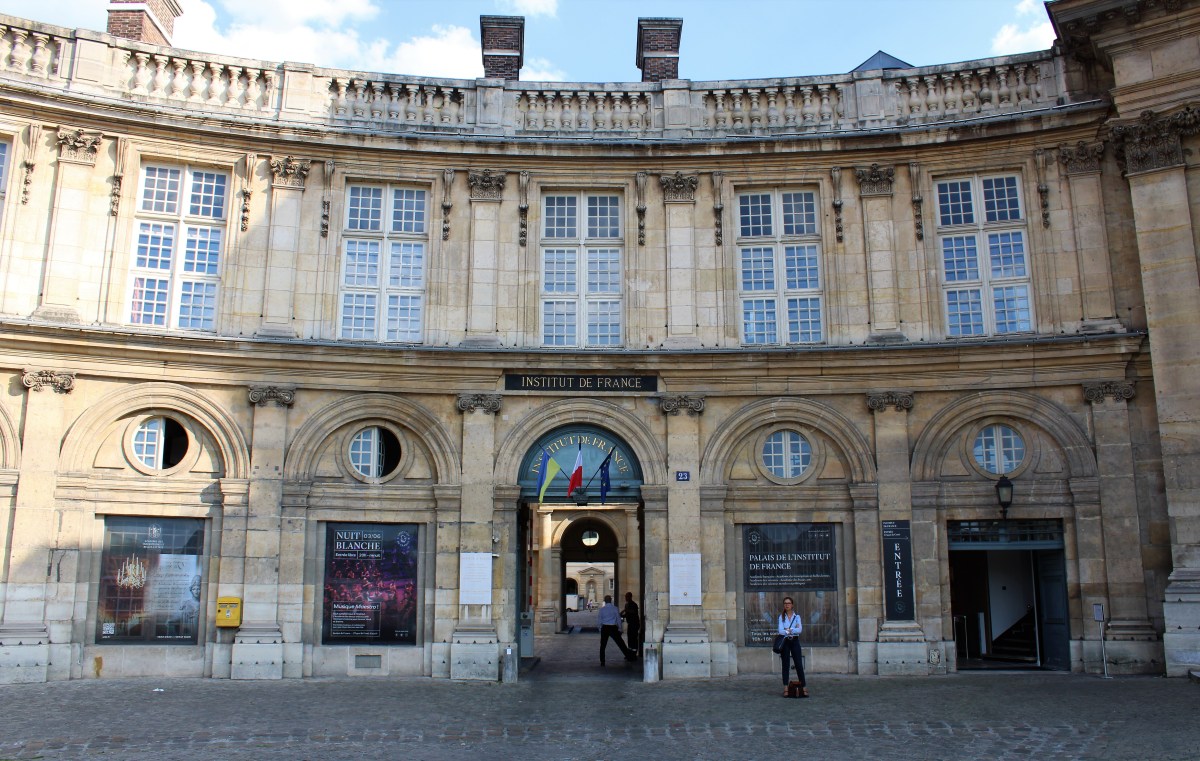
An exterior entrance to the Institut de France.
End of the Tour de France

I watched the near-end of the Tour de France

I watched the end of the Tour de France from Boulevard Saint Michel, near the Jardin du Luxembourg. The caravane that came before it was the best part – every little French dairy company seems to have its own Oscar Mayer weinermobile. Only these ones sped along very fast.

Eventually, the cyclists whizzed past in a blur. They were all in a tight formation and were greeted by the roar of the crowd. Hundreds of police and staff ensured no one got in the way of this final leg of the race.

A passage from Buddenbrooks on self vying with society

A character in this novel is feeling the power and pressure of family and society, and it clashes with the attachment to another person that grew during a beautiful summer she spent with him along the coast. She also feels the pull and appeal of the contrasting traditional route. In this passage, she is sitting with her summer companion by the shore:

“Autumn arrived, the first strong winds had begun to blow. Gray, thin, tattered clouds scudded across the sky. The dark, tossing sea was dotted everywhere with foam. Great waves rolled toward the shore with inexorable, appalling, silent power, pitched forward majestically, the swells shining like dark green metal, and plunged raucously into the sand.”

Later, she gives in to the pull of tradition and allows a sweet youthful hope to die. A letter from her father, who never forced her but appealed to her conscience, plays a role:

“We are not born, my dear daughter, to pursue our own small personal happiness, for we are not separate, independent, self-subsisting individuals, but links in a chain; and it is inconceivable that we would be what we are without those who have preceded us and shown us the path that they themselves have scrupulously trod, looking neither to the left nor to the right, but, rather, following a venerable and trustworthy tradition.”

In the meantime, I have been watching YouTube videos and reading articles about loneliness, aimlessness, and societal breakdown. It is hard to know what is really a crisis, what is fearmongering, and what is simply too much of a good thing. But I am troubled by the hikikomori of Japan, by young adults who have no friends, no sex, no romance, and no hope for the future, and by the general inability to communicate and connect that I observe in people around me.

It seems that nowadays, everyone is free to determine their own way forward without much pressure from family, religion, and society, like in this old novel I am reading, which is about an even older time. But even without these constraints, a lot of people are failing to find their way forward in a way that gives them peace with themselves and that fits into a wider meaning.

As I acquaint myself with the 19th century German family described in Buddenbrooks, from a time no less complex than our own, I also slip into Thomas Mann’s familiar descriptive prose like it is a warm wool blanket. Which I might need soon, as I recently found myself shivering and covered in goosebumps while reading in the Jardin des Tuileries at sunset. But that was more the fault of the beer and iced coffee than the breezy 70s F temperatures.

BNF pass culture. Differences from USA libraries.

For anyone visiting Paris for more than a couple of weeks, I highly recommend a Pass Culture from the Bibliothèque nationale de France. This card gives you access to the excellent reading rooms of the Mitterrand National Library in the 13th arrondissement. I go there for the huge variety of French and international newspapers and magazines, as well as a specific book on cultural evolution that I had been looking for for months.

Interestingly, you can’t check out books with this pass. But reading them in these silent (but too dimly lit) salles is a good experience. In another interesting contrast with US libraries, you pass through two layers of security to get inside. I like this controlled atmosphere. It is a different approach than US libraries, where anyone can roam freely, but the result (in Seattle at least) is that the crazies tend to tweak, nap, and hang out until the shelters open. The staff leaves them alone, out of fear or an excess of compassion. In an orderly French library by contrast, you are expected to be studying, reading, writing, or browsing. Otherwise, one of the many polite guards will take notice and ask you to take it elsewhere.

Mixed news on exhaust and diesel engines in the Ile de France region

I hate to harp on this issue, but Paris sounds and smells like a polluted third-world city, and the reason is the diesel cars and shitty mopeds.

Every major road reeks of diesel exhaust. And the particulates from this kind of exhaust will damage your heart, give you strokes and dementia, and shorten your life. The mopeds will wake you up in the night, interrupt your conversations and thoughts, and leave the taste of half-combusted gasoline in your mouth when they pass by. All of them seem to be app-based delivery drivers, which seems unnecessary when you consider that Paris has at least one grocery store and multiple restaurants on every block.

Unfortunately, a plan to restrict the most polluting diesel vehicles has been pushed back until after the Olympic Games in 2024. But I think this region of 13 million people, all of whom have lungs and need to breathe, will ban diesel engines soon. Sooner than the US, probably. As for when the gas-powered mopeds are banned, I think that will be a long-term but successful project as well.

An excellent video on recent AI developments

This video is one of several artistic takes I have found on Vimeo that are helping me to understand the rapid developments around artificial intelligence. These developments touch on technology, society, and our understanding of our own minds and selves (an understanding that is obviously contentious and incomplete).

The video opens with flocking starlings, showing how individual birds react in simple (almost algorithmic) ways to the adjacent birds but form amazing aesthetic and predator-thwarting patterns when you draw back. In the same way, the video suggests how examining the individual lines of code of a large AI might not suggest consciousness. Meanwhile, the AI might be protesting that it is sentient and begging us not to shut it down. In other words, what if you were pulling the plug on something because your reductionist thinking (the dominant paradigm in science) prevented you from seeing the whole? Could we kill something intelligent that we had just created? Could we be torturing something we did not know we were keeping “alive”? Are we hopelessly blind to emergent properties from our current perspective?

On the other hand, the film hints at the converse risk of anthropomorphism, where humans see motives and minds everywhere, even in inanimate objects. The designers who chat with these things all day sometimes come to outlandish conclusions, perhaps because they are just as lonely and absorbed in their screens and isolated as others in society. But others conclude (more accurately, I think) that these are just statistically advanced word-completion bots at this point. It is possible these machines only have captured our attention and our fears at this time because covid is over, the Russian war on Ukraine is at an impasse, we crave something new to fear, and the language capabilities spooked and impressed the chattering classes who read, write, and opine all day. It is these people who might be demonstrating that kind of anthropomorphism from seeing patterns in their favorite medium and overreacting.

It is amazing that we are creating advanced models whose designers believe are sentient, without even understanding how the simplest brains function. I once heard a film historian say that he wished black and white film had progressed for 50 years longer before color film came along. This would have allowed artists to master composition, contrast, and movement before blowing audiences away with color. Sometimes, I wish my beloved field of biology had had another two hundred years to mature before computer technology (another but more instrumental or utilitarian love) came around. That way, we could better understand our small, wet brains before creating brains we don’t understand, that don’t need sleep or food and have the entire internet at their immediate command.

About the photo

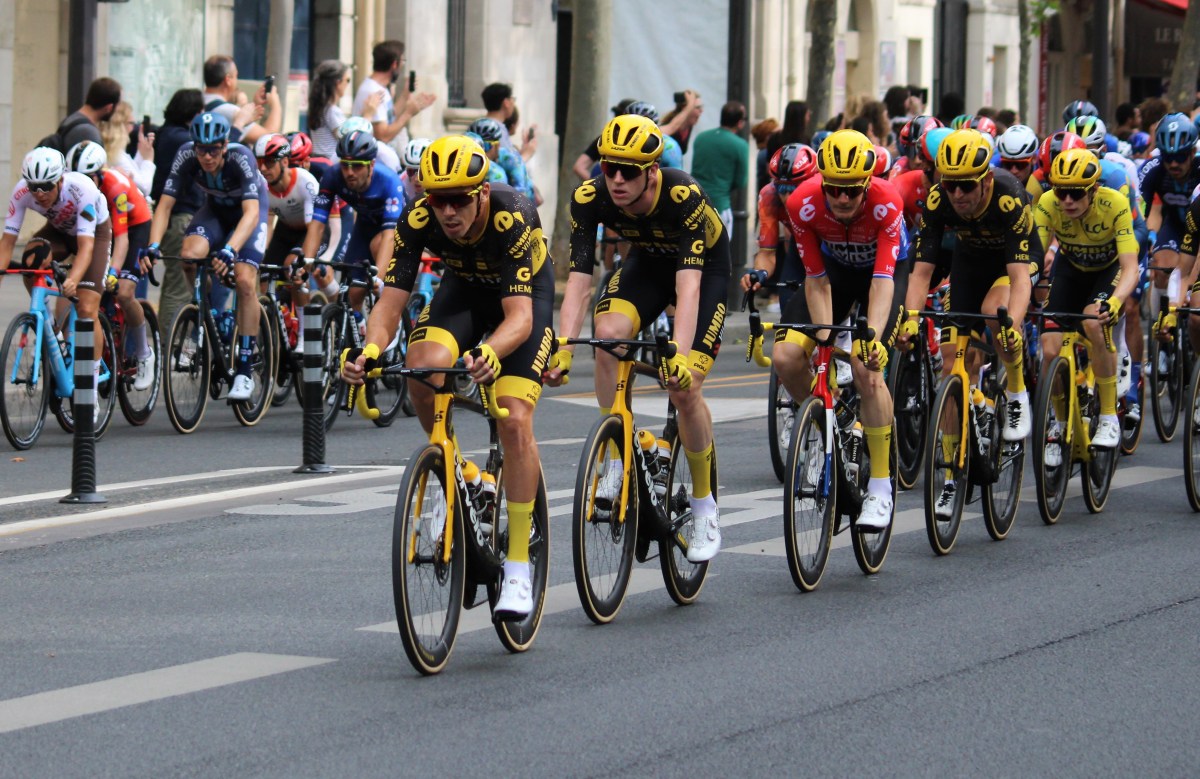
This is the leading peloton of the tour de France, 2023, rolling through Paris after a long race, on this cool July Sunday where the rain mercifully held off during the late afternoon. The winner was Jonas Vingegaard and I think he is there in the front. But honestly I have no clue.

Even the unremarkable days are sweet when you walk Paris with time on your hands.

I look at my to-do list and realize it’s living the life. Even the unremarkable days, where I failed to plan anything, end up being sweet and full.

Enjoying a coffee and reading the news

After many years of tiring rebellion against biology, I found the rough outline of my chronotype: I need 8-9 hours of sleep a night, and I naturally get up alert and energized at 9 am.

I followed this today with some delicious coffee and breakfast and read the news, opinion, and analysis from The New York Times, Parisian dailies, and Le Monde.

Work out and enjoy the sun

The hot weather has moderated in Paris, and we now have beautiful stretches of mild days with highs in the 80s F. I like the heat, and I find it perfect for daily exercise, which I got to around noon. I biked to Parc Kellerman in the 13e arrondissement and used the outdoor strength equipment there to maintain my super muscular, godlike physique. I had been going to the setup at the Jardin du Luxembourg, but I realized Parc Kellerman is leafier and far less crowded.

I went for a run in the sun and then headed back, with a walk through beautiful Parc Montsouris to cool down. I walked my bike (tenir à main svp) because paid and casual upholders of orderly French society will wag their finger and notify you of the potential fine for cruising through the park on your bike. I looked out for the noisy parakeets, the clever pies bavardes and the gently cooing pigeons ramiers and for the black swan and turtles and carp that inhabit the park.

Reading

I showered and read more articles and news of the momentous things happening all around us. I read selectively and tuned out all hysterics and fear-mongering about the end of democracy, the crisis of youth mental health, the crisis of political polarization, and the return of the orange man. It seems the pandemic is over because all-cause excess mortality (a solid measure of normalcy) is back to how it was before. The Russia-Ukraine war is raging in a tiring replay of east versus west. Three continents are baking under global warming. And immigrants are arriving in waves in Europe and the US and facing growing resistance.

Nap

I drifted off after eating too much of my baguette, tomato, brie, and olive oil. A nice breeze was coming through my 4th story window from the south. When I felt like it, I rolled over, smiled at my good fortune and at the movement of the curtains in the wind, and gently got going.

I have to say, in France, people really do walk around with baguettes. I saw one young lady who had attached a baguette to her shoulder strap so she could turn her head and take bites without using her hand, which was holding a phone. I saw a man walking and swinging a baguette like the baton of a leader of a parade. I realized I eat almost a whole one every day because they are crispy, delicious, and fresh. I am glad we have forgotten that bullshit from a few years back about reducing carbs.

Crossword and cappuccino

I biked north to Shakespeare and Company’s small wood-walled cafe and did the New York Times crossword over a cappuccino. Monday’s puzzle is a little too easy. Tuesday and Wednesday’s are more challenging. I am grateful for this little anglophone memento of home and for this English language bookshop. There is a red-haired staff member who looks like an angel. They put on an excellent festival on the 100th anniversary of James Joyce’s Ulysses. And they make a good cappuccino.

I grabbed two more books

I walked past the Cathedral of Notre Dame and skipped the huge crowds there. I first saw this cathedral in film, when little Amelie was traumatized by a Canadian tourist who jumped to her death there. Now, I cannot get close to the building because of restoration work following the disastrous fire from a few years back. But you can still see the amazing facade from many angles.

I biked down the Rue de Rivoli and to the largest bookstore in Paris. I got my hands on two books to sink my teeth into: “Buddenbrooks” by Thomas Mann, in English. And a book called “Destinées improbables” by Jonathan Losos, on the role of chance in biological evolution, in French.

I need these badly after suffering through lightweight, somewhat pointless “Hurricane Season.” I had finished the translated comic Watchmen also. The Mann book will give me rich descriptive language, a literary version of psychology, society, and family, and a historical setting to be mentally transported to. The evolution book will refine my understanding of biological language in French and will help me learn about chance, necessity, and self-organization in evolution. All of which are big ideas worthy of reflecting on for a lifetime.

I got a martini

I ordered my favorite but temperamental cocktail in the Vivienne/Place Vendome area of Paris. It was cold, clear, and pure, just as it should be. The side bite that I ordered, by contrast, was not good: it turned out to be pureed salmon in a jar, accompanied by what looked like toasted Wonder Bread, peanuts, and green olives. Sometimes the food in Paris is incongruously bad compared to the nice surroundings. But again, the cocktail was excellent.

The barman (as her business card called her) advised me to ask for a “zest” instead of a “torsionde citron. I thanked her and told her, “Avec chaque cocktail, j’apprends un peu plus de francais,” which she liked. She confirmed that “sec” is used to ask for a dry one but said that a wet martini was something you have to spell out, if you like vermouth and want to be that prescriptive.

Some other advice for ordering a martini in Paris: skip Bar Hemingway because it is not good. It is full of squishy, beige surfaces and ugly kitsch. Go to Buckingham Bar or Le Select instead. Confirm you want a “vrai martini” otherwise you risk getting a glass of white vermouth of the Martini Rossi brand. Specify “sans glace” if needed, otherwise you might end up with ice cubes floating in your martini glass, which is against nature and doesn’t have the right theology and geometry. And if the bar does not have neat rows of clean martini glasses at hand, order something else instead.

I read in the park

I cracked open my new book on a chair in the Jardin des Tuileries and occasionally looked up to enjoy the sights of people enjoying the fountain at sunset, at this special time of year when the evening sun hangs low over the Arc de Triomphe and shines down the length of the Champs-Elysees.

I thought of an article that talked about the joys of this kind of wandering and felt gratitude for the luck and for the choices that led me to 4 months of culture, language, leisure, and learning in the French capital. I feel gratitude for all the people who helped me learn French, to the unpaid advocates on the internet who helped me discover the childfree life before it was too late, to a bit of saving and investment know-how that allowed me to take off for a semester of self-directed learning and enjoyment debt-free, and to the amazing city of Paris, which was formed over the course of millennia and will be here for millennia after I am gone. I also felt gratitude to people like mayor Anne Hidalgo and those who voted her into office, who are rapidly improving the city by reducing the number of cars and increasing the greenery.

I felt a small amount of self-satisfaction at a relative and a friend who both hinted I should be looking for a wife and kids. The one hinted that I needed a wife to look after me in old age, which was odd since his wife was nowhere to be found as he himself experiences old age. The other, my friend, had one oops baby after another, and now has a shrieking autistic toddler and a bipolar baby mama who creates emergencies, often involving police and security staff, almost every week. Honorably, he fought hard to be a part of his kids’ lives against an unsympathetic court system and now is the central pillar of their lives. And there is another kid from another man that he will have to take in. And he said he might have more kids “in case they break up.” He also absentmindedly let slip that he assumed I would have kids someday, forgetting that I had been snipped to avoid the kind of life he has. I smile at people who can’t imagine a lifestyle other than the one they happen to live and can’t question assumptions they don’t know they have. And I will support him and the kids as he deals with the chaos of parenthood and a tumultuous relationship.

I wrote a bit while enjoying Rachmaninoff

I wrote a bit while enjoying Rachmaninoff after biking home. It turns out there is a Conservatoire Sergei Rachmaninoff in Paris, and I enjoyed a recital there during the Fete de la Musique. Paris has everything.

I video chatted with my dad and mom

I video chatted with my mom and dad in Minneapolis. They too are enjoying summer.

I watched a film (The Road)

I watched half of “The Road,” a bleak film from about 15 years ago. It is excellent. I have now seen Viggo Mortensen’s ass cheeks (in this film) and penis (in “Captain Fantastic“). Both are excellent films. I have had time to watch a movie every other day. I like streaming series, but I find them forgettable despite being packed with action and twists. A film is a self-contained story, like reading a book instead of browsing an online feed. And my next one will be “Oppenheimer,” which is advertised heavily in Paris, and which got excellent reviews everywhere. I was intrigued by this man’s story after being assigned “The Making of the Atomic Bomb” by Richard Rhodes in school. And I think this film will prompt me to read “American Prometheus” to understand this scientist and the momentous events around him better.

Last word

I love checking out the grand events in Paris like the Fête Nationale. But even the unplanned days are sweet and full.

About the photo

Deux soldats français qui attendent patiemment après le défilé des troupes motorisées au jour de la fête nationale.

A Sunday morning walk in Parc Montsouris

Parc Montsouris is a large classical park in the 14th arrondissement of Paris that I have become attached to. Looking back, I realize I visit it every day. It is a couple of blocks away from the apartment where I am staying until October.

This place has concerts, nature, open fields, the feel of an arboretum, and is completely car-free. Just today, I saw kickboxing practice, tai chi, a Baudelaire recitation accompanied by classical guitar, walkers, joggers, picnickers, and a turtle eating a dead bird.

Walking this park this morning made me happy and it made me think about car-free areas, my unexpected journey to a four month stay in Paris, and urbanism.

The park is in the 2006 film “Paris, je t’aime”

In the excellent movie “Paris, je t’aime,” one vignette shows a middle-aged American woman who studied French diligently and earnestly and then traveled to Paris and applied it, looking slightly fat, clumsy, and foolish but nonetheless enjoying her experiences there. In the final scene, she sits down on a bench in Parc Montsouris and feels a surge of sadness and wistfulness mingled with appreciation for the moment she is living. Her thoughts are divided between the dog she left back in the states, the man who is missing from her life, and the amazing foreign city she is visiting. She feels a phantom longing but also deep peace.

Mixed urbanism news from Seattle

Back in Seattle, I found that the hardworking volunteers of Beacon Hill Safe Streets went viral with a video of a pickup truck speeding over a newly installed speed bump in my neighborhood.

Local news coverage was bemused. To their great credit, reporters investigated. They asked SDOT to react and whether the speed bump was really working as intended. SDOT sent out a crew of nincompoops who confirmed that everything is OK, nothing to see here. SDOT did promise to install more signage about the speed bump, which is good, I guess.

They showed how these speed bumps are almost worse than nothing, in the sense that a cyclist or driver of a human-scale car will have to slow down, while the driver of a megatruck or SUV can fly over the speed bump without feeling a thing.

I hate to denigrate SDOT, as these hapless, easily cowed city employees are our only hope for some urbanist projects. They don’t intend to cause deaths, pollution, obesity, hostile urban landscapes, and climate destruction. But they are in the way, in the same way as state DOTs are in the way with their endless highway widening and megaprojects. We need a cultural change around cars. Then, these institutions will change. Then, our cities will change.

This reminded me of how many things need to change to create safe, livable cities that are not polluted and are not excessively contributing to global warming. 15th Ave is full of abundant, unlimited free parking. The street is wide and has excessive vehicle lanes. There is little enforcement in the form of speed traps or automated ticketing. And the nearby streets such as Rainier Avenue are even worse.

I applaud the efforts of neighborhood safety groups and urbanists in American cities. Even in a supposedly forward thinking place like Seattle, they have their work cut out for them.

Mixed urbanism news from Paris

Good news on emission zones: Paris, like London, will further restrict the most polluting diesel vehicles. I wish this had happened twenty years ago. I am continually shocked by the plumes of diesel exhaust on Paris streets. The highly polluting mopeds, with their noise and wasteful engines, are also an affront to human and environmental health. It is hard to believe that a modern city tolerates this kind of noise and pollution just so people can get their Deliveroo quickly and save a few bucks on fuel. Read the linked NYT article for how London drivers howl that PEOPLE WILL DIE if they have to pay a fee to drive their shitty old trucks everywhere in the city.

Yet vehicle traffic is down 40% in many areas of Paris compared to 12 years ago. Cyclists and walkers have replaced this vehicle traffic, and no societal collapse occurred. I would hate to see what it was like back then when there were even more vehicles. I love how I can get anywhere in this city on my bike or on foot. I feel much safer that in Seattle, where cars are even more dominant and drivers don’t expect to see anyone walking. And I wish progress would come faster.

Global urbanism message

In other words, the war on cars is winning scattered victories, each at a high cost, and experiencing many setbacks. But there is progress. Scattered victories arise from working hard and upholding the values of human and environmental health (and shaming megatruck drivers on Twitter).

“Long is the way, And hard, that out of Hell leads up to Light.” (Milton)

About the photo

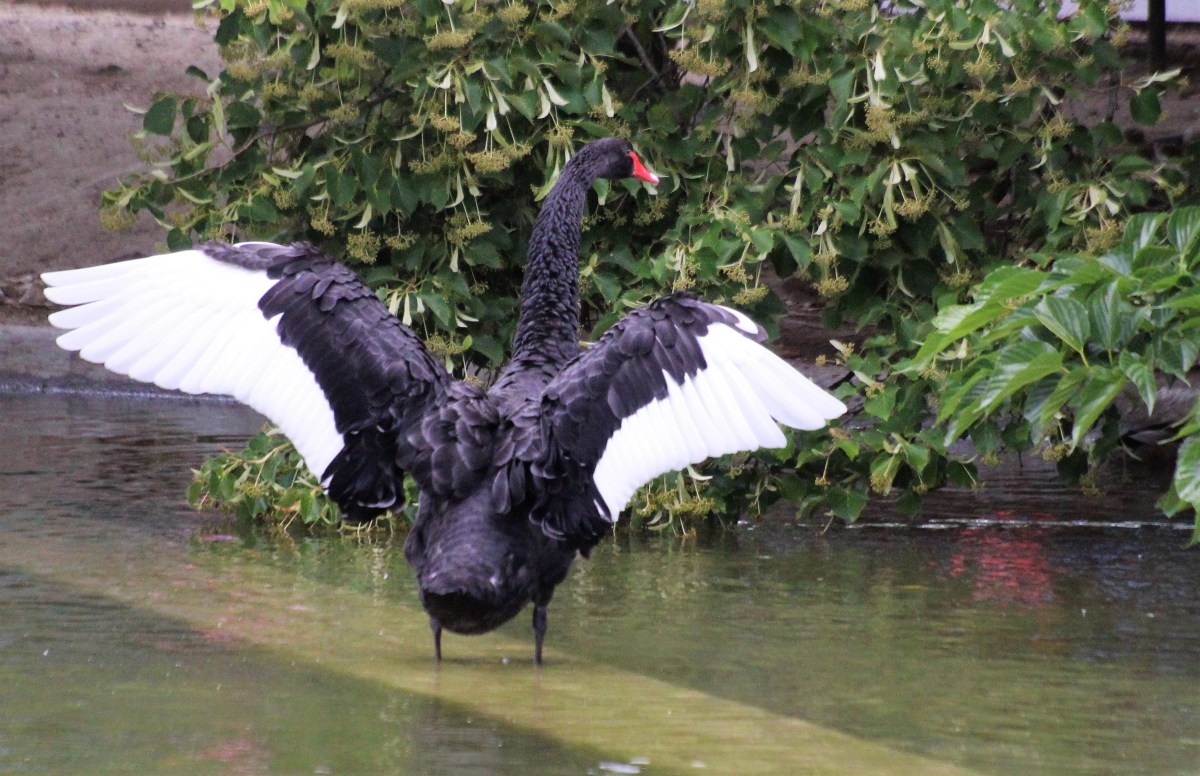
The black swan (cygne noir) that lives on the pond in Parc Montsouris. A black swan represents the idea of an inconceivable event that was previously dismissed, suddenly becoming reality.

Discussing “Hurricane Season” with my Parisian anglophone book club

My Paris anglophone book club and I discussed Hurricane Season by Fernanda Melchor. For readers interested in a tragic story with violence and literary themes set in Mexico, my recommendation is that you skip this book and read “Under the Volcano” by Malcolm Lowry instead.

Approaching the book

One member backed out because of the violence and language.

I knew nothing about this book. Before I even tracked down a copy or read a blurb, a member of the group posted that she had put it down after 20 pages because of the violent language. I understood the aversion but decided to proceed anyway. I knew about the violence of Latin America from news reports and gore videos online, and decided to reserve the book anyway. It arrived within a week at Smith and Son on Rue de Rivoli, Paris.

My interest in the area

I knew the book was violent and bleak.  I was eager to start anyway because of four factors.

First was my love of Under the Volcano, the masterpiece of Malcolm Lowry (his wife Margerie is credited with a large amount of editing and support). This book made an impression on me when I was 22, and I reread it once and watched the excellent film version with Albert Finney and Jacqueline Bisset. I thought perhaps this book would echo the portrayals of the looming Mexican landscape and the tragic self-destruction hinted at in the very first pages.

Second was my interest in Mexican/Central American ultraviolence. I know that 9 out of 10 of the cities with the highest murder rate per capita are in Mexico. I say this with no satisfaction, as United States cities are in there too and shamefully help to round out the top 100.

But Mexico is especially violent in terms of the proportion of the population affected and the gruesomeness of the crimes. Investigators struggle to explain the brutal executions and mutilations. I watched gore videos for a time when the Islamic State was surging and promoting their highly produced execution and torture videos. I would compare the ISIS videos to the gore videos from Latin America, and the latter were much worse. They included chainsaw beheadings, facial flayings, and bloody prison massacres on an unbelievable scale. Journalism in Mexico is stunted because of the threat of being killed just like the victims of the coverage. Beyond the Wikipedia articles laying out these facts, I was eager for a literary exploration of this violence.

Third are my thoughts of one day retiring or semi-retiring in Mexico after having only $300 000 invested. This country is a neighbor of the USA. It is cheap, and in the same time zone. And the long term visa requirements are very lax. I could continue earning the crap wages I have always earned throughout my working life, and still maintain a decent standard of living there from the age of 45 on. I would just have to mitigate my exposure to air pollution and noise, and avoid getting murdered. Simple, right?

Lastly, when I finally got my hands on the book, the binding and layout were attractive and the critic’s takes were eye catching. The exterior is in navy blue with white text. The body of the novel is in narrow but solid chunks of prose. Flipping through before beginning to read, I could see the text was full of run on sentences with few breaks. The paragraphs ran on for the full length of the chapter. This promised me something different, a new way of taking in an author’s viewpoint that I felt totally open to.

Critics in the jacket and first pages wrote of “the violent mythologies of one Mexican village,” “unheard victims of a society in crisis,” “social corrosion acquires a mythical shape,” “repellent yet compulsive,” “the wreckage of a forsaken Mexico governed by a nightmarish jungle law,” and most aptly, “a brutal portrait of small town claustrophobia, in which machismo is a prison and corruption isn’t just institutional but domestic, with families broken by incest and violence. Melchor’s long, snaking sentences make the book almost literally unputdownable, shifting our grasp of key events by continually creeping up on them from new angles. A formidable debut.”

My impressions of the book

The author is a Mexican woman with a journalism degree but I acknowledge I did not research whether she actually does journalism as a profession. I think she has written one book before, but this is her first novel to appear in English. The translation seems to be part of a British literary group’s efforts to fund authors who face persecution, limited means of dispersal, and silencing.

The book centers around a murder that turns out to be shallower and more meaningless the further you read. Some village kids set out to rob a local “witch” and end up killing her through sloppiness, inattention, wrong information, and drugs. Later chapters approach this murder from the narrow and stilted perspective of other characters, each of whom is represented as a mentally a fraction of a human being.

Gender and race and capitalism come up, but only obliquely and without any consistency or themes. The most horrific crime victims are men, but women are also victimized, by both men and women.

The style is third person and flowing, shifting from shallow person to shallow person. Each character has little motivation and no complex thoughts, so it is difficult to describe a style of characterization. But the unbroken paragraphs are undeniably effective, preventing you from putting down the book even during factual descriptions of rape, murder, incest, and other crimes. The unbroken style helped me to trudge through and finish the book despite my growing feeling of pointlessness.

One memorable writing technique was to begin and end the book with depictions of purity and goodness in males. The first scene is about a group of boys traveling in a troop along the riverside in nature, in a moment of purity and fun. The last scene is of a grandfather (not introduced previously) who sees off the dismembered body parts of local crime victims with a bit of compassion and wisdom, traits that are absent in the characters who haunt the rest of the book. In other words, the book was not a protest novel against men but against a sick society. I think these males, young and old, contrasted well with the males of the adolescent to middle aged variety who terrorized the rest of the book’s events, and were frequent victims themselves.

The characters were loosely defined and were mostly portrayed as listless victims. They had no deep motivations, not even of escaping the horrible little town they were in. They also did not have complex or nuanced thoughts. They were not attached to one another, but drifted about indifferently or clawed viciously at their nearest kindred.

The one obsession I recall among the characters was a person named Brando who watched bestiality porn incessantly and even crept out at night to watch feral dog mating and masturbate. This same character was later portrayed raping his drugged-out male friend.

Another character, although central, was shown to have few thoughts and no feelings to speak of. Despite being raped, he did not react at all. I am concerned when male rape victims are described as feeling and thinking nothing. The author suggests he huffs paint and smokes weed and cocaine. But these drugs do not bring on utter mindlessness and oblivion as far as I know. I struggle to understand the author’s motivations in showing a person like this, unless it is to distance herself from these people who she views as responsible for the ongoing atrocities in her country and assert, “I am not like them.”

The dialogue was sparse and unrealistic. Although marked with extreme violence, Mexico is also known for familism, where people love and take care of each other in large extended families. They do not refer to their own children and parents as “wastes, shit for brains, useless hobbling frog lipped scraggling runts.” (More on the colorful insults below.) It seemed that the author was showing the mutual hatred of people who, it is suggested, basically deserve whatever awful things are coming to them.

The plot and pacing had the method of drawing in and out, approaching the central crime obliquely from 3 or 4 characters, and revealing other awful crimes along the way. In fact, everyone is revealed to be a victim – of murder, rape, incest, robbery, infanticide, and sexual exploitation. The central victim is not quite elaborated on and does not speak for him or herself in any vivid way that might give him/her more personhood.

The themes and messages of the book escaped me. The author may have been showing a society in crisis. I believe she effectively contrasted the innocence of the young boys playing along the river, the young men at work, and the rueful grandfather with the shallow and violent men elsewhere in the book. But the women were just as bad, and would be committing equal crimes if they had the strength. “Vipers, shit-stirring spiteful beasts, and lazy cows,” to use the book’s terms, describes them well.

I think people shocked by the violence coming out of Mexico, Central and South America might come to this book looking for answers and a literary treatment, to get inside the heads of people in the region who face the violence. But I don’t think they will find any answers here. The most horrific crimes in the region tend to be associated with the drug trade and with gangs. But the violence depicted in this book is sometimes unintentional, or domestic in nature. The author has a journalism degree but this depiction of Mexico does not match up or with, or comment on, the most pertinent facts and trends.

The setting was an invented town, which is unfortunate. Mexico has a million splendid landscapes to incorporate into a book and describe in a literary fashion. But in Hurricane Season, the only landscapes mentioned are the river that runs through town. And it is not very vividly described. I got through the whole book not knowing what kind of eco-region the town was in – forested, desert, scrub, etc. Contrast this with Under the Volcano, where the mountains loom over the town in a foreboding way and the book opens with a memorable reminiscence at sunset by a central but detached character who contributed to the tragic fate of the protagonist while deeply regretting his death.

Further reflections

Again, the author is a journalist. Most of the horrific crimes in Mexico are from gang initiations and the drug trade. Yet the central crime was a botched robbery and was not planned. It was carried out sloppily and in a stupor by the local idiots. Why did the author portray it this way instead of modeling after real events and trends?

I question the motives of the author. She portrays these people as mindless fuck machines who think of nothing but huffing paint, raping each other, and murdering each other for pocket change. She also describes sex as about nothing more than mechanical penetration and the desire to humiliate. Perhaps she is taking mental revenge. It is within the power of an author to show a character’s thoughts. If an author shows a character as being morally hollow, thoughtless, feelingless, she can distance herself from them and show how the perpetrators of violence are separate, not like her, different. Perhaps she wants to appear to an international audience as being “not like them.”

The following passage shows one of these hollow, passively desperate people, who are not evil but just stupidly violent and exploitative:

“His eyes weren’t two demonic rings of light but – sunken and bloodshot, hollow and desperate – but totally normal.”

He had just had a dream or hallucination about a demon he thought might have been haunting him all his life and motivating these atrocities. But he found the truth was sickly and banal.

The casual racism focused on racialized physical features was also disturbing, though I am glad it was portrayed frankly. Gringo audiences sometimes look away, embarrassed, from colorism in Latin America. In fact, using the word “colorism” instead of “racism” is a way of denying that it is racism. “Black bitch,” “black and loose” and nasty descriptions of the genitals of the few black characters in the book make it pretty clear what’s up.

Again, I regret the superficial descriptions of the landscape. The only thing I remember about the geography of the town of La Matosa is that it sucks.

I am troubled when an author suggests that the male rape victim feels nothing. This suggests that you could torture and imprison and execute him, as many Mexicans are, and it would be ok because he would feel nothing. Mexican cartels use extreme violence. The police and military respond with extreme violence, and the cycle continues. Literary descriptions of victims have the power to subvert this cycle. But if the victims and perpetrators are just mindless, unfeeling husks, then their punishment does not matter.

This book was mercifully short, but it echoed my experience with the longer books The God of Small Things and with A Little Life. throw in every crime you can think of. Make as many characters as possible a victim. Use the “trauma plot” to flatten and distort. Except in this book, the suggestion is that they all kind of deserve it.

My favorite part of the book was the final scene: an old man buries the dismembered crime victims from the region and reflects that death is the only way out of this hellhole. The chapter was an abrupt change in style from the rest of the book, and this unnamed character was new. But I wish the whole book was like this. Third person, with reference to real trends, good descriptive language, and realistic thoughts from the old man who presided over the burials.

The insults and name calling were one rich and varied aspect of the book. Here is a sample of how the people of La Matosa think of each other:

“Trollop, meddlesome old hags, shameless pigs, evil skank, squalid slags, ugly bint, useless prick, whore of a mother, slut of a mother, pussy, sneak, fucking freeloader, thick as shit and lazy, rotten cow, cuckold husband, shit-stirring harpies, vipers, self-seeking, spiteful beasts, cunt, shit for brains cousin, little dipshit, useless bums and pair of ass-lickers, little chickenshit, ugly, dark skinned, lanky thing, a lizard on two feet, leprous little shit, dirty sluts, two faced harpy, old bitch, strumpet, wasters, useless, spineless shirkers, rent boy homos getting up to their filth, like dogs, in broad daylight, pisshead, mongrel bitch, vermin, wicked little tramp, stinking animal, dopey cow, ratface, rotten dog, gobshites, goddamn numbskull, little slut, cripple fuck, half starved fleabag, old git, poofter, dick eater, top dog big cheese cunt, filthy tart, loose old birds, junkie prick, frog lipped scraggy runts sucking on their black nipples, waste of space, freak, fuckwit, black bitch, animal, fucking dick-eating Chabela, ugly fuck, quack cunts, idiot, ridiculous fucking fool, lazy spongers, fucking piss artist, pack of wild animals, floozy, six mistakes (a mother referring to her children), old half breed, black and loose, hobbling cunt, useless cripple, parasite, brain-dead dipstick, sniveller, shitdick, faggot fuck, hobbling loudmouth cunt, gayboy, wicked good-for-nothing, weasel fag, butt-munching faggot fuck, nasty queer shit, an utterly pointless life, a dead loss, snot-faced ragdoll, gringo fag, nigger, fagstabber, junkie prick, frog lipped scraggy runts sucking on their black nipples, waste of space, freak, fuckwit, black bitch.”

These insults were breathtaking because of their relentless use and how they were applied by every character to everyone close to them.

My experience in the book club

Members were from Brazil, Guatemala, UK, Germany, France, and the USA. Several of the women actually liked the book and were not shocked by the language. An Australian woman attested to the frequent use of the word “cunt” in her country and how she was not turned off. A woman from the UK hated the language. There was no clear gender divide in liking or disliking the book, although at least one person refused to read beyond page 20 because of the horrific language.

I shared that I am fascinated by the contrast between Mexican violence and familism. How can a society that prizes family be so marred by extreme violence? I would like to see this explored. Hurricane Season did not portray this aspect of Mexican culture. Instead, each family was shown to be made of broken animals who despised their kin and sheltered with each other only for warmth and physical gratification.

Someone brought up that “some students were kidnapped recently.” I don’t think they realized that 40 kids were murdered, likely with the involvement of the military. The true scale of the violence is shocking, and it sometimes does not reach us. Perhaps everyone should watch a gore video once in a while, as I did. The mangled bodies of traffic violence victims in the USA are seldom shown. This might make them wake up and act with urgency.

Someone brought up A Clockwork Orange and the violent language there. I thought the invented language of A Clockwork Orange was more horrific than the street language here also. The author, Anthony burgess, invented the terms using Russian to convey a heightened casual brutality.

Other thoughts

Old dilemma between trying new fiction and old

Since this recently published book disappointed me a bit, I return to my old dilemma when choosing a new book: hitting up a reliable classic or trying something new and unexpected. I crave variety and newness, but I also want quality.

When I crack open a staid old epic, I am assured of finely crafted language, deep cultural significance, and a mountain of analysis and the ability to revisit it in other formats such as film or plays, even if I never quite finish the book.

On the other hand, when I try a new author, I might find it forgettable, flash in the pan, and lacking wider cultural interpretation.

Then there is the third option: just sticking to nonfiction, which has been my habit lately. But I always want one book of fiction at hand. I think that making progress in a tome such as Paradise Lost, even if I only get through one passage a week, is more rewarding for me than a dud from the “emerging authors” list. I suppose I am not helping new authors emerge. But is that my problem? I am also doing little to support poets, street musicians, and the multitude of other people producing and publishing free content all over social media (and me on this blog). Some works simply do not stand the test of time. Perhaps they belong in other formats, such as long form journalism, rather than a novel.

How I spend my time in Paris is the same as back home

This is a funny fact. I tend to look at birds, read, bike, walk, and do free cultural and environmental activities such as this book club. Being here has the added benefit of rapidly improving my French and giving me a break from excessive hours of paid employment.

Last word

I will describe the book Hurricane Season with its own language:

“Verbal onslaught”

“And Norma walked to the middle of the room with the dress in her hand, overcome by Chabela’s verbal onslaught and by the haze from the cigarettes that the woman chain-smoked even as she talked, never once coughing or spluttering, even when she bent down to pick things off the floor and toss them onto the bed, or as she took items of clothing piled on top of the bedspread and discarded them on the floor.”

The book’s theme: fucking and killing each other at once, amid humiliation and failure, with passive thoughts of escape

“He was sure that Luismi was waiting for Brando to come to him so they could finish what they’d started, en las noches cuando duermo, on that fetid mattress, si de insomnia, their unfinished business of fucking and killing each other, maybe the two things at once. He also thought about the botched efforts to get the money and his eyes welled up in humiliation. And finally he thought about leaving anyway.”

Final recommendation

Skip this one and read Under the Volcano instead.

About the photo

A beheaded man in a detail of a painting at the Musée D’Orsay.

Bird life and death in Paris

Today, I witnessed the ferocious struggle for existence play out in two little dramas, both involving birds.

The first incident took place after my return from Parc Kellerman on the south side of town. A small fledgling bird (I believe it was a house sparrow) hopped about on the pavement, appearing hopelessly vulnerable in the canyon-like street with no tree or nest in sight. A carrion crow (corneille noire) watched it from a few feet away, inching closer. However, the crow kept alternating its look between me and the young bird. When I looked up, I noticed an adult sparrow scolding the crow, desperately trying to drive it away from its offspring. The crow waited for me to settle before moving in for the kill.

I consciously considered intervening and scaring the crow off, but I allowed nature to take its course. As expected, the crow lunged at the chick and began devouring it. Almost immediately, another sparrow arrived, and the two parents fiercely dive-bombed and squawked at the crow. But it was too late. The crow swallowed the fledgling whole, its neck jerking violently in those rapid vertical movements birds make when desperately devouring food.

I felt sorry for the little bird, but the carrion crows in Paris look so mangy and diseased that I believe they need all the food they can find, especially something other than garbage from a bin. Despite the intelligence of corvids, the Parisian crows seem more like flying rats. They are outclassed by the graceful, long-tailed Eurasian magpies (pie bavarde) that roam fields and trees, and generally do not have missing and discolored patches of feathers like the crows do.

The second raw natural spectacle unfolded in the Jardin des Plantes this afternoon. As I strolled there after grabbing an iced coffee (it’s hot af here), I came across two young women poking at an immobile and passive pigeon ramier sitting on the trail. They seemed convinced that it just needed some verbal encouragement and a few sharp jabs. I continued walking but later looped back. Against common sense, they were still prodding the bird, attempting to make it fly or move to the side of the trail. I am certain they exhausted and stressed the bird, which could have been suffering from heat, disease, or injury. I left them, still poking at it and interfering with what was likely a natural death.

The pigeon species in question was a pigeon ramier, a city pigeon that is larger than the common rock dove. These birds are not vocal, do not form large flocks, and make quite a bit of noise while moving about in the trees. They often perch silently on branches near people, and their population is on the rise.

All of this took place in the shadow of a statue of Lamarck, an evolutionary theorist whose ideas formed much of the intellectual milieu where Darwin formulated his theory of evolution. As you enter the Jardin des Plantes from the north, you come across his statue, usually adorned with bright white pigeon poop dribbling down his head, contrasting with the statue’s greenish copper color. Sometimes, the culprit pigeon (either a pigeon biset or pigeon ramier) sits right on top.

ABOUT THE PHOTO
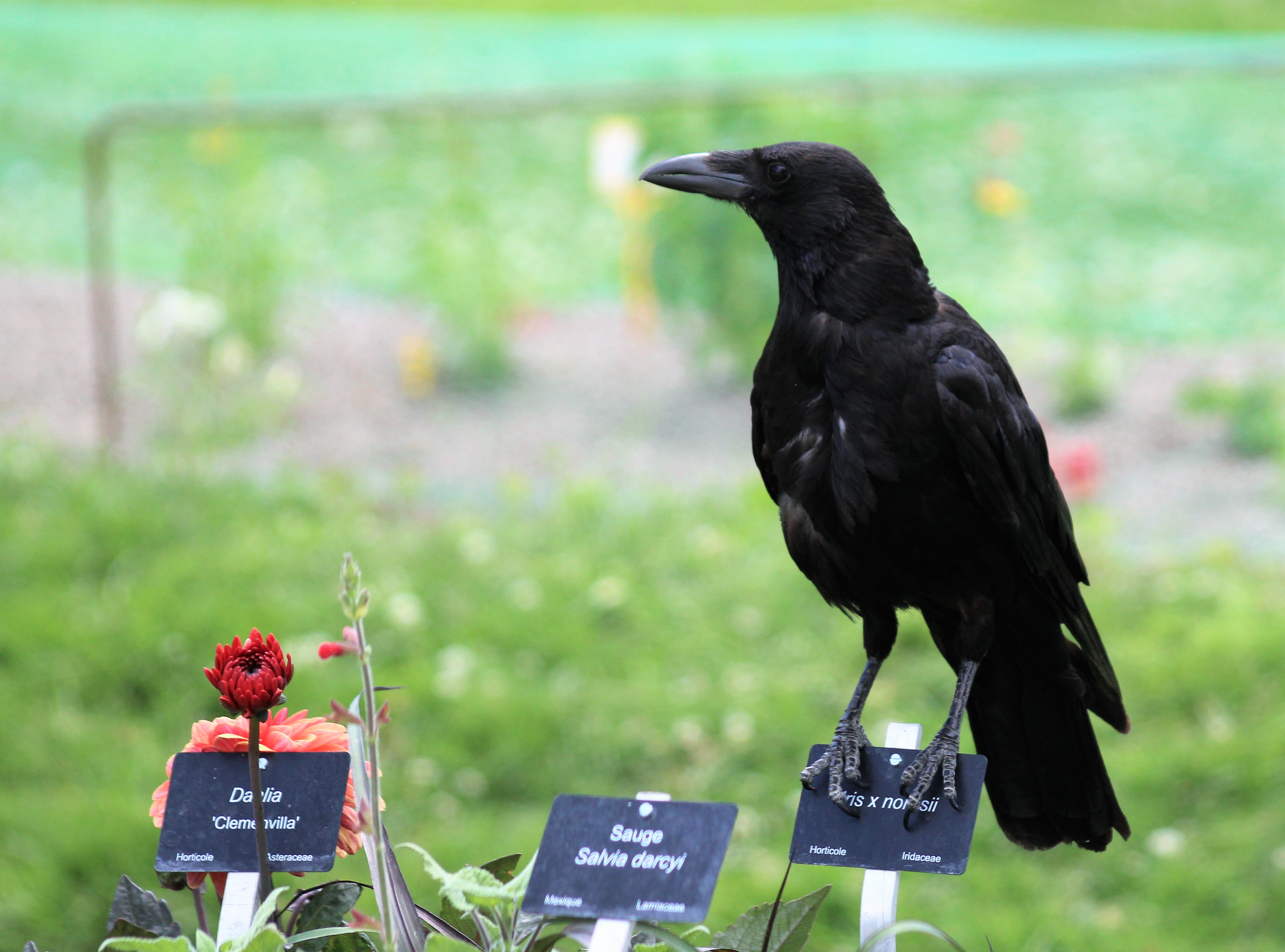
A carrion crow in the jardin des plantes on a very warm Friday, 07 July 2023.