Parc Montsouris is a large classical park in the 14th arrondissement of Paris that I have become attached to. Looking back, I realize I visit it every day. It is a couple of blocks away from the apartment where I am staying until October.
This place has concerts, nature, open fields, the feel of an arboretum, and is completely car-free. Just today, I saw kickboxing practice, tai chi, a Baudelaire recitation accompanied by classical guitar, walkers, joggers, picnickers, and a turtle eating a dead bird.
Walking this park this morning made me happy and it made me think about car-free areas, my unexpected journey to a four month stay in Paris, and urbanism.
The park is in the 2006 film “Paris, je t’aime”
In the excellent movie “Paris, je t’aime,” one vignette shows a middle-aged American woman who studied French diligently and earnestly and then traveled to Paris and applied it, looking slightly fat, clumsy, and foolish but nonetheless enjoying her experiences there. In the final scene, she sits down on a bench in Parc Montsouris and feels a surge of sadness and wistfulness mingled with appreciation for the moment she is living. Her thoughts are divided between the dog she left back in the states, the man who is missing from her life, and the amazing foreign city she is visiting. She feels a phantom longing but also deep peace.
Mixed urbanism news from Seattle
Back in Seattle, I found that the hardworking volunteers of Beacon Hill Safe Streets went viral with a video of a pickup truck speeding over a newly installed speed bump in my neighborhood.
Local news coverage was bemused. To their great credit, reporters investigated. They asked SDOT to react and whether the speed bump was really working as intended. SDOT sent out a crew of nincompoops who confirmed that everything is OK, nothing to see here. SDOT did promise to install more signage about the speed bump, which is good, I guess.
They showed how these speed bumps are almost worse than nothing, in the sense that a cyclist or driver of a human-scale car will have to slow down, while the driver of a megatruck or SUV can fly over the speed bump without feeling a thing.
I hate to denigrate SDOT, as these hapless, easily cowed city employees are our only hope for some urbanist projects. They don’t intend to cause deaths, pollution, obesity, hostile urban landscapes, and climate destruction. But they are in the way, in the same way as state DOTs are in the way with their endless highway widening and megaprojects. We need a cultural change around cars. Then, these institutions will change. Then, our cities will change.
This reminded me of how many things need to change to create safe, livable cities that are not polluted and are not excessively contributing to global warming. 15th Ave is full of abundant, unlimited free parking. The street is wide and has excessive vehicle lanes. There is little enforcement in the form of speed traps or automated ticketing. And the nearby streets such as Rainier Avenue are even worse.
I applaud the efforts of neighborhood safety groups and urbanists in American cities. Even in a supposedly forward thinking place like Seattle, they have their work cut out for them.
Mixed urbanism news from Paris
Good news on emission zones: Paris, like London, will further restrict the most polluting diesel vehicles. I wish this had happened twenty years ago. I am continually shocked by the plumes of diesel exhaust on Paris streets. The highly polluting mopeds, with their noise and wasteful engines, are also an affront to human and environmental health. It is hard to believe that a modern city tolerates this kind of noise and pollution just so people can get their Deliveroo quickly and save a few bucks on fuel. Read the linked NYT article for how London drivers howl that PEOPLE WILL DIE if they have to pay a fee to drive their shitty old trucks everywhere in the city.
Yet vehicle traffic is down 40% in many areas of Paris compared to 12 years ago. Cyclists and walkers have replaced this vehicle traffic, and no societal collapse occurred. I would hate to see what it was like back then when there were even more vehicles. I love how I can get anywhere in this city on my bike or on foot. I feel much safer that in Seattle, where cars are even more dominant and drivers don’t expect to see anyone walking. And I wish progress would come faster.
Global urbanism message
In other words, the war on cars is winning scattered victories, each at a high cost, and experiencing many setbacks. But there is progress. Scattered victories arise from working hard and upholding the values of human and environmental health (and shaming megatruck drivers on Twitter).
“Long is the way, And hard, that out of Hell leads up to Light.” (Milton)
About the photo
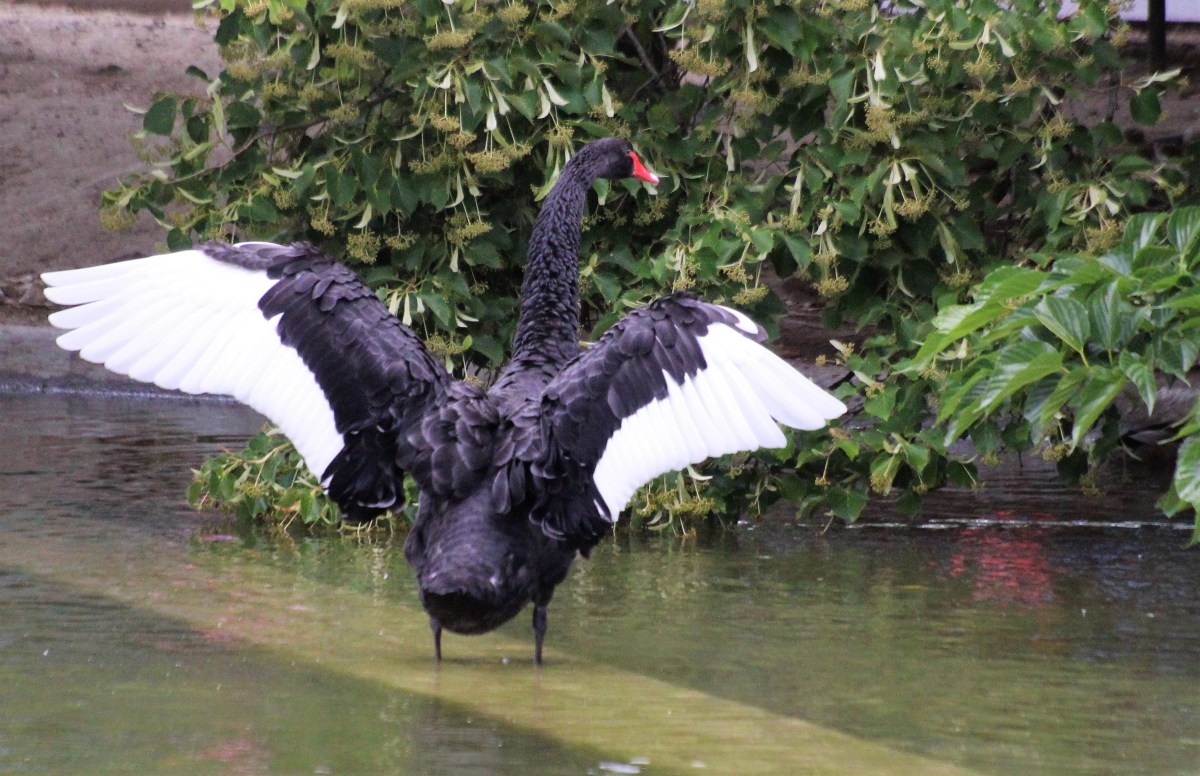
The black swan (cygne noir) that lives on the pond in Parc Montsouris. A black swan represents the idea of an inconceivable event that was previously dismissed, suddenly becoming reality.
 pseudoisaac