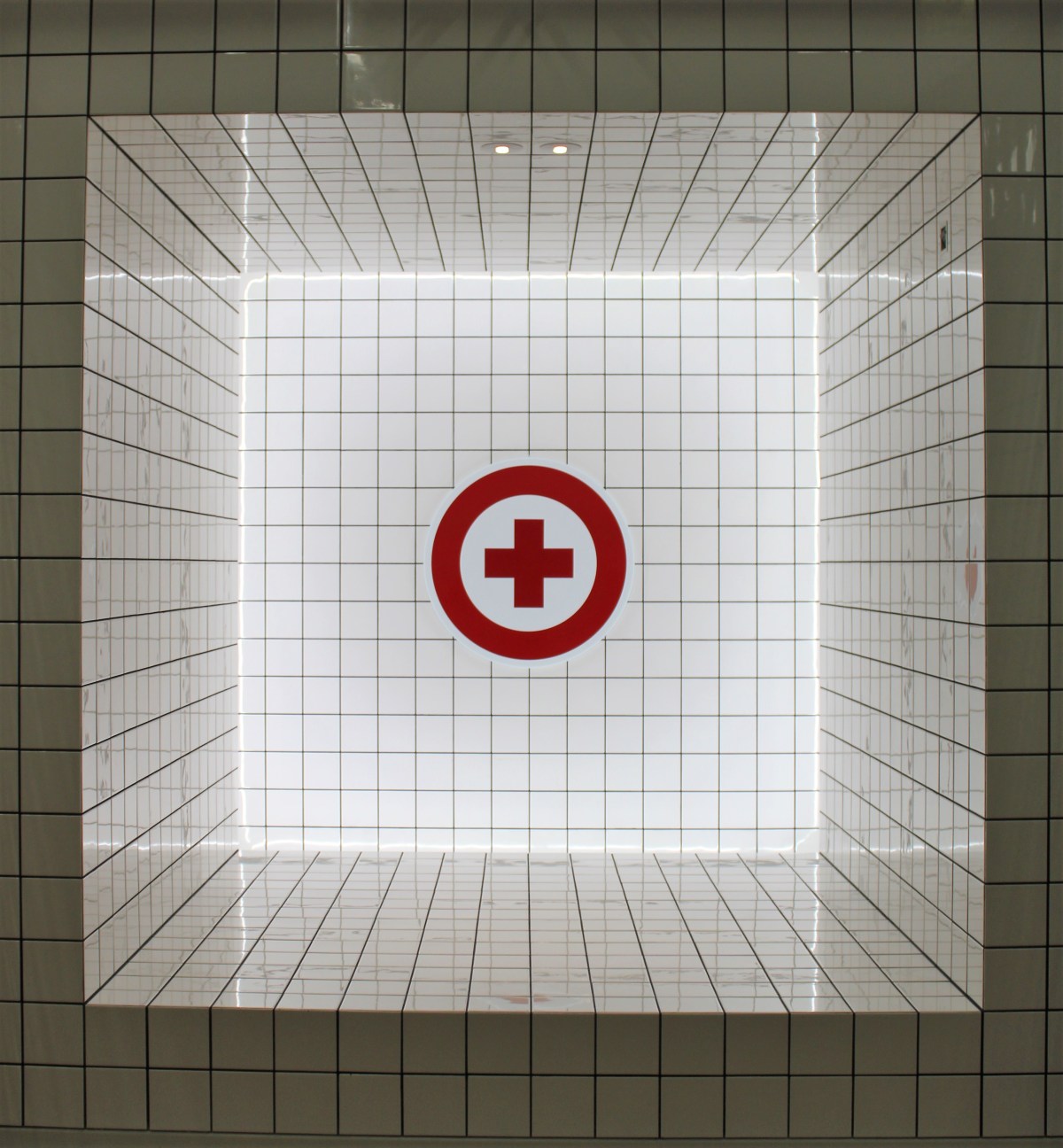
A visit to the modern art collection at the Centre Pompidou

I visited the modern art museum located centrally in Paris and absorbed it all. I loved the stunning views of the city, and after spending two months in town, I’ve now visited most of the major sites you can point out from there.

I enjoyed the multidisciplinary approach to art at the Centre Pompidou. In the past, I took an art history course where the working definition of art seemed to only include visual arts such as painting, with scant mention of other forms. The Centre Pompidou houses a wide variety of activities and forms.

Lastly, I was very pleased to discover a beautiful, modern library that appears to surpass the Bibliothèque Nationale de France (Mitterrand site) in terms of light, airiness, newness and accessibility of materials, and aesthetics. While I appreciate the BNF library, its interior and exterior design have significant drawbacks, and it feels unusually dim for a place where people are trying to read and work.

Two Cultural Observations

Driver psychology is the same everywhere.

A motorcyclist waved me through an intersection when he had the green light, saying, “Allez, allez quand même.” I’ve found that driver psychology is consistent everywhere (it’s inherently antisocial), but in Paris, drivers simply have fewer opportunities to harm pedestrians and cyclists or be involved in extremely destructive crashes. In the US, higher speeds, larger and taller vehicles, aggressive blunt vehicle design, wider roads, more distractions, tinted windows, fewer people outside of cars, and overall anger, aggression, disregard, and rage contribute to Americans experiencing significantly higher rates of traffic-related fatalities compared to Europeans.

“Du coup”

I’ve noticed that casual conversations in French are peppered with the phrase “du coup,” which is frequently used to express causal relationships, consequences, and continuity, much like “so” and “well.” Yet, this phrase never came up in any of my formal studies, to my recollection.

Film

Film screening at the Louvre

I watched a classic Western called “Once Upon a Time in the West” projected in a courtyard of the Louvre. Before the film began, there was music and drinks. I appreciated the haunting harmonica tune that signaled impending doom and vengeance. I watched closely for visual influences on Kill Bill and other contemporary films, and it seemed there were many. The only downside was that this long movie started late, at close to 11 pm.

I LOVE REESE WITHERSPOON

About a year ago, I was captivated by Witherspoon’s portrayal of a goody-good overachiever in “Election.” Last week, I finally watched “Freeway,” where she depicted an angry, violent high school delinquent seeking revenge on a psychopath portrayed by Kiefer Sutherland. I was astonished by how she could transition between these two roles so easily, as if changing a mask. “Freeway” had other shocking and twisted moments, like the scene with Brooke Shields after her character’s suicide, and other instances of dark humor.

More Childfree Affirmations

Almost daily, I observe events that reinforce my decision never to have children. (Although I am not sure I actively decided, as I’ve been opposed to it for as long as I can remember, though I have made choices to reinforce my decision and make conception nearly impossible.)

One recent event involved a colleague totaling his new car while rushing to buy breakfast cereal for his child, who refused anything else. Another event concerned a relative who had to decline valuable training involving travel due to being responsible for three little kids. Lastly, a friend is embroiled in a custody battle over two kids, with both him and the other parent weaponizing the children in their legal dispute.

The news media also continually affirms that I made the right choice. In my permanent home of Seattle, one could earn $70,000 a year and see $40,000 of that go to childcare costs for two kids, as reported recently. It’s simply a financial disaster. Of course, even if it were free, I still wouldn’t choose to have children. Seriously, what are the arguments for having children? I am having trouble remembering any.

Blast of Cold Air and Rain

Yesterday, as I left my apartment in the morning, I was hit by a blast of winter-like cold. I felt impotently angry at conditions and bitterly cold but I managed to jog and warm up. It doesn’t feel like August in Paris; it feels more like November in Seattle. I want sunny days again.

Buddenbrooks Passage on Detachment

“Thomas, however, had enough imagination to embrace the old maxim that all human endeavor is merely symbolic. He dedicated all his aspirations, abilities, enthusiasm, and active energy both to this small community, where the name Buddenbrook placed him in the forefront, and to that name and the family business he had inherited. Indeed, he had enough imagination to take his ambition of achieving greatness and power within this limited sphere seriously and simultaneously to smile at himself for his ambition.”

I’ve been pondering detachment and its potential to veer into aloofness. This passage suggests living in alignment with one’s values while acknowledging that external circumstances are beyond one’s control. These ideas intrigue me due to my desire for a balanced and contented life. The maxim proposing that all human endeavor is symbolic, couched in Mann’s descriptive prose, presents an interesting perspective on this concept. I like how the ideas in Buddenbrooks and The Magic Mountain sneak up on you, coming in reflective passages that punctuate long descriptive passages and dialogue, so that they are not overly didactic and you can almost miss them.

About the photo

An installation at the Centre Pompidou. This piece was large enough to climb into and extended back very deep. It instantly evokes personal memories of medical settings, which I’m sure every person has, and also made me think of the blood-on-white-tile visuals in some horror films.
Choice Reddit commentary on a car-centric article on e-bikes

It’s been a very rainy and cool week here in Paris, which has led me to spend more time indoors reading articles and lounging about while enjoying my freedom. A piece that caught my attention was one that fearmongered about e-bikes.

As someone who bikes constantly for utility, commuting and fun, I’m open to acknowledging that there may be new hazards with e-bikes. Some e-bike users could learn better control and trail etiquette, and perhaps be gentler on the throttle. However, this article seemed to adopt a car-centric perspective, contributing to the unwarranted fear of new technology while sidestepping the real issues of our car-dominated cities.

r/fuckcars reliably replies with zingers

In my quest to reinforce my already-held viewpoint, I visited a subreddit called r/fuckcars, where I discovered some choice commentary from this radicalized but often correct online community:

– “Every single accident mentioned in this article involved a car, but ebikes are the problem. Fuck off, NYT.”

– “‘Clipped by a Nissan’ and ‘thrown violently’: something about these two separate and apparently unrelated incidents doesn’t sound right to me.”

– “Pedestrian gets hit by a car? Shoe accident.”

– “Teenagers driving cars: good. Teenagers riding e-bikes: bad.”

– “Good thing teenagers don’t ever die while driving! Get those kids in a car!!!”

– “The problem is clearly that this kid was forced onto a street with a 55 mph speed limit with a bicycle. Bike paths would save lives. Lowering speed limits would save lives—but that’s inconvenient, so let’s just ban e-bikes. SMH.”

– “When a car collides and someone dies, it’s a tragedy. When a bike collides and someone dies, it’s the bike’s fault, and we should ban them.”

– “They literally say the e-bike only goes 20 mph, a speed easily reachable on a regular bike, and that the person’s route took them onto a 55mph road. E-bike had nothing to do with the accident, only bad drivers.”

– “When the street is a war, the victors write history.”

– “People criticizing the use of E-bikes by teenagers will go on to see it as a perfectly normal thing for a teenager to be driving at 16.”

Giving considered, non-mob feedback directly is a good idea

One commenter expressed their thoughts through the New York Times feedback portal, emphasizing the importance of safe streets for the climate, livability, and saving lives. This is the correct response, replying rationally, avoiding acting like a mob, and encouraging the reporter to look into the real issues of unsafe street design, massive bluntly designed vehicles, lax regulation, abundant distractions, impaired driving, repeat offenders, enraged and aggressive drivers, inadequate licensing requirements, victim blaming, and excessive speed.

Overall, the article used unclear language to avoid acknowledging that drivers and unsafe road design were responsible for these accidents. A person’s skull doesn’t turn to mush without a serious impact, and in these cases, the impact was caused by a car. I was especially annoyed at this glossing over because I bookmark every article in my city that involves a hit-and-run killing, or multiple fatalities. Recently in Seattle, a driver killed 6 people and the incident received very little coverage when you consider the death toll. A hit and run killing is one of the most egregious crimes, and these and multiple-fatality car collisions occur regularly without much reaction. Nobody seems to question why multiple lives and bodies are obliterated and scant changes are made to the roadway, the car design regulations, or the laws.

“A Deadly Wandering”

Interestingly, the same reporter authored an excellent book on attention and driving with cell phones, exploring how these factors contribute to numerous fatalities on the roads. The book is excellent and delves into the science of attention. It came at a time when phones were less advanced and distracting than now. Of course, it also focused on the dangers of a new technology. But it was about how this technology made driving (already a source of relentless carnage in the US), even more deadly.

Confirmation bias

Reading these Reddit comments, which ranged from highly rational to false, I noticed my own inclination to seek out voices that align with my views online. Another urbanist perspective that came up on this subreddit with me was from an individual advocating for leaving North America if you desire a walkable community. This solution is extreme. And while the NYT is far from a shitrag, it’s obvious that US newspapers heavily rely on car advertisers, which influences their coverage.

My views on car-centric communities date back a long time, and I learned about the “culture of fear” two decades ago from an excellent book called “Culture of Fear” by Glassner. This concept explains how we tend to magnify minor new threats while neglecting more significant and pressing issues, which we tire of because they demand lots of ongoing work and complex solutions. It would be easy to ban e-bikes. But to reduce wide-scale vehicle carnage is difficult.

Other urbanist resources

Some other less strident urbanist resources that I visit regularly, are “The Urbanist” blog from my city of Seattle, “Streets.mn” blog from my hometown of Minneapolis, and YouTube channels like “Citynerd” and “Not Just Bikes,” and the podcast “The War on Cars.” These last three benefit greatly from chat bots that can condense the message and cut out fluff. Reddit’s r/fuckcars provides the striking visuals that show how far we have to go to get safe streets.

The rainy weather in Paris

I appreciate the changing weather in Paris this week. Although the hot weather was pleasant (for me), it left the city dusty and dry. Now, the rain is providing a thorough soak and the gray look that reminds me of rainy impressionist paintings. During this cool and autumnal week, I plan to enjoy doing the crossword puzzle at Willy Shakes over a cappucino. I will finish Buddenbrooks. I’ll continue binge-summarizing videos using a Firefox extension that converts any YouTube video into an article, saving me countless minutes. Additionally, I’ll be planning for the next two months, considering that I am halfway through my stay in Paris. Toward the end of the week, I’ll visit the Centre Pompidou museum on the first Sunday of the month, when admission is free of charge. Afterward, sunny weather will return, and I look forward to the peak of the Perseid meteor shower in August. I hope for clear skies on the night of “Paris sous les etoiles” that amateur astronomers set up their optics to share the experience of viewing the most intense meteor shower of the year in nearby Parc Montsouris.

About the photo

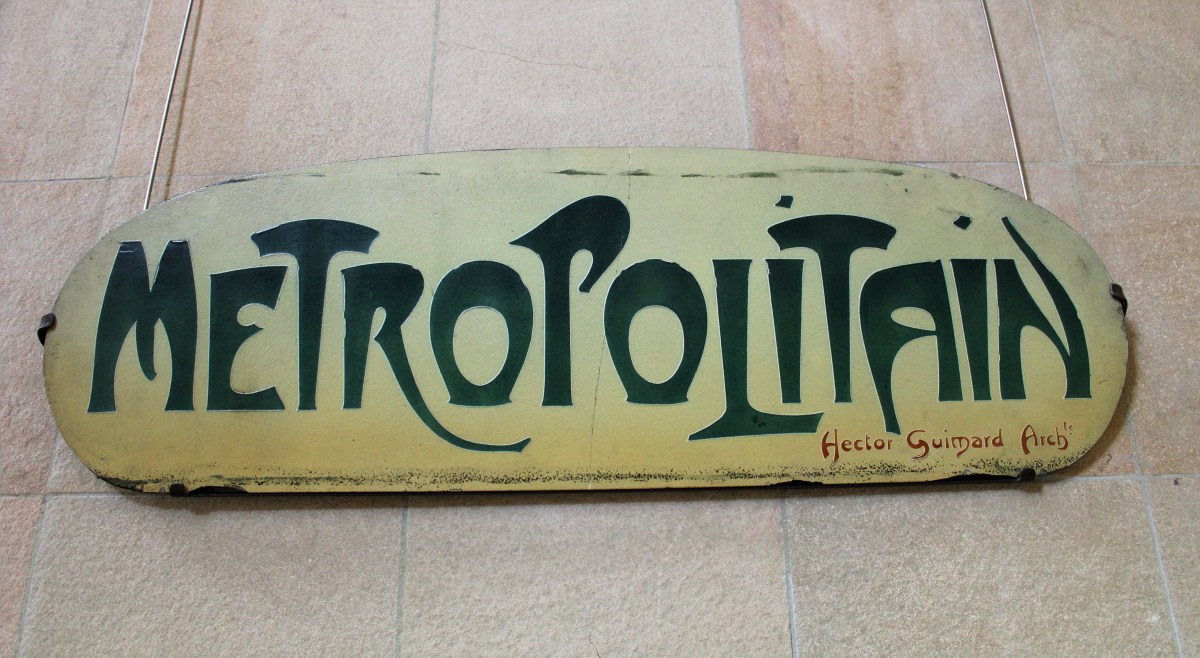
An original placard from the Paris Métro in the Musée d’Orsay. The style was retained during systemwide upgrades over the decades.