Sharing some really powerful stuff here. It reflects some of what I’ve been going through lately, with my middle parts:
Author: pseudoisaac
It is more worthy to leap
I can’t say it better than Shakespeare:
“It is more worthy to leap than to delay until you are pushed.”
Although this epithet was in the context of a hopeless ultimate battle, I find it very appropriate to my mild 20th century personal situation.
Previously, I have felt hurt and I have been in distress and malaise. I wouldn’t call it suffering out of respect for those who actually suffer, the living people who I see and read about every day. But all of it – all of this drawn-out unease, has been self-imposed, or at least exacerbated by circumstances that were self-imposed.
So I leapt.
I leapt and found a string of opportunities to exercise several faculties I treasure: curiosity, adaptiveness, initiative and adventurousness. These are faculties or skills that I treasure but have occasionally allowed to lie dormant or underutilized.
But I stopped delaying. I took out one of the sharp instruments I had honed and I cut the essential from the nonessential. I looked to the many hazy opportunities before me and selected them above the few known opportunities that were behind me.
Tomorrow I continue and I am confident my enterprises will thrive. Once again I cannot say it better: “Men at some time are masters of their fates. The fault, dear Brutus, is not in our stars but in ourselves, that we are underlings.”
I don’t plan to die like Brutus did in a wild, dire conspiracy. I have a long and happy life ahead of me. What I mean is that I will no longer accept becoming an “underling” due to my own choices or due to my own failure to choose.

Some things I dig lately
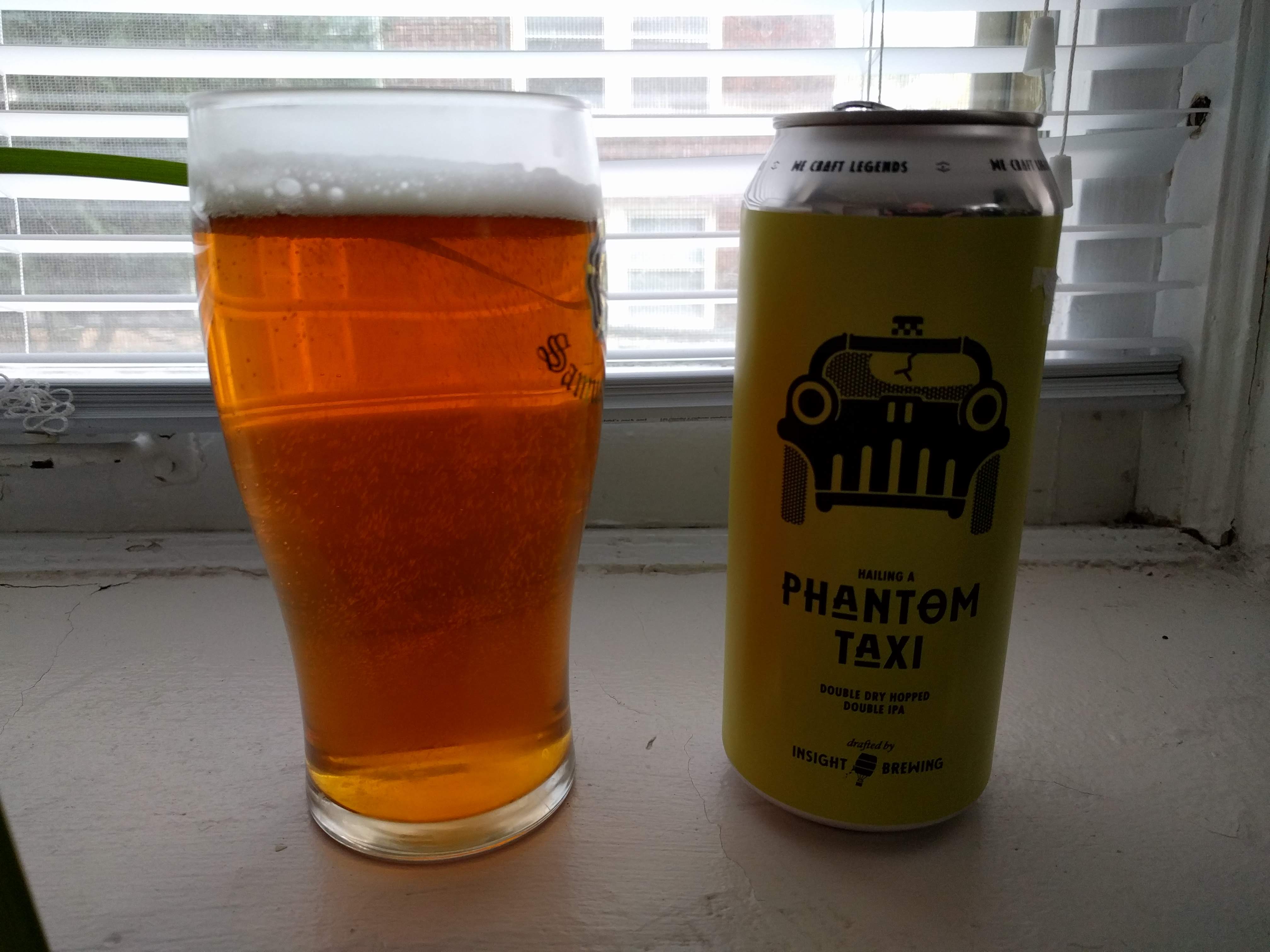
IPAs
…and all their derivatives and relatives. Insight Brewing (pictured) is a great one. Some of them go past bitter and through syrupy and back to bitter again. Always consume with some food. These are not breakfast beers. Also the label art is lovely, just lovely.
r/childfree
This subreddit (i.e. internet forum on Reddit) is a daily source of humor, commiseration and affirmation for those of us who realized we had a choice and then chose. Or, for those of us who always knew and never vacillated. Or, those of us who really struggle with pros and cons and seek advice.
There are posts with refreshing honesty. There are rants about entitled parents (mombies, daddicts, breeders, gremlins, fuck trophies, etc.). There are genuine requests for help, where you watch the original poster’s decisionmaking through the course of hours and hours of comments and responses.
A saying has it that the most important decisions in life are made between two people in bed. Although this sounds poetic, I am glad it is not strictly true. Some people come to internet forums to make the right choice. By recognizing they have a choice in the first place, and contemplating it at all, they are more likely to go childfree.
There are also plenty of humorous rants. This subreddit is strengthened by a single moderator, SailorMercure, who sets “guardrails” on the overall tone and locks down threads that have overrun them. She has created and enabled helpful wikis for people looking to get sterilized. And she has set the overall tone in a way that will enable its continued growth.
r/publicfreakout
This subreddit is for videos of people freaking out in public. The source material is inexhaustible. Sometimes my heart rate goes up when viewing these strange but recognizable encounters.
They often seem to occur in fast food restaurants. Another common site of freakouts is public roadways, of course. Basically any place where someone can perceive that a rule was violated, and that the violator needs to be punished. Then there are gangstalking videos, which are a world unto themselves.
It is a great reminder to me not to intervene except in the most dire circumstances. There are too many examples of stupid, pointless deaths out there. Some of them died because of incorrect French fry orders or for feeling disrespected. Recently my brother’s girlfriend’s stepdad confronted a jerkoff who was disturbing people in a grocery store. The man (who was a longtime criminal) stabbed him in the head. The blade pierced his brain and he died. And what was the point of it? There was no point.
The lesson is just to stay away, unless you absolutely must act to avoid immediate harm.
Simple English Wikipedia
Compare the two articles for the planet Saturn, one in English and one in simple English. The first two paragraphs of the English page give you qualifications, clauses nested within clauses, and oblique references to scientific debates.
The first two paragraphs of the simple English article, on the other hand, give you a concise summary of the planet instead of a wall of text.
This is an example of how sentences in Wikipedia articles are subject to highly motivated editors who want to introduce hairsplitting distinctions impressed on them during their university courses or careers. Readability suffers as a consequence. The simple English version helps to counteract this.
Gattaca
This movie is a masterpiece. I have been watching and rewatching. I looked for the novel upon which it is based, but there is no novel. It is just brilliant screenwriting, where the filmmakers created a whole world of genetic discrimination and determinism, without sensationalizing.
When I saw this around its release in 1997 I was about 11 years old, so much of it escaped me. When I saw it again in high school biology class, I again overlooked it as yesterday’s pop culture.
Revisiting it, I see it for what it is. The dialogue and music are great. The visuals are incredible. Uma Thurman and Ethan Hawke are fantastic. In this fall season of long walks, I walk with ideas and vignettes from the film reverberating in my head.
Podcasts
Geeks without God (a Minnesota-based one), ChooseFI, the Art of Manliness, Science Magazine, Mad FIentist, Jocko Podcast, RFI en français facile, The Skeptic’s Guide to the Universe, Waking Up With Sam Harris, etc.
Geeks Without God did a great episode recently where they explained why they would not be performing at the Minnesota Renaissance Festival anymore. Anyone who enjoys the festival should check out this podcast before visiting next year. Don’t cancel your visit – just listen to the podcast and consider it before visiting, visiting with a deliberate plan, or not visiting.
RFI has continued coverage of the ebola outbreak in Democratic Republic of Congo. Jocko had a good episode series on US Marine Chesty Puller and his son. Mad FIentist had a good status update on two years of financial independence/early retirement.
The options are inexhaustible. And they are free of charge. You just need to disregard the dumb mattress, health supplement and meal prep service commercials. You can always skip them. Always listen at 1.2 X speed, unless you are listening in another language.
Scarves
They help to stanch the flow of warm air escaping from your torso through your neck region. Don’t underestimate the utility of a scarf or shemag.
Sibley Historic House
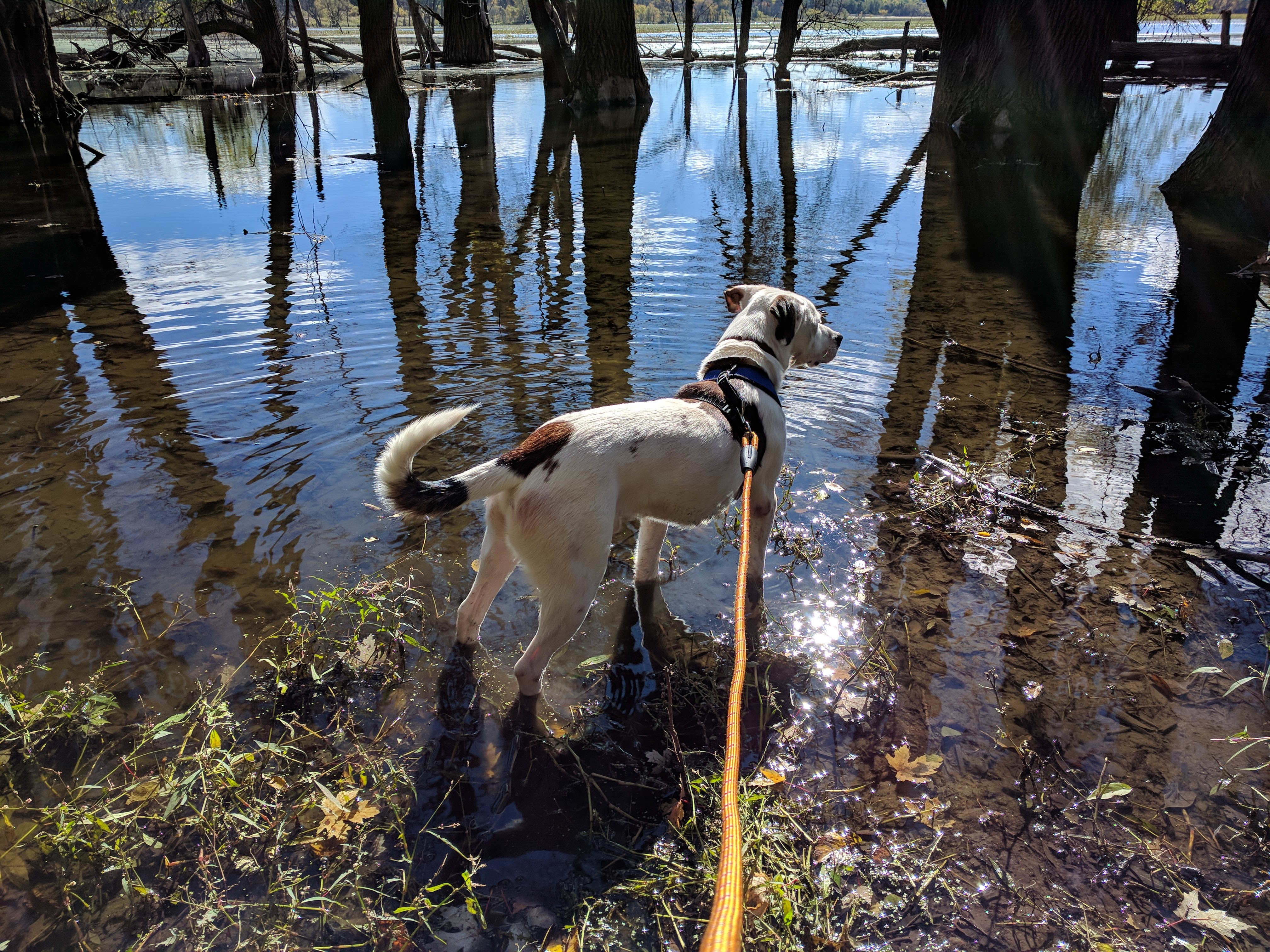
Recently I borrowed a dog from a family member for a hike. I drove him to the Sibley Historic House and we hiked westward along the south side of the Minnesota River. The dog was thrilled. He sniffed out and investigated a hundred different things, eagerly bounding forward into the weeds, grass, mud and water. It’s great to have a dog along. I feel pangs when I see happy dogs running along the trails with their humans. I want a dog, or a few rats. Also if I fell in a grotto or got stabbed for wandering too close to a hobo camp, maybe the dog could run for help.
On the trails a couple of yellow-rumped warblers darted about very close to us. Perhaps they were so preoccupied with catching bugs during their migration that they did not care about the dog, or about me. Other woodland birds seem much more wary. I suppose the greatest threat for a migrating warbler is from above in the form of resident hawks.
The rest of the hike was fantastic. The temperature shot up in the midday sun from 30 F to almost 50 F. I got a little warm under my scarf and other layers. I was glad I had brought my boots because there was still flooding on the trail from the week or two of rain and clouds. The trails were covered with yellow ash leaves just like the streets and sidewalks. The silver maples and eastern cottonwoods were also turning. I love the trees. I love the trails. I love the wildlife. This hike was so much better than a drab one from a week ago at Elm Creek Park Reserve. I don’t know why it seemed so ugly. It just had no charm at all, even though it was so nice to hike during the summer. Today was much better. I don’t know why. Perhaps having the dog along was the main difference.
Yet another Hawk Ridge trip
I visited Hawk Ridge again. I drove up to Duluth Saturday morning and arrived at the ridge by 1045.
There was occasional sun but it was mostly cloudy. The winds blew in an unfavorable direction so the migrants were few. I did see sharp-shinned hawks, bald eagles, an osprey, and a broad-winged hawk. There were also turkey vultures, northern flickers, cedar waxwings, blue jays, white-throated sparrows, and chickadees.
The Ridge has a very unfortunate design. This Saturday was Hawk Weekend, which is a publicized event that draws crowds. Despite the crowds, the road cutting through the preserve remains open to vehicle traffic. As a result, drivers speed through the area constantly. Instead of looking up and around for birds, visitors are on guard constantly for careless, speeding drivers. There is one traffic control employee or volunteer in dayglo overalls attempting to calm the incoming vehicles and warn visitors of their approach. But the feeling for visitors is that you are camped on the side of a road instead of visiting a nature preserve. It is unpleasant. Why can’t they just close the road to vehicle traffic on weekends during the hawk migration? The road is gravel and leads only to a few residences.
I drove to Snowflake campground and set up my tent. I struggled to get a fire going. I think the wood was damp. It was from an uncovered pile outside the Holiday gas station. I finally got it going and read for a bit before going to bed.
I slept okay. There were some college-age individuals in a nearby campsite who screamed and shouted a lot instead of just talking at a normal level. There was very light intermittent drizzle in the late evening. I think this continued overnight. As a result, apparently, a mom and her daughter slept in the camp complex’s building, just feet from the door that you open to get to the water fountain and the bathroom. Of course, when i went in there to get water and wash my hands at around 2100 the mother looked absolutely terrified of me when she looked up from her blue glowing phone screen and realized i was standing there, trying to get by. She then said, “sorry.” i am tired of tiptoeing around frightened strangers, trying not to scare them further, trying to reassure them that no one is attacking or judging them. When someone says, "Sorry," and all you have done is walk by, how exactly are you supposed to respond? You have done and said nothing reproachful. Do you just ignore them? Are they trying to unbalance you, to make you feel you are intimidating, disruptive, and unwelcome? Is it their way of attacking in a passive way? Why do strangers say sorry when you walk by? Why do strangers apologize?
I was warm and comfortable the whole night. I could go 30 F colder and still be fine. I think the lowest temperature was 48 F. it was damp, but even so it did not feel cold at any time. I am more than ready for some October excursions.
For my next trip i will use a hammock. This will reduce pack weight, avoid the problem of my heavy head resting on an uncomfortable ball of jacket/clothing (with hard metal zippers and clasps), and will keep me off the ground away from slugs and earthworms (a few of which i had to pluck from my gear when I returned).
I got up at 0800, packed up my stuff, and drove home. I think I will skip Duluth next year. There are so many other great places to visit. Even Hawk Ridge has compelling rivals when it comes to birding action. There are many birding hotspots to check out instead of returning here. I still have not visited the Sax-Zim bog. I also have not visited the Agassiz National Wildlife Refuge. I also need to check out the Raptor Center at the University of Minnesota.

Why are so many people in my family diseased, dead or dying ?
My aunt: recently deceased due to cancer. She had suffered from cancer for many years, in between remission and relapse. That was in addition to many painful spine surgeries during her last decade.
My other aunt also has cancer. She had just retired when she found it had come back. The travel plans she and her husband had made are now on hold.
My grandma is in a locked memory care unit. Her short-term memory is completely shot. She is almost 100 years old. I asked her once whether she felt she was ready to die, and she said yes. That was 8 years ago.
My uncle died in his early 50s in a diabetic coma after decades of self-abuse with alcohol.
And then there is my mom. In another cosmic joke, she developed dementia just as she entered retirement in her early 60s. Now she is between the middle and the end of the long decline. At a recent family meeting my sister teared up when she told us about how she thought often of how Mom would have been now, had she not developed Alzheimer’s. How her garden would have looked, how she would have played with her grandchildren, how she would have carried on her life’s work as a clinical social worker into retirement. Now, her world is small and dim and getting more so.
I suppose these are the good problems to have, diseases of longevity and affluence. Better to have a stroke at 60 than to have tuberculosis at 20, for example. Yet the young were not exempt. My siblings suffered when they were young, too, from mental illness that pressed hard on us their nearest kindred.
It still sucks though. It’s a reminder that disease is rampant in the world.
This is my grim and joyless post for the month. Future ones will be brighter, including one for an upcoming Hawk Ridge birding trip.

Decrepit industrial building
I recently checked out an interesting building a mile from where I live.
Previous explorers had very helpfully pried open the particle board that covered a broken window. I found two or three decent works of graffiti, some great views of the Mississippi River, and a giant 40-ton metal hook meant for moving things between levels.
I looked around extensively, but I still have no idea what this site was used for. To me it was just a generic decrepit industrial site.
I appreciated how some scenes were preserved. Some old sinks, counter-tops and work tools looked like they had been abandoned hastily. Other parts of the building looked quite weathered, scattered and irreparable.
All abandoned buildings like this have dark parts near their center where cool, musty air flows out constantly from a gap of some kind. I found a few openings like this but I did not have a flashlight nor the gear I would insist upon to proceed safely.
A place like this is a great venue for fantasizing about post-apocalyptic scenarios. I think I’ll return and read a zombie comic.

An interesting example about the way excess possessions tend to accumulate
I bought a French press recently on Amazon. I did it to try to save money on my frequent trips to the coffee shop.
I realized that once I bought it, I needed a kettle to boil water. I considered a $15 electric kettle but since I have few outlets and counter space I went for a stovetop one from the thrift store.
Since the kettle had corrosion and grime from stranger’s household I had to buy steel wool to clean the kettle out thoroughly.
I also had to buy beans, of course. I like my coffee fresh but I opted not to buy a grinder, even though this is important for freshness. Because of the outlet and counter space scarcity, I again went without. I decided to just have the barista grind it for me.
I had to pick up a standard-size plastic spoon for measuring the grounds out instead of just dumping them in the press haphazardly.
So, things have a way off accumulating. When they accumulate, they make your living space feel smaller. They crowd you in and seem to writhe at you. Each excess item seems to have a restless spirit that is imprisoned until you finally acknowledge that it is junk and throw it away.
I am glad I no longer produce as much paper and plastic waste from cafe visits (at the cafes that don’t give you the option). I also spend less. But now my walks to Quixotic, Starbucks, Fireroast, Peace Coffee and others are less frequent. I have more grounds to clean up and flush from the sink. I have a kettle and a French press to wash. (Coffee is an surprisingly oily substance.) And although I have a consistent, quality drink, I have less variety.
A couple of concepts are involved here. One is the slight tension between frugality and minimalism. I save money by making my own coffee, even though I own more things. This is frugal. Visiting the cafe instead would allow me to own fewer things, but would result in spending more money. This would be a minimalist approach. I should point out that the minimalist approach outsources some of the waste in the form of those paper cups and plastic lids. The waste is still there, but you keep it from entering your living space.
Another concept is the missing R in “Reduce, Reuse and Recycle.” A science professor once conveyed to me very vividly how the the most important R, Refuse, is missing from this slogan. If you can, why not refuse waste in the first place? Fortunately the waste hierarchy is now ingrained in regulations and industry, unlike when that slogan emerged.
I found this French press substitution to be worthwhile. Now I’m looking for other things to refuse.

Saying goodbye to Aunt Joanne
Just a week ago an absurdly large amount of snow fell in Minneapolis. All night Friday, all day Saturday, and all day Sunday the wet slop accumulated, causing hassle and physical inactivity and at least one death. The rate of snowfall kept almost everyone indoors for the entire weekend.
The storm was a blow to the psyche because of the time of year. As if to mirror events in the atmosphere, my aunt had died just a few days prior. She had entered hospice two weeks before that after doctors confirmed aggressive ovarian cancer. Having undergone many spine surgeries, she was aware of the rigors and uncertainties that medical treatment poses for an 82 year old. She weighed her options and decided to go with comfort care, knowing that this meant declining all attempts to treat the cancer.
I think she made the right choice. As a result my family had a chance to say goodbye. As with my great aunt Betty’s death in 2006, I abided by a “good death,” or as close as you can get to one. My uncle updated Joanne’s CaringBridge journal with compassionate, detailed statuses and reflections. I learned about their early relationship, read some vignettes from their marriage, and heard the clear voice of my uncle, who I normally only chitchat with at family gatherings. It’s amazing how you see deeper into one person through their relationship with another.
Once hospice started, Joanne’s two children, grandchildren, husband, and hospice nurse made her comfortable and provided a few easements and delights. She received a parade of visitors in her downtown condo overlooking Washington Avenue in Minneapolis. The room was filled with flowers, many of which were yellow, which was her favorite color. She got her hair cut and had the walls covered with art from her two small grandchildren. Two of those paintings wound up in the funeral pamphlet. On her last-ever car ride, she drove by the church where her funeral service would be, and remarked that “death could be glorious.”
As the days went on the mix of pain medications was adjusted, but the general trend was to up the dose. This meant more sleepiness and shorter visits. We learned that pain meds can be delivered by courier, on demand from the hospital. As this continued, Joanne became weaker. But she still spent evenings reading the many cards and online comments that came in.
Although she was warned that hospice could continue for weeks or months, Joanne died only 19 days in. It happened in the morning, the day after I visited to say goodbye. I am so glad I got in there beforehand. When I saw her she was lucid and as sharp as ever but extremely sleepy. She apologized for nodding off. She told me about her system for sending cards for birthdays and holidays. I knew all along she had a system! She told me she outsourced the stamping and mailing part to her husband. She sent 30-40 cards per month to her many loved ones and contacts throughout the world.
She and I agreed she didn’t want to die in a hospital intensive care unit, with needles and catheters coming out of her and strangers pounding on her chest at the end. I recalled Betty’s courage and I reflected on the several strong matriarchs in my family. We remarked on the vile weather. I assured her she was not missing much by being indoors.
My last card to Joanne mentioned my favorite hunting dog of theirs, Bjorn. I wrote about how she helped me move in at the beginning of sophomore year of college. How she prepared pheasant for us and warned us not to bite down on a pellet from the lead shot. I mentioned the several interesting people she had introduced me to. Many of her associates from around the world visited them.
My older sister lived with Joanne during my sister’s pregnancy. During this time Joanne was commuting to South Dakota for her job as a director of a regional nonprofit. Even in her 60s and 70s she was inexhaustible. She had three motors humming constantly: one for family, one for career/business and one for her friends and contacts. I find this type of person to be exhausting. I wonder if my uncle, a quiet soul, ever felt the same. But people from their generation didn’t divorce like we do now. They simply patched it up and made it work.
My sister once recounted a vignette from that time: Joanne was in the shower. The phone rang. Instead of ignoring it or calling back, she jumped out of the shower and bounded down the hall naked in order to answer it in time. Joanne was not the type to let life happen to her. Nor to just roll over and die.
The funeral service was in a church. It was very Lutheran, which is what Joanne wanted. She reveled in Norwegian and Lutheran culture. Her husband is the same way, running a hobby farm in South Dakota. He told me once that if I wanted to understand my ancestors, I should read “Giants in the Earth” by Ole Edvart Rølvaag. Joanne was born in Minneapolis but had deep appreciation for her not-so-distant Norwegian immigrant roots.
I saw her in her coffin one last time. Dead for a week and a half, her face looked too rounded and the flesh was failing against gravity. The skin had minute superficial wrinkles despite whatever preservative fluid the mortician had introduced underneath. At visitations like this, I acknowledge the decedent and then move along because I want to preserve the living face in my recollection. My uncle from a few years back was too yellowish and dehydrated. My great aunt’s hair was too done up and her face was too painted with unnatural makeup.
After seeing her I skipped the lines to greet my uncle and Joanne’s two children. There were dozens of people lined up to greet them and offer condolences. My other sister and I agreed that kind of thing is exhausting for the immediate bereaved: you relive the emotions one after the other after the other, with some people approaching you in tears, some more cheerily. All of it unpredictable, repetitive, and exhausting, as they search your features in an effort to be appropriate while displaying and concealing their own mix of emotions.
The service was fine. The impressive part was the reading written by her husband and the glorious organ music that she had selected for the end. I wish there had been more of that. I helped carry the coffin to the hearse. Feeling its great weight was quite welcome. Death is not always a light thing that you shuffle like a pamphlet or arrange like cut flowers. It was good to lift at the end of the coffin and to shove it forcefully onto the hard metal railings of the hearse.
I skipped the lunch in the church basement. Later the extended family gathered at Joanne’s son (my cousin) and daughter-in-law’s house for a more private visiting and talking. We mostly just caught up with each other’s lives and watched the antics of the children. I reflected on how my other aunt was becoming more and more frail but without a diagnosis of any kind. My grandma, who was too senile and frail to attend, is stable but almost 100 years old. My mom is in her 70s with Alzheimer’s dementia and requires benzodiazepines to get through long events like this.
After a few hours, my uncle was the first to leave this gathering. I watched him walk out to his car, to return home alone after more than 50 years marriage. It is true that a person’s death is more the affair of the living than of the dying one.
I don’t know where to go from here. With the thing done, the cards to my uncle will slow to a trickle. The weather has improved. We reached 60 F and sunny on Saturday. Today it is 70 F. This Saturday is Joanne’s burial outside a tiny town in South Dakota. All there is now is to take care of each other. To be there for the next death with no regrets about how we treated each other. To uphold a piece of Joanne’s tireless love, mentorship and affirmation. And to exult in the season of rebirth for the sake of one who no longer can.
Recommended Book: The Once and Future Liberal
I picked this book up after hearing an interview with the author (Mark Lilla) on Sam Harris’ podcast.
It is a very short read. I would recommend it to anyone who, like me, is still confused about Donald Trump’s win, and has deep misgivings about how divisive identity politics have taken center stage. In fact, the author is not the first to see a connection between the election and the identity politics trend.
I have struggled to define my own personal set of coherent political principles among all the noise. I look at my own side and it seems to be the source of anti-vaccine hysterics, irrational GMO bans, endless online hectoring and moralizing, and inconsistent views on consent, religion, immigration, local development and other issues.
I look at the other side and see it as even more incoherent.
I find clear voices here and there in certain blogs, podcasts and books, but they don’t seem to have a message that can fit on a bumper sticker or in a Tweet. (The Flying Spaghetti Monster will not change the mind of a religionist.)
This book does not reconcile any of this. It is just a short reflection on what got us here, to a Trump presidency.
Below are a few passages I highlighted:
“As soon as you cast an issue exclusively in terms of identity you invite your adversary to do the same.”
“That one now hears the word woke everywhere is a giveaway that spiritual conversion, not political agreement, is the demand. Relentless speech surveillance, the protection of virgin ears, the inflation of venial sins into mortal ones, the banning of preachers of unclean ideas—all these campus identity follies have their precedents in American revivalist religion.”
“Surges of fevered fanaticism come over us, all sense of proportion is lost, and everything seems of an unbearable moral urgency.”
“What replaces argument, then, is taboo.”
“And it turns the encounter into a power relation: the winner of the argument will be whoever has invoked the morally superior identity and expressed the most outrage at being questioned.”
“In these courses she also discovers a surprising and heartening fact: that although she may come from a comfortable, middle-class background, her identity confers on her the status of one of history’s victims.”
“This is a classic ploy familiar to revolutionary leaders throughout history: the failure of the revolution proves the need to radicalize it.”
“A whole scholastic vocabulary has been developed to express these notions: fluidity, hybridity, intersectionality, performativity, transgressivity, and more. Anyone familiar with medieval scholastic disputes over the mystery of the Holy Trinity—the original identity problem—will feel right at home.”
My one gripe with the book is the latter part, where the author reflects nostalgically on the 1960s activism of his Baby Boomer contemporaries. He seems to look at this time as a period of true engagement, where liberals turned movement politics into party politics and then into governance.
But I view Boomers less charitably, as a generation that used political power to saddle the younger generation with a variety of debts (student debt, national debt, etc.) and drove into insolvency the two giant entitlement programs after guaranteeing the benefits for themselves. As the book describes, they engaged energetically in movement politics in the 1960s… and then voted Reagan into office in a landslide.
Whatever comes next will be an improvement on identity politics and on the Boomer mistakes. Voters are beginning to recognize that their fears and prejudices being manipulated and inflamed by highly motivated entities such as news organizations, advocacy groups, foreign governments and politicians. With the tools of the Internet they are learning to better hone their “bullshit detectors.” They are ready for progress based on reason, science and humanism. I just wish there was a major political party to represent them.

 pseudoisaac