Orchid show

I visited the Como Conservatory orchid show with my mom. During this yearly show the greenhouse complex is embellished with these fascinating plants in arrangements that complement the regular foliage. Experts on orchids proudly display their own specimens and share their vast knowledge of the plants with visitors.

I hated every minute of it.

Because of my mom’s dementia, navigating the crowded, narrow walkways was difficult. She was confused and claustrophobic. The crowds were almost at a standstill, making most of the visit an exercise in standing in a queue. Bulky coats, wheelchairs and strollers obstructed the paths. People on cell phones fumbling to take photos (or just playing dumb games while waiting in line) also blocked movement and enjoyment.

Then there were the strong fragrances of the visitors. As people warmed up in the greenhouse and removed layers, I got regular mouthfuls of personal odors. Some people just want every stranger in the room to smell them.

My mom started asking to leave almost immediately.

On the way out a dull child shouted, “Bye Felicia” to my mom to impress her two dull friends. My mom, good-natured as always, said “Hello, how are you?” The kid then said another dumb thing. My childfree lifestyle helps me avoid these awful fountains of nonsense for the most part. But occasional interactions are unavoidable.

On the walk back to the car, my mom cried and begged to be taken home. She repeated that she just couldn’t do it, couldn’t stand it anymore. I got the feeling I was torturing her, putting her through pain she could not understand.

Looking back on the day, I realized I hated the long drive through ugly gray Minneapolis and Saint Paul. I hated searching for parking. I hated the cold and the hints of the subzero weather that is once again approaching.

Looking back further, to the night before, I realized I had not slept well. I was dreading being with my mom. And the dread may have been appropriate because the outing went just as bad as I had predicted. The night before I had been turning over the idea of Alzheimer’s dementia in my head, ruminating on it. I thought about how my mom’s existence is a continual present, and the present is usually confusion, discomfort and anxiety. There are hours here and there when she is distracted by coloring books, gardening, meals or walks. But for most hours of the day she is restless or upset.

I thought ahead, too: there are five to ten more years to come where the condition worsens and becomes more difficult every month, with no hope for recovery. Then she dies in confusion, pain, and a shitty diaper.

When I brought my mom home my dad then became responsible for her. I used to think he had a special knack with her, but things are also very difficult for him. He is just habituated. Thus each visit of mine is a glimpse into his private hell.

I thought this outing would be like a breath of fresh air, a nice green oasis to punctuate a long January and bring some joy to my mom. Instead it turned out to be very frustrating and bleak.

Included: This Tillandsia in a glass orb cost $13 at Home Depot during Christmas. Afterward, it was marked down to $1.50. It even has a little LED light string inside.


Star Wars: The Last Jedi

[Spoliers below!]

I saw Star Wars: The Last Jedi with my little sister.

Her younger clients are middle schoolers who are obsessed with fan theories on Youtube and other sites. Before the previews rolled, I told her I knew I would enjoy the film no matter what and that I guard against strong negative reactions by reminding myself that it’s a movie for children about space wizards. With this attitude, even Jar Jar Binks doesn’t bother me.

The venue was Saint Anthony Main Theater in Minneapolis. Our screen had an unfortunate setup where the double doors are in the back of the theater, so every time a patron went for a bathroom trip during this matinee screening the whole room flooded with light.

I enjoyed the film. There were many firsts to keep me a bit off balance. As the second film in the current trilogy, it provided echoes of The Empire Strikes Back, where the heroes are down and hope is dimmed. Details such as the wealthy commercial planet and the ice world also were familiar.

My major gripe with the previous film, The Force Awakens, was that the circumstances were all the same: there was still an Empire, there was still an evil emperor, there was still a dark lord, and the Jedi were still in hiding. In addition, there was no New Republic. Instead the Resistance was feeble and scattered. Instead of being bongo drums, stormtrooper helmets were still on the march.

This is in contrast to the expanded universe novels (written in the 1990s) that I read when I was a kid. The Thrawn trilogy and the Jedi Academy trilogy portrayed the political and governmental side of the New Republic at it established itself on Coruscant, as well as the mystical academy on Yavin 4. I guess I expected fulfillment of the balance prophecy and restoration of the Republic, with a neat variety of new enemies battling the new Jedi.

Episode VII simply continued the battle. It even included a third Death Star, which was destroyed in the same way as the previous two. Some very insightful and impassioned online commentary, from people with much greater fanboy credentials than me, mirrored my opinion.

The great strength of The Last Jedi was that Luke, the dark lord character, and even Yoda all pointed out this endlessness and pointlessness and urged a break from the past. They called for leaving the past behind very dramatically: Luke by sacrificing himself in a final lightsaber battle and promising to haunt Kylo Ren; Kylo Ren by killing his dark master; and Yoda by burning the ancient Jedi tomes. The odd code breaker character also demonstrated that the weapons dealers that supplied the evil First Order also supplied weapons to the Resistance.

This all seemed to answer the call of Kylo Ren to Rey to leave the past behind. It’s the only way to break the cycle, to make sure we are not still fighting the same battles the next time around. As for storytelling, it set up Episode IX for a major reset. The “Skywalker saga” will definitely end.

This all appealed to me: purging the past, shedding a dumb religion, highlighting moral ambiguity.

[I also have to acknowledge the words (from 2008) of George Lucas. He said, “The Star Wars story is really the tragedy of Darth Vader. That is the story. Once Vader dies, he doesn’t come back to life, the Emperor doesn’t get cloned and Luke doesn’t get married.”]

Now I’m actually excited again. If Episode IX echoes Return of the Jedi, then Kylo and Rey will kick ass with their lightsabers throughout. I feel as though anything could happen in Episode IX. The climactic battle could occur anywhere, the Force could be a major part of it or a minor part, and everyone might die. I hope the film is three fucking hours long.

Word of the day: mummery

Mummery. Noun. “A ridiculous ceremonial, especially of a religious nature.”

I first encountered the word mummery in a favorite book of mine several years ago. Since then it has been ever-present. The term applies to the many Lutheran church service ceremonials I have witnessed in my lifetime:

  • The special hats, robes, and colored cloths the pastor wears to distinguish himself or herself as a holy person

  • The raising of the bread and wine overhead as if to lift it to God (who lives up above on a cloud, of course)

  • The obscure, venerated symbols and art, often in impenetrable Latin and Greek

  • The highly ordered and specific processions, taking of communion, kyrie, words of our lord, agnus dei, hymns, benediction, etc.

It also applies to the “bells and smells” of the Catholic Church.

When I grew up with this nonsense it seemed like background normalcy as I colored in my coloring books and read my dinosaur books. Only as an adult did I perceive the proceedings as cult-like and deranged.

Despite realizing how stupid it all looked, I went along with the ceremony on Christmas and Easter, because that’s where the family went on those days. What else was I supposed to do – stay at home in an empty house and wait for everyone to return?

With this in mind, I am proud to say that at the age of 31, I proactively announced to the fam that I would not be participating in this year’s Chrimbus Eve worship. I stated my intention diplomatically and resisted the temptation to be snarky, sardonic or biting. I told them I would be visiting Grandma and invited them to let me know of anything I should bring to her or say to her.

The thing that motivated me now, and not 14 years ago, was the fact that my grandma cannot participate in Chrimbus this year. For the first time ever, at the age of 98, she is too frail to join the fam on Chrimbus Eve. My family has always done its major celebration on Chrimbus Eve. We dine, attend church, and then open gifts. Chrimbus Day in our fam includes a later start, with a few small stocking stuffers, another midday family meal, and then games and possibly football and a walk.

So during the time between dinner and gifts on this special night, I will be visiting the one family member who is excluded because of her age and frailty. I won’t be chanting hymns and closing my lids and raising my head to the sky. When the candles are lit I won’t be “opening my nostrils and inhaling with a mystic sensuousness.” I would have stood out obtrusively among the congregants because even when present at those services I decline to join the bread-breaking ceremonies, especially the ones where you kneel and eat directly from the pastor’s hand.

Instead I’ll be spending time with a sweet old lady who would otherwise be left out. Instead of being in the presence of mystical figures who are only conjured by candles and hymns, I will be in the genuine physical presence of someone who I care about. She has shown me so much real care over the years. It seems so obvious that we should be caring for her, and not engaging in mummery in candlelit darkness in an unfamiliar church so many miles away.

Some recent vehicle carnage

397 people were killed in traffic in Minnesota last year. The carnage hums along in the background, generating only passing media coverage and very little attention in the political sphere. The deaths do not spark outrage on social media. They are treated as private tragedies.

Often a news article will describe the crash, mention the one or two deaths and then close with, “The Minnesota State Patrol is investigating.” For those who did not personally know the decedents, that’s the end of it.

Even so, some of these incidents stand out a bit. Whether due to the pointlessness and predictability of the deaths, the outrageousness of the driver’s behavior, or the scale of the carnage, some stories earn more than just a paragraph or two.

Just in the past year, the following stories rose above the usual carnage and caught my attention:

Woman kills herself, her infant son, and another driver while trying to overtake another car. According to the article, “Kraft has a variety of traffic-related offenses in Minnesota, according to state records. She has been convicted three times for driving after her license was revoked, twice for driving without insurance, twice for speeding, once for drunken driving and once for not wearing a seat belt. Her license was valid at the time of this crash, a state Department of Public Safety spokeswoman said Monday.”

http://www.startribune.com/passing-motorist-kills-3-in-crash-in-redwood-county-1-year-old-among-the-dead/463176293/

Teenage driver allegedly is using Snapchat when her SUV drifts over the fog line at 60 miles per hour and kills a cyclist.

https://www.cbsnews.com/news/teen-accused-of-using-snapchat-just-before-killing-cyclist/

Driver kills himself (but fortunately not his passenger) when he speeds and goes airborne over an interstate guardrail and causes a fiery wreck after plunging 16 feet.

http://m.startribune.com/driver-dies-after-car-plunges-off-bridge-onto-i-94-in-minneapolis/436927873/

SUV driver hits and kills a cyclist while speeding and driving erratically. The driver still has not been caught and has not turned himself or herself in.

http://www.startribune.com/st-paul-restaurant-says-its-worker-was-cyclist-critically-hurt-by-hit-and-run-driver/460272183/

A man in a Ford F-350 Superduty fails to slow and physically drives over a Camaro, killing the driver of the Camaro.

https://patch.com/minnesota/richfield/pickup-drives-over-camaro-kills-bloomington-man-msp

A woman kills a Highway Patrol officer while texting and high on cocaine. Her license had already been revoked because she was deemed “inimical to public safety.”

http://www.twincities.com/2017/09/11/wayzata-police-officer-funeral-highway-12/

Man with a history of driving offenses gets extremely drunk, crashes the car, and leaves his dying girlfriend in the car while he runs away. He did go back to attempt to retrieve his phone from the wreck before fleeing. The man had been convicted that same year for a hit-and-run.

http://www.twincities.com/2017/09/20/super-drunk-boyfriend-charged-minneapolis-crash-killed-st-thomas-student-ria-patel/

I don’t know what to say. I have no new ideas or insights. And these are just the stories that I notice. The other ~400 deaths, with no provocative details, are basically forgotten about.

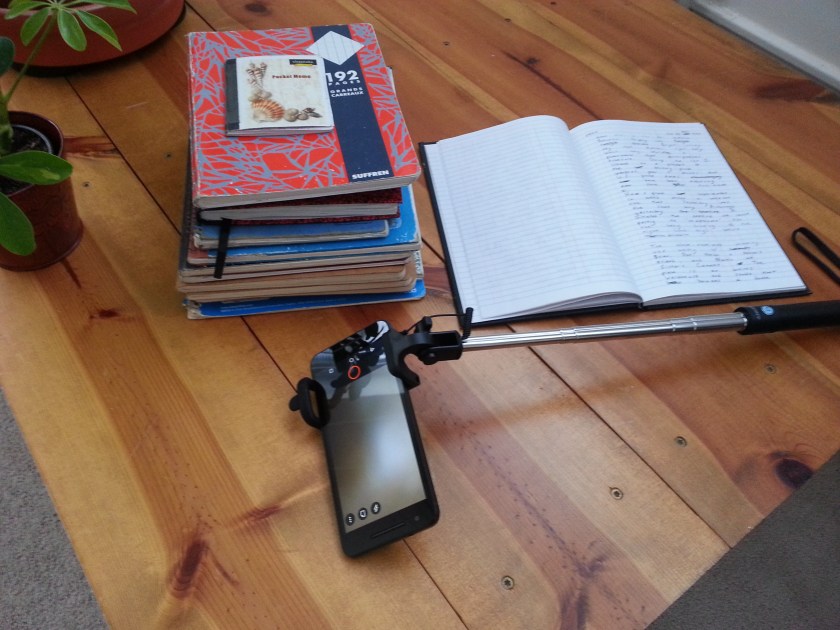
Decluttering old journals with the Office Lens app

I enjoy decluttering (throwing away old useless shit). But I ran into a roadblock with my journals. Although all my writing is now electronic, I have sat on a pile of physical journals and notepads spanning about a decade.


The pointlessness of it is obvious. I store them in boxes for many months. During moves I pack them up and pay in time, money and effort to transport them. Then they remain in those boxes, unused, for many more months until the next move.


But I recently came across Google’s PhotoScan app and saw a way out. When I found that this app sucked, I turned instead to Microsoft’s Office Lens. This app allows you to scan in high resolution by aligning the screen with all four corners of the page. This is ideal for glossy paper such as photographs. You can also do a quick low-resolution photo with a flash, which is much faster and is optimal for regular paper journal pages.


Although I struggled to start, I am now about a third of the way through my old journals. I have broken this project down into three parts:


  1. Scan each page.
  2. Check that the scans arrived correctly in my OneDrive folder.
  3. Throw away the journal for good!


Getting rid of this dead weight feels great. If I ever actually want to re-read those journals, I know where to find them.


If I run out of patience, I can always just throw these journals away without even scanning them. Mightn’t that be a little drastic? Well, no. Consider the following: the journals have already done their job. They were there for me when I needed introspection, thought and interpretation of what was going on in my life. They provided a place to record my thoughts, an activity where I could slow down and deliberately process many new places and events.


Much of my journaling was in special locations such as under an oak tree at the very far end of a nature preserve or inside a tent or on a train. Many entries included not just the time and date but also the place. Journaling there helped weave the place into my memory. The point of the journal has already been served. So throwing it away with no possibility of revisiting it is not necessarily a loss.


Whether scanning or simply tossing, shedding these old journals feels great!
Office Lens project

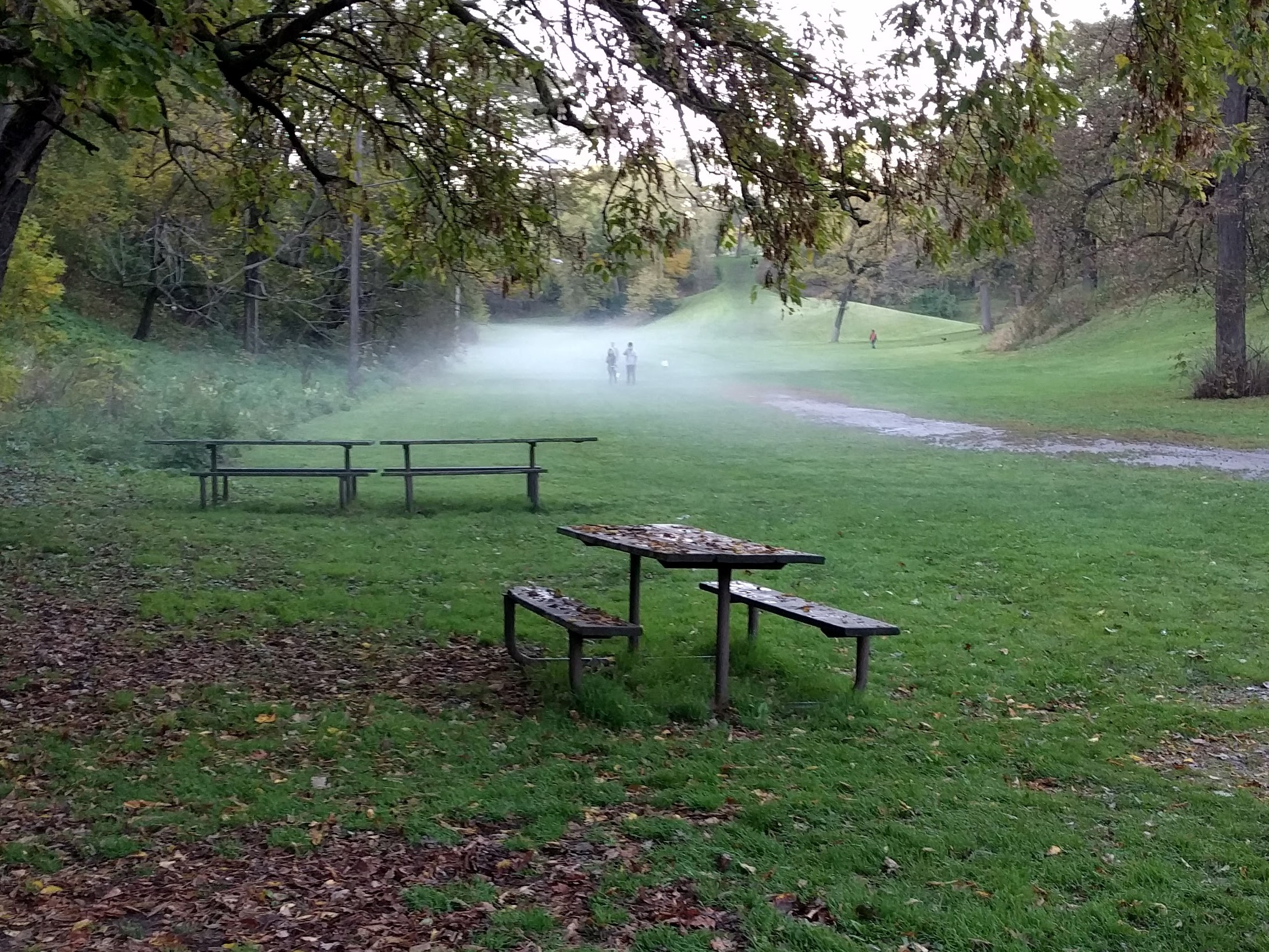
Featureless gray


I visited Portland, Oregon recently for pleasure and for practical purposes. I had a great time.

Airbnb

I stayed in an airbnb within walking distance of downtown. Since it is the slow season, the rate was very reasonable.

Weather

The weather was mild to me: highs in the 40s and 50s F with light showers once or twice a day. I felt very comfortable in a thermal baselayer, jeans, a tee shirt, sweater and light jacket.


I appreciated the fall foliage and the abundant flora. Trees, shrubs and gardens grow in profusion and do not die off by this time of year like they do in Minneapolis.

Transit

Transit from the airport and around downtown was similar to Minneapolis, but streetcars and light rail are easier to use and comprise a network instead of a crumpled V shape.

Homeless people, tweakers and criddlers

The homeless population is very visible in Portland but not in your face. I saw a lot of people sleeping in business entryways and camping in marginal public areas such as the lawns next to thoroughfares. I was never harassed, although two people did start long conversations with me under a pretext only to ask for money at the end. This is probably because I walked so many miles.


The homeless people are not just mentally ill older men, but also a younger group pejoratively called tweakers and criddlers. These are drug users who residents complain will steal bikes and yard implements and shout and follow you and behave unpredictably.

Walkability and beerability

I walked many miles in downtown, Pearl District, Lloyd District, Kern and Sullivan’s Gulch neighborhoods. I visited several brewpubs and took note of features of the parks system. When it comes to open green areas, Minneapolis may be a close tie. But since all that green dies off in the winter in Minneapolis and is mostly abandoned and devoid of people for much of the year, the comparison may be invalid.

Hillsboro

I visited Hillsboro, a suburb, because of a reason I had. It turned out to be much more remote than expected. Much like Minneapolis suburbs, there is little or no transit on the weekends. The private company Uber stepped in to fill this gap.

Weed gummies

I got some weed gummies from a dispensary downtown. As expected, a legal recreational cannabis system is safe, hassle-free and controlled. It’s funny to compare the moral hand-wringing that accompanies cannabis legalization debates with the laissez-faire attitude toward deadly and addictive opioid prescribing.

Book festival

A highlight of my trip was the 2017 Wordstock book festival. The event took over several city blocks, including the Portland Art Museum and the Oregon Historical Society. I attended a couple of readings and panels by authors I was totally ignorant of. Nonetheless I enjoyed it. Partly because of those potent gummies, no doubt.


I enjoyed my trip and I am looking forward to a more nature-oriented visit in the future. Mount Hood is less than an hour away. So is the Oregon coast. This is in stark contrast to Minneapolis where an hour’s drive in any direction presents you one thing: corn fields!

Monster can assault rifle


Six great resources to acquaint yourself with financial independence

Financial independence (FI) is a movement that started as early as the 1990s and is now catalyzed by online communities, podcasts and blogs. It is about finally answering the question, “What would I do if I didn’t have to work for money?” It is about deciding how much is enough, and about optimizing your lifestyle to reach your goals and live according to your values.

I have been consuming FI literature and multimedia for about a year. The more I learn, the more I hunger for more. Fortunately there is a thriving community to explore. There are so many topics to dive into, and each one has been explored, critiqued, defended, and expanded upon in some blog or forum. Some of the original bloggers active during the Great Recession have passed on the torch to new ones. New podcasts and Youtube channels are springing up and maturing. Forums are blossoming and are organizing all the knowledge that has been published.

I feel like I’ve stumbled upon something that will alter the arc of my life. With the forewarning that your life trajectory may permanently change, I wanted to share six fantastic resources to acquaint you with FI:

1. Your Money or Your Life: 9 Steps to Transforming Your Relationship with Money and Achieving Financial Independence: Revised and Updated for the 21st Century

YMOYL was originally published in 1992. As self-help and personal finance books go, it is in a class of its own.

The authors help you to confront yourself and your own beliefs about money in very clear terms. Some central concepts include deciding how much is enough, constructing your own wall chart that shows when your passive income exceeds your expenses, simple living, and the concept of trading life energy for money. Results of some of the simple exercises, such as calculating your real hourly wage, will at first shock you. The authors are not preachy or judgmental. Instead they give you the firm push you need to get started on the path to FI.

2. Mr Money Mustache

This blog is also a great place to start. The author credits YMOYL as a foundational influence. The author has special appeal to me because of its anticonsumption message. He delivers a great deal of face-punching and straight talk, which is exactly what many of us need to snap out of our insane consumer lifestyle.

There are plenty of frugal hacks and an overall engineering mentality of efficiency and optimization.

If you visit and read just the top ten all-time posts, you won’t be disappointed. You can also visit (http://www.mrmoneymustache.com/all-the-posts-since-the-beginning-of-time/) and read sequentially. I have read almost every post from 2011 to 2014 and have laughed often and learned quite a bit.

3. The Financial Independence subreddit

This is a great place to answer questions about index fund investing, retirement accounts, health savings accounts, budgeting, and frugality. There are good personal accounts of successes in the daily thread, some of which will encourage you because they closely mirror your own situation.

Take one of the best user-created spreadsheets on budgeting and the best one that generates the key FI numbers. Plug in your own numbers. Tweak it for your own situation. You’ll find you understand where you are on the path to FI a lot better. If you are like me, you will at first be awed by the challenge, but not at all discouraged.

4. Early Retirement Extreme

This blog (and the book that is a more organized version of the blog) exemplifies the early retirement aspect of financial independence. The author did the extreme route to FI. Then, since he was financially independent, he wrote and pursued other projects. He then went back to work for an investment firm as an analyst. A highly paid analyst, I can only assume.

There are some striking insights in this book. It is more philosophical than practical. It will help you to start asking the right questions. The forum also has some good older threads with very involved users. And the author was active in responding to comments in the forum. I would read the book or blog after dabbling in some of the other resources listed here.

5. The Simple Path to Wealth blog (especially the stock series at jlcollinsnh.com/stock-series)

Read this series on stock market investing to reinforce for yourself what is becoming conventional knowledge: you should invest in low-cost index funds, minimize your expenses wherever possible, don’t pay anyone to manage your money, and keep it simple.

6. ChooseFI podcast

I love the attitude of these two guys. The show is full of practical tactics and strategies for frugality, tax-advantaged investing, and simple living. There are some great case studies from their listeners as well as interviews with FI bloggers.

They appear to have a good Facebook community. I can’t confirm this because I hate Facebook. But I highly recommend this podcast. It averages more than an hour in length. Take their efficiency tip and listen at 1.25 speed!

Hone your bullshit detector

I had a really interesting experience recently that illustrated the importance of sharpening your skeptical tools.

The setting was a long table at a brewery. A person I had just been introduced to was describing her involvement in a project using “californium muriaticum” to treat AIDS patients in Africa. I was confused. What is californium muriaticum? It turns out that it is the same as californium chloride. But people who believe in homeopathy use archaic names for the same compounds for some reason, perhaps to add a bit of woo (dressing an idea in the trappings of science).

It feels good

AIDS already has an effective treatment: antiretrovirals. And since these drugs reduce the blood and body fluid viral load, they also constitute prevention. But this does not matter to the homeopath. A homeopath thinks: if it feels good, do it. And extolling “californium muriaticum” certainly feels good. She made sure to provide irrelevant details as well such as, “Chlorine is a halogen, do you know what a halogen is?”

Interesting contrast

The thing that made it interesting was the contrast between the two ends of the table. At one end was a conversation about relatives who were building a human breast milk bank in Minnesota. This is an effort grounded in quality science. At the other end of the table pure quackery was being aired. Yet to someone standing nearby they both would seem like science-based conversations.

This is why bullshit can be so dangerous. The purveyors of bullshit do not know they are bullshiting and they certainly don’t think they are doing harm. They are also unlikely to be contradicted in a friendly setting like that. And who is going to call them out when their aim is the ever-sympathetic goal of “helping AIDS patients in Africa?”

Eventually I tuned this person out. But I noticed she had selected another subject for her lengthy exposition of pseudoscience. She even dropped the term “major histocompatibility complex” at one point. Again, painting on a veneer of legitimacy while the poor guy nodded politely.

Be skeptical

What a tricky situation! In my left ear is science. In my right ear is bullshit. Yet both sides appear at first glance to be equally articulate and informed. It struck me that this mixing of truth and falsehood happens all the time in life, and sorting it out is effortful and imprecise.

This all served as a reminder of my commitment to skepticism. Skepticism as the withholding of assent until someone does the work needed to convince me. Skepticism not as a stance, but as a set of tools for separating the true from the false. Skepticism as a bullshit detector.​​

Another Hawk Ridge trip

Duluth was sunny and pleasant on Saturday when I visited this birding hotspot. The foliage is still green up there except for a few yellowing aspens and reddening sumacs.

In absolute numbers the migration that day was a bit subdued, but there was still plenty to look at, including osprey, northern goshawks, red-tailed hawks, turkey vultures, sharp-shinned hawks, ravens, sandhill cranes, and American kestrels. A few days prior, 26 000 broad-winged hawks had passed overhead!

A highlight of my visit was a 1.5 hour hike with a naturalist to the auxiliary lookout, which is deeper within the network of trails in the nature reserve. From this lookout you can observe raptors rising from the woods in the morning as the sun reaches the tops of the trees they roost in. On this day the auxiliary lookout was busier with migrants than the main lookout. But for scientific reasons the count must be conducted consistently from the main lookout.

On the hike the naturalist pointed out flowers and plants I wouldn’t have noticed otherwise. We paused to listen for songbirds and woodpeckers and other critters. She explained that part of the reason for the migration bottleneck is the exposed basalt rock along the Sawtooth Mountain ridge, which causes thermals, which the raptors soar on instead of expending energy flapping their wings. She pointed out the downed trees in various stages of recovery from last year’s storm (whose destruction I recall vividly). She took apart an aster blossom and explained how each aster flower is actually a group of tiny individual flowers, and how what we see as a flower is the superstructure formed by these parts.

With a leader like that every sight and sensation along the trail becomes illuminated: the rocks are ancient exposed basalt providing optimal thermal passage for the birds overhead. The downed trees are food for the grubs that in turn fed the hairy and pileated woodpeckers. The nondescript chip sounds are from the juncos passing south through the understorey and trying to avoid being prey to the hawks passing overhead.

Following her and listening, it occurred to me that every person is a fountain of knowledge and experience and interpretation. The way to unlock these streams of knowledge is to get them to be voluble, uninhibited and enthusiastic. And you do this through interpersonal warmth, genuine interest in their interests, and the give-and-take of normal conversation. Maybe in 20 years augmented reality glasses will provide all this info exhaustively and engagingly to people who crave an information feed. But it won’t match the oral narrative of a person.

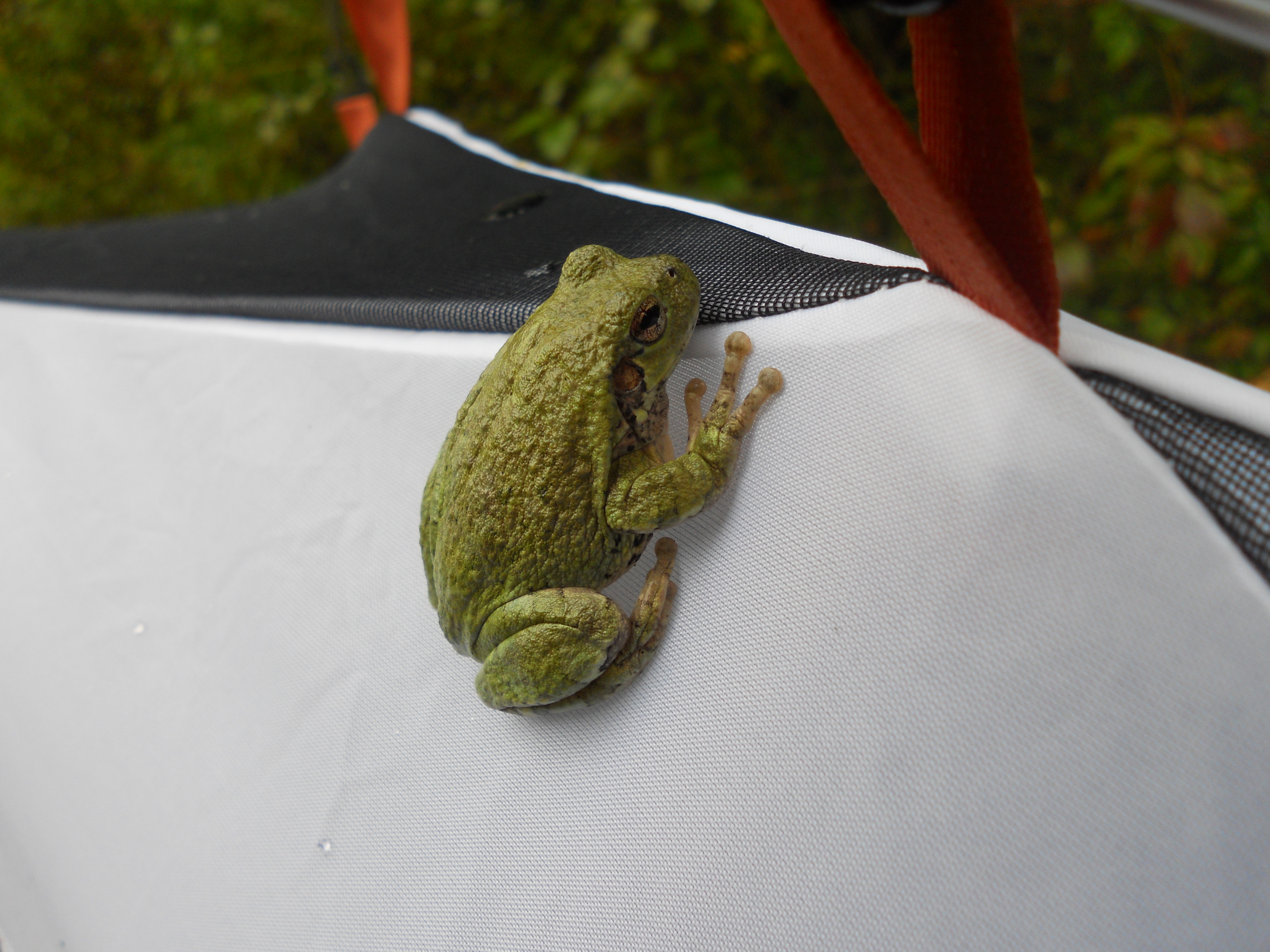
Included: not the first time I have woken up to find that a treefrog had crawled under my rainfly to escape the cold overnight rain.

Three things I dislike: Twitter, Trump and the NFL

These dumb topics all converged toward the end of the last week into some sort of controversy. I ignored it as best I could, but thanks to the constant news cycle and multiple info streams, I filled in the gaps. As predicted, the entire issue was irrelevant, inconsequential and forgettable, and remains so.

There are a hundred noisy, low-quality sources vying for my attention each day. Each one attempts to turn up the volume enough to interrupt what I am doing and get me to click or swipe.

Alarmingly, even the Google mobile search bar includes a news feed edging in underneath it that cannot easily be turned off. A Google product forums user named Patches23 echoed my feelings very well when he or she wrote, asking how to turn it off:

“I don’t ever want to see any news when I say ‘OK Google’ or tap on the search widget. I don’t want to see what’s trending, I don’t want to see anything about a certain politician. If I have to look at this shit every time I want to search for something I will throw the phone away. You will never see me asking for one news story from Android search so there is no history. How do I get rid of this, is the only way to disable feed completely and lose everything else that goes with it?”

(https://productforums.google.com/forum/#!topic/websearch/ilfVtoqLCGo;context-place=topicsearchin/websearch/category$3Aandroid)

Knowing the details of the Trump-Twitter-NFL controversy against my inclinations served as a reminder to me that I must take control of my information intake. There is very little value to me in passive news consumption. And there are costs.

Taking control is effortful. To do it I have turned to podcasts, Feedly and Amazon’s Send to Kindle Chrome extension. I use the BBC’s primary news site to see the important global stories. Sadly, I abandoned The Guardian once they committed to their all-Trump-all-the-time formula. Active use of Reddit is a big part of my effort too. Although configurable, Reddit is too easy to scroll through, so it remains risky.

Am I part of the trend of people moving toward news sources that simply reinforce their own opinions? I don’t think so. I think that kind of self-sorting is an effect of scrolling through a tailored news feed that has a long history of your viewing habits, such as Facebook’s. I think a deliberate and selective approach is much better than browsing the feed. I’d rather hunt stories like a shark than filter feed like a whale.