A bike ride to enjoy the autumnal equinox

The temperature in Minneapolis/Saint Paul reached 90 F yesterday. This coincided with the autumnal equinox of 2017 for the northern hemisphere, which occurred at 3:02 pm.

Equivalency

This means day and night are of approximately equal duration. That’s something anyone can remark upon if they’ve been enjoying activities outside. It’s something you feel on an animal level. Wikipedia puts it more precisely and objectively:

An equinox is the moment in which the plane of Earth’s equator passes through the center of the Sun’s disk.

You can count on Wikipedia for the above-named strengths in its presentation of facts. However, its readability is reduced in this trade-off. I often visit the Simple English version of the article to get a less hair-splitting perspective on the subject at hand. (Then if it’s really interesting I go to la version française de l’article.)

This dynamic map also illustrates the matter well:

(https://www.timeanddate.com/worldclock/sunearth.html)

Cyclicality

A pairing of equal night and day occurs twice a year, in spring and fall.

Since it occurs at the same times of March and September each year, you can make an occasion of it and plan a camping trip, a bike ride, or just a short walk to a place with a good view. To make a special event out of a cyclical solar event is to have your finger on the pulse of an artery in your local appendage of the cosmos.

I took the warmth as an opportunity to swim in Snelling Lake for what might be the last time this year. This place is a hidden gem. It is a small lake in Fort Snelling State Park. Because the lake is small and shallow, it stays warm well into fall. For those with a 7:45 to 4:15 job like me, it means you can hop on your bike when you get home, ride down the bike trails in either Saint Paul or Minneapolis, and hop in the lake just as the sun sets.

Although this beach is very noisy in the summer due to its proximity to the airport, the thundering jet traffic overhead becomes sparse after Labor Day. The place is very peaceful. The sun is directly ahead of you as you walk into the water.

Yesterday a guy named Pedro was splashing his two female companions while they screamed, “Pedro, no! Pedro no! I don’t want to get wet! Aaaaah!” and so on.

Transition

The autumn equinox is not just a cycle and not just an equivalency to remark upon but also a transition, because it marks off the end of summer and the beginning of fall. Although many of its attributes are calculable eons in advance, each equinox, when it happens, has never happened before. The same goes for jumping into the water and feeling the lake weeds between your toes.

No one can predict the limitless branching possibilities for me as I transition, with effort, into a friendly, approachable person. In fact I spoke with a few bird and nature enthusiasts on this very bike ride. It was easy, and they provided more evidence for my working hypothesis that other people are good and beneficial and fun. I will find more nature people during the winter solstice roughly three months from now, when most of the landscapes at my northerly latitude will have transitioned into winter.

There are many solstice events to choose from. Between now and then Three Rivers Parks District will also host many hike and ski by the light of the full moon events with hot cocoa and luminaries.

Fall is a special time and a lot of people’s favorite season. I am determined to spend as much time outside in it as possible. And I promise to photograph and write about it here!

Included: some free stuff I found on the ground
Northern walkingstick

I encountered a northern walkingstick. This insect is perfectly camouflaged as a small branch of living maple twigs.

It crawled across me on a beautiful Sunday afternoon as I sat at a park overlooking the Mississippi River. So far, September in Minnesota has had several sunny, warm days and the month has been very dry.

I am planning my next Hawk Ridge trip for later in the month. I will drive to Duluth to witness the peak of the hawk migration, when there is a possibility of seeing thousands of raptors pass overhead in this geographic/biological bottleneck on their way south.

It is a delight to talk with the nerds enthusiastically sharing their bird knowledge and honing their identification skills and exalting in the enjoyment of nature. It is great to see the banded birds up close and to see the less common ones such as northern goshawks and merlins.

Circumcision: Once again, it’s personal

I learned yesterday that my pre-teen nephew is undergoing an additional surgery to correct problems directly related to the circumcision he was subjected to as an infant.

As my sister explained, part of the skin of his penis is fused unevenly one side. In addition, he suffers from meatal stenosis, meaning his urethral opening is uncomfortably narrow.

The personal

Of course, this disclosure saddens me. The infant circumcision was unnecessary. My nephew was subjected to physical pain that no newborn deserves. Now, as a preteen, he must undergo more cutting, not just on one part of his penis but on two.

Teenagers are often wracked with body angst, especially surrounding their intimate parts. Having been cut and then re-cut, my nephew may be left with even more doubts than usual about whether his penis is normal and acceptable. And he will never know what it might have looked and felt like had it not been surgically altered without his consent.

He is also growing up in a society where circumcised boys are at last the minority. What kind of effect does that have on an individual? This is not to mention the global perspective: only 10% of the world’s non-Muslim males are circumcised.

My sister is a regret mom. Like so many others, she did not think much about circumcision. Now she is left to wonder about these avoidable harms.

The objective

“Though uncommon, complications of circumcision do represent a significant percentage of cases seen by pediatric urologists.”

(https://www.ncbi.nlm.nih.gov/pmc/articles/PMC3253617/)

Meatal stenosis is exceedingly rare in intact boys:

“After circumcision, a child who is not toilet-trained persistently exposes the meatus to urine, which results in inflammation (ammoniac dermatitis) and mechanical trauma as the meatus rubs against a wet diaper. Loss of the delicate epithelial lining of the distal urethra may then result in fusion of the epithelial lining in the ventral meatus, leaving a narrow orifice at the tip of the glans. Because this condition is exceedingly rare in uncircumcised children, circumcision is believed to be the most important causative factor for meatal stenosis.

(Emphasis is mine.)

(http://emedicine.medscape.com/article/1016016-overview#a5)

What next?

I have nothing to offer but the following plea: because current US law allows forced circumcision of male minors by anyone, whatever their training or qualifications, for whatever reason, under whatever conditions, with whatever outrageous customs the family wants (including oral suction), it is up to individuals to take a stand.

Mothers should say no to forced circumcision. Fathers should say no. Insurers should say no. Nurses should say no. Doctors should say no.

The only person who should get a circumcision is an adult who consented after being fully informed, or an infant or minor (or incompetent adult) who has an internationally recognized disease or disorder that cannot be treated with less invasive means.

Total solar eclipse of 2017

I witnessed the total solar eclipse of 2017. I watched as the moon slowly overtook the sun over the course of about an hour and a half. I watched the daylight subtly change as the moment approached. I saw the sun appear as a bright waning crescent, like the familiar crescent moon. I saw beads form on the edge of the ring as it winked out, as a result of the uneven surface of the moon. Finally, I witnessed the landscape go dark in less than a second at the moment of the beginning of totality.

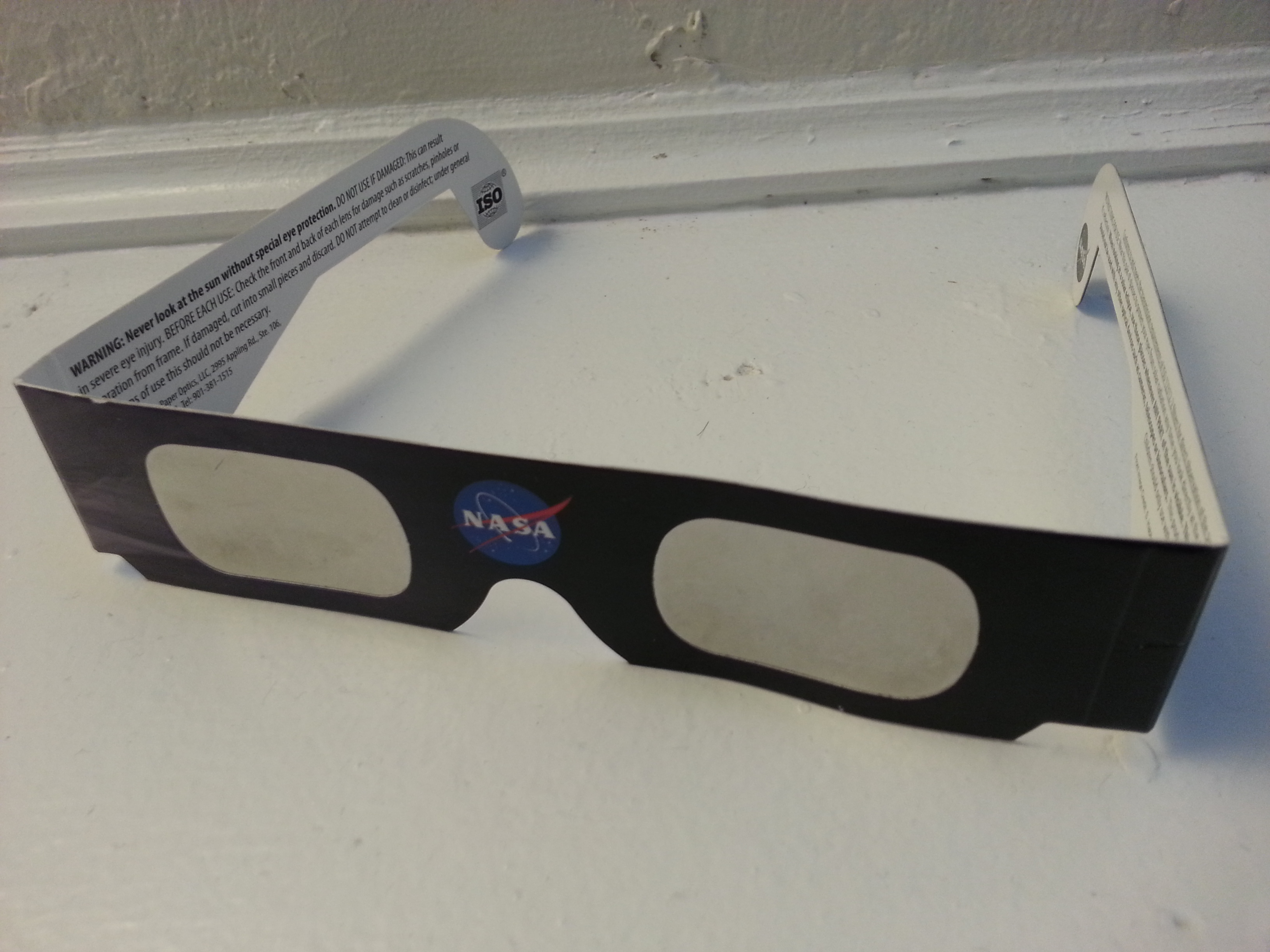
For the next 2 minutes and 29 seconds I removed my safe-for-direct solar-viewing-glasses and observed totality. I have never seen anything like it: a black sun, surrounded by wispy white swirls (the Sun’s corona). Two planets came into view. I believe they were Mercury and Venus. I could not find Mars and Jupiter.

After this short but profound period of darkness daylight returned in an instant and the process began to reverse itself. The Army band played Holst’s “Mars, the Bringer of War,” in a rendition that really got my heart pumping. Over the course of the next hour and a half the eclipse ended.

While driving there and back I had a lot of time to think. Is it wrong to draw meaning from events in nature that are essentially random? In many instances, yes. Call it apophenia or patternicity or whatever. It can lead the mind astray. But from the occasion of this chance alignment of spheres I indulged in drawing a great deal of meaning:

New eyes

This was my first big astronomical event since getting LASIK surgery. I had skipped the Perseids because of sheer negligence. Seeing everything in clarity was awesome.

Bike

I threw my bike in the back of my car. When I arrived in Jefferson City, Missouri I moved swiftly about the city to scope out the best spot, to find a restaurant to eat lunch before the event and to check out some other sights. I am so glad I brought it. Everyone else looked hot, sweaty and slow in comparison. A bike is a great thing to have with you when checking out a new town.

Misinformation

A lady walked up to a couple near me who were setting up advanced optics for recording the eclipse. She asked about whether planets would be visible during the eclipse. They answered no.

To the contrary, four would be visible. I only identified two. Even with a Newtonian physical phenomenon like an eclipse, details of which were calculated many years previously, people still give you the wrong information. And as for “how often this kind of thing happens,” wildly different statements circulated.

Local milk people

Driving through the county roads of Missouri to get back to Interstate 35, I saw a lot of the local milk people. Rural Missouri is not much different than parts of rural Minnesota, just more hilly and hot.

Traffic. Woman who died.

A Minnesota woman named Joan Ocampo-Yambing died in eclipse traffic when a semi driver rear-ended car the car she was in. Many details of the crash was similar to my situation: she was in a small Toyota. She was headed to Nebraska (instead of Missouri, like me). It occurred at 10 am, when I too was on the road. She also wrote (https://www.createspace.com/7292322). Sadly, the linked page still says “Joan Yambing is currently a student at Creighton University pursuing a Computer Science degree…”

I reflected on the countless semis I passed, some of which drifted about as if the driver was falling asleep. Not to mention the people looking down at their phones or eating Subway sandwiches and steering with their knees. In 20 hours of driving there was only one close call (that I noticed), when a driver in a pickup truck made a left turn in front of me that required me to brake hard from 65 mi/h to avoid hitting him. During the thunderstorms I drove through I could have crashed into a stalled car with the lights out and been killed in one gory instant.

The news of the death was a reminder that when you hop in the car for a road trip or for a trip to the grocery store you are rolling the dice with your life. It is up to the individual to estimate the risk in advance and then decide whether to accept it.

Phone. Airbnb. Car. Kindle.

I am grateful for my tablet phone with its great battery life and navigation. I am grateful for Airbnb for letting me book a room just outside Des Moines at the very last minute as I watched the weather. I am grateful for my Kindle and for the ability to send eclipse-related articles to it so that I could read up in the days and hours leading up to the event. Finally, I am grateful (and a little astonished) that my 2008 Corolla made it 1080 miles without a problem, through 95 F heat, thunderstorms in Iowa, stop and go traffic, and 75 mi/h plus conditions.

Human event

I really enjoyed seeing people get excited about this eclipse. The chatter and anticipation leading up to it was great. One commentator stated it well when he said it was not just a science nerd event; it was a human event.

Were people watching in “awe and wonderment?” Hardly. Most people were highly informed, with a plan for how to appreciate the event. Some were equipped with advanced optics. Most had safety in mind.

The whole thing exemplified the pursuit of knowledge, beauty and understanding. The scale of the shared appreciation of the event was only possible today, in the information age.

Among the astonishing facts I learned is that the last eclipse in this “series” will occur in the year 3009. The first one was in 1639. The greatest duration of totality will be during an eclipse in 2522 lasting 7 minutes, 12 seconds.

I won’t be around for any of those. But I am already determined to be there for the next total solar eclipse in 2024. I might watch it from Carbondale, Illinois, the only place where the path of totality coincided with the eclipse of 2017. Or I could select a more exotic vantage point such as Mazatlan, Mexico. In the meantime I will watch more occultations as well.

Included: my ISO conforming glasses for direct viewing of the sun

Red-spotted purple

Just a reminder to get out there while the summer lasts and witness novel events in nature.

Last week I came across a black butterfly with dark blue wingtips that had landed on a dead, road-killed garter snake. The butterfly was sucking its juices.

I looked it up online, and lo: “The red spotted purple does not usually feed on the nectar of flowers, but eats rotting fruit and plant material, dead animals, and the sap of trees.” (http://www.oldnaturalist.com/midwestern-butterflies/).

It also has two generations of adults in one summer. Its caterpillar is camouflaged to look like bird droppings.

Then the other day I happened upon a downy woodpecker that had gotten ensnared in some bur plants while it was foraging near the ground. As I neared it, the bird finally freed itself and flew off.

There is so much great stuff going on out there, even in the relative calm and stability of midsummer. Observe as much as you can!

My dad’s request for help

My dad, my five siblings and I recently sat down for a conversation that was overdue. Dad began with hardly any preamble because we all knew what it was about and what was needed: my mom, diagnosed with dementia six years ago, was worsening. To care for her and to cope he would need more of our help.

He no longer dances around the term “Alzheimer’s disease.” At this point, every other likely cause has been ruled out. And matters really are too much for him to handle. We reflected with amusement on some minor blunders my mom had made in the early stages of the disease, before we considered having her evaluated: getting lost in Chicago where they used to live. Overspending at the mall. Being less diligent about gifts and holidays and gatherings.

Those incidents seem very minor compared to how she is now: anxious and upset in the evenings (i.e. sundowning). Repeating questions over and over again. Not showering or dressing properly without being forced to. When out and about, demanding to leave and go home. Once back, not realizing it and demanding to be taken home yet again. Refusing to believe she actually lives there.

These are the day-to-day hassles. Then there are the incidents that cause actual alarm, such as when she wandered off for an entire night and was only found in the morning, with the help of the police. We have no idea where she slept. It was probably on someone’s porch sofa.

Further, there are those moments that do not represent hassle or alarm, but just piercing sadness: my dad described his sorrow when he could not discuss his daughter’s wedding with my mom on the very morning after, because she did not remember. Later in the morning, with the help of pictures and reminiscences, she recalled a little.

He also broke up when he said how much he missed his conversation partner.

So the point of the meeting was to figure out a plan to meet her needs, however they may multiply in the coming years. Between six kids, she’ll be cared for. She will not be abandoned by her kids like her mind is abandoning her.

We need to care for our dad as much as for our mom. After all, he is serving her just as she would have served him if he had been the one affected.

We need to relieve Dad whenever possible by taking Mom out to the lake, to the Como Conservatory, for coffee, for open air concerts and festivals, or just for car rides. We need to keep her around the things that continue to energize her and make her smile and always have: walks, people, art, flowers, gardens, family, children.

We need to spend afternoons and evenings and weekends being present and living with her in the moment as much as possible. After all, with memory loss you have no choice but to live in the moment.

Our task is to be ready for anything during the gradual but unpredictable worsening. As a discouraging sign, she did poorly at a trial of a daytime center for people with dementia. It’s already time to try something else…

As I drove home from that family meeting, weighing the awesome burdens of the future, I wondered whether I had already said goodbye to my mom a few years ago when sustained conversation (beyond brief smalltalk) became impossible.

But I dismissed the thought. I won’t say goodbye until the very end. It’s just that it’s a long, twisting goodbye with joy and sadness interspersed.

At that wedding, which she has no memory of, she was the belle of the ball. She was thrilled to greet and say hello to people she had no recollection of later. She had joy there, but only in the moment.

How to enjoy a quadruple sunset in Highland Park

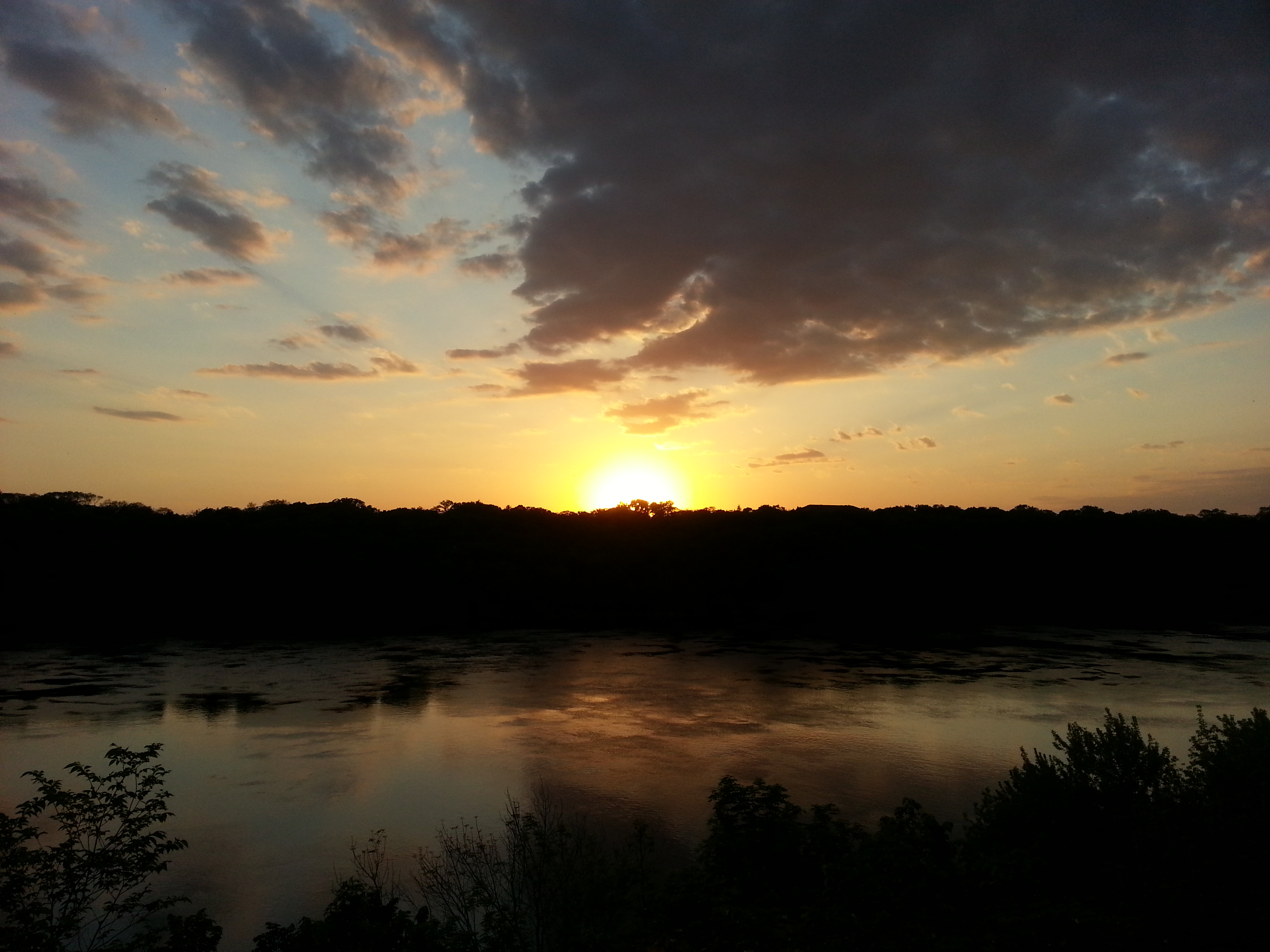
​One thing I really like about Saint Paul is enjoying sunsets over the Mississippi River. Having grown up in Minneapolis, which is to the west, I seldom saw this. Since the Highland Park area is hilly, people who are up for climbing and biking (and timing) can extend the sunset and essentially see it four times in one evening.

Start this climb half an hour to an hour before sunset, depending on how much you like to dawdle:

1) Start at the limestone bluffs near Woodlawn Avenue and Mississippi River Boulevard. Lock up your bike and climb down to the water’s edge. Look at the swallows, silver maples and wild irises growing there. I once even found a mudpuppy foraging near the edge of the water.

2) Climb up and out of the valley just as the sun sinks below the canopy of the opposite shore. Bike south on Mississippi River Boulevard to the Ford Dam Overlook. Enjoy seeing the cormorants and crows that dwell in that area. If it’s early summer, observe the mayflies and cottonwood clumps floating through that lend epic scale and depth to the valley.

3) Head south again and cross the street just before the sharp left curve in Mississippi River Boulevard. Enter the southwest corner of the Ford site and check out the pond there, where nature is taking over what was once an industrial dump. Heave your bike over the unused railroad tracks that are becoming overgrown with quaking aspen saplings. Head directly toward the Cleveland Hi-Rise and then take the gravel utility trail out of there. Cut through the Little League fields, through the strangely quiet apartment complex, and get to the southwest corner of the Lunds and Byerly’s building. Look at the awesome expanse of the Ford site and contemplate its many possibilities for people and nature.

4) Finally, bike east on Ford Parkway, take a right on Kenneth Street, a left on Bohland Avenue, and a left up the stairs to the grassy hill overlooking absolutely everything. This is where you want to be when the sun fully winks out. Check out the Minneapolis skyline and visually retrace the route you took to get there.


Quadruple sunset in Highland Park


Some things I dig of late

"Singles" album by Future Islands.

Why didn’t someone tell me about this before? Oh wait, they did.

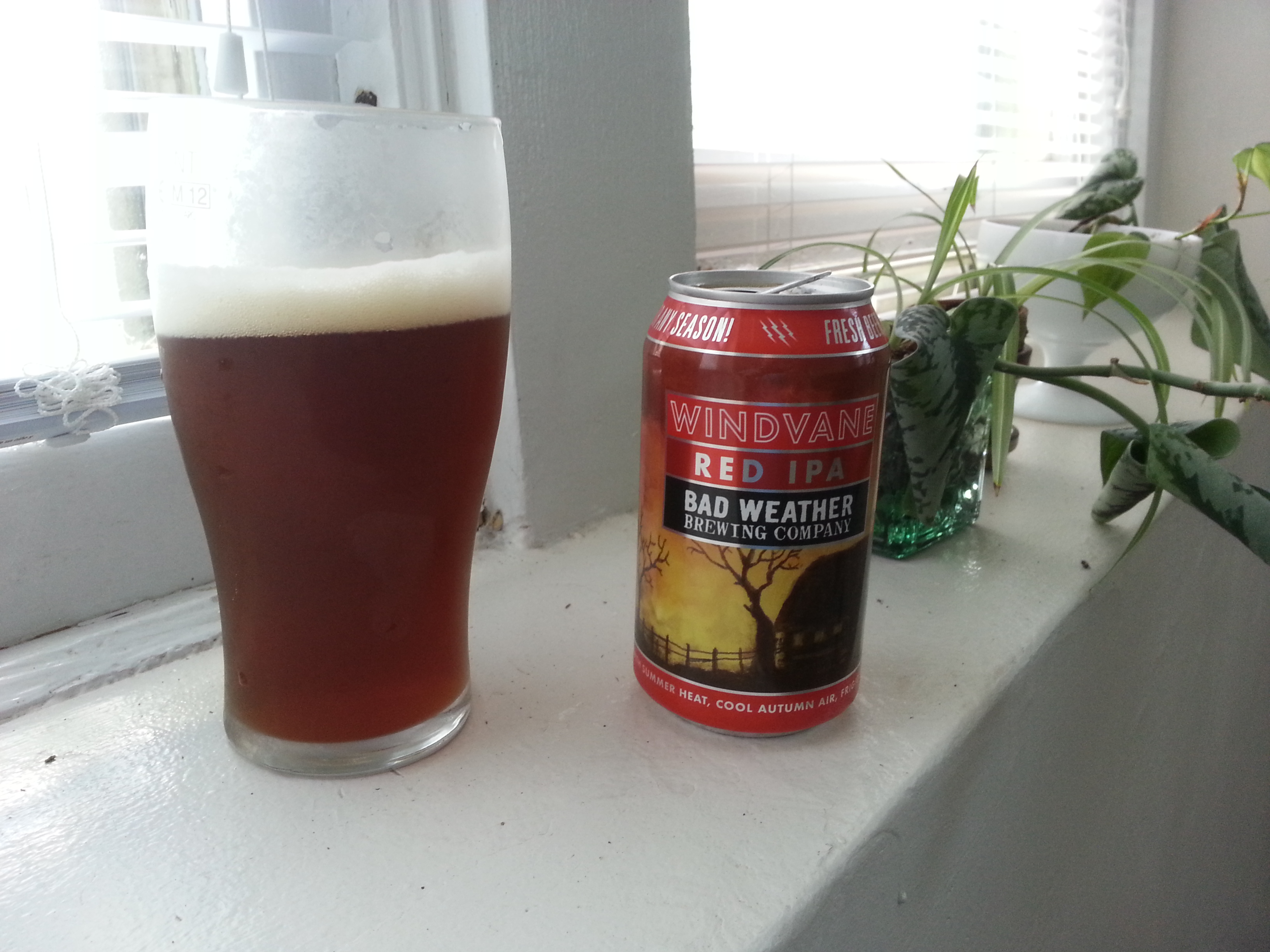
Red IPA’s of all kinds

I like the color. And the beer that they have in them.

Biking everywhere all the time

Biking enables me to spend many hours outside effortlessly.

Podcasts

ChooseFI Radio – Ciel & Espace Radio – Geeks without God – Here to There – Nature – NEJM – Point of Inquiry – RFI – Science – Sound Opinions – Talk Python to Me – ProPublica – The Skeptic’s Guide to the Universe – WSJ – You Are Not So Smart

All-day ear pleasure on tap. And you learn things too.

Hazardous fixed objects

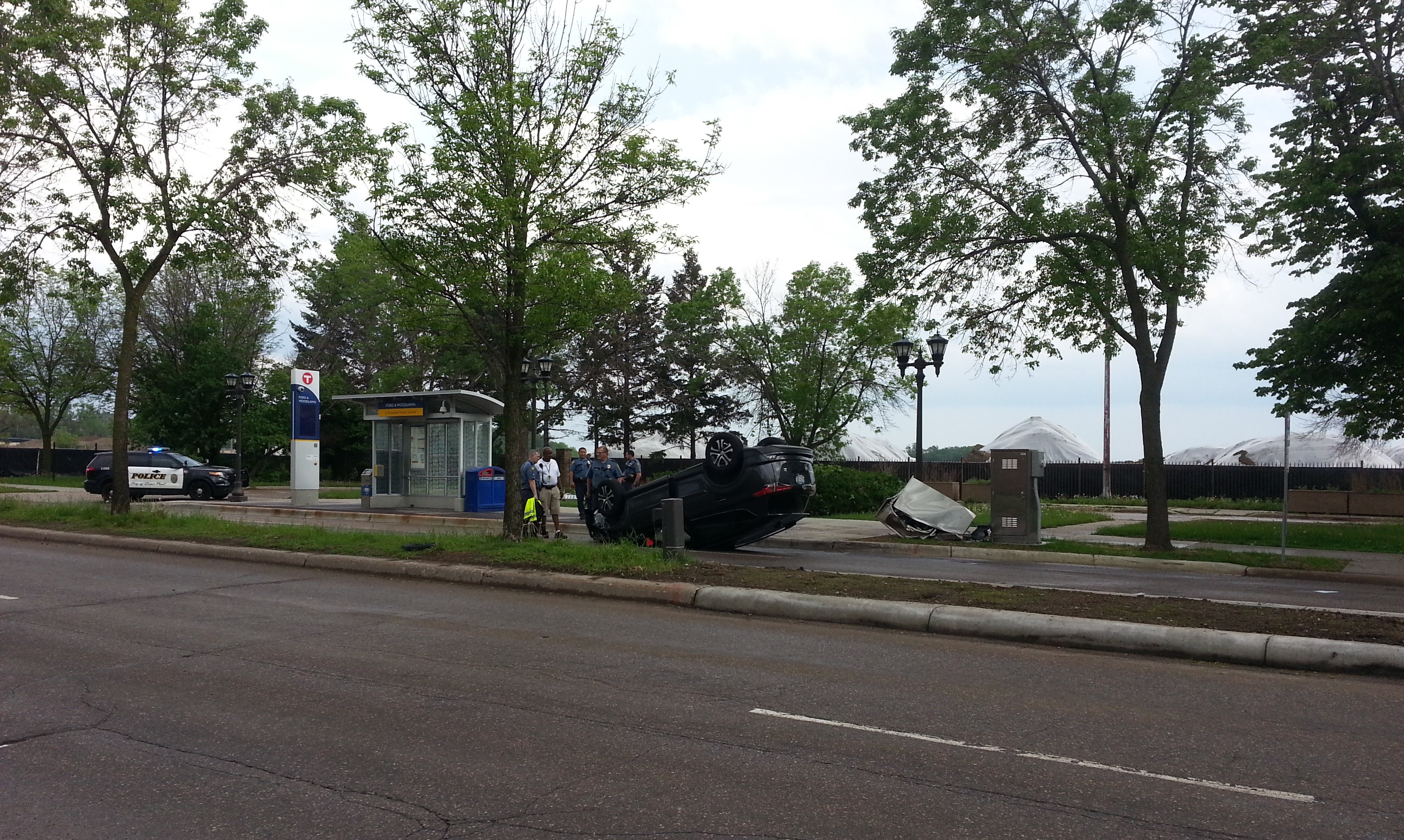
You know how sometimes you’re driving on a city street during the daytime in a 30 mph zone and all of a sudden your car veers off the road, hits a fixed object, and then flips over?

Yeah, me neither. I guess Facebook must have been really interesting at the moment.

This happened for some reason on Ford Parkway in Saint Paul MN just a block from me.

State departments of transportation often refer to trees as "hazardous fixed objects" and argue for their removal so that speeding drivers won’t be as likely to die when they leave the road and hit them.

When a crazed driver killed pedestrians in Times Square on May 18, the rampage was only stopped because of steel bollards. When a 76 year old driver killed five people at an auto auction in Massachusetts on May 3, the SUV only stopped when it lodged into a wall.

I would much rather the driver deals with the consequences of their own behavior than to have a pedestrian die as the car coasts to safety. I would like to save the trees.

Decluttering accomplishments

I threw away an old watch I really liked. The band had broken. It had human grime in its nooks and crannies and left marks and indentations on my skin. Replacing the band would have cost just as much as buying a new watch.

I tossed a bunch of old torn maps I had hung on my walls. Removing them makes my place look bigger and more open now.

I sold a pair of binoculars I got nine years ago. They were too bulky and the image was too dark. In comparing binoculars I had focused too much on the magnification while disregarding the importance of the diameter of the objective lens. I now have a more compact roof prism design.

I donated (dumped) my Sibley Guide to Birds in a Little Free Library. There are tons of newer and more comprehensive or more specialized bird books at the library to check out any time I want.

I sold my Ikea reclining chair. I have a goddamn couch to sit on. Which I got for free.