Minneapolis Parks

I’ve resolved to once again make the most of the summer here. In Minneapolis you see people extracting as much of the brief season as they can. (I call it a brief season but last year it continued into November).

The park system wins awards year after year. They proffer the visitor with what are essentially large vehicle-exclusion zones. Maybe this is part of what’s pleasant about them. Walkers and cyclists are safe from speeding vehicles and noise and exhaust fumes.

Anyone can bike, jog, walk, swim, wade, sail, fish, kayak or canoe. Every restaurant and cafe makes a patio of as much of the sidewalk as they can get away with.

New neighborhood festivals seem to pop up each year. The elms, despite having been decimated by Dutch elm disease, make green linear cathedrals of the residential streets. The lilacs and crabapple blossoms explode all at once to inaugurate the season. The peonies and mulberries sustain it.

The trails are swimming with walkers and families enjoying the music and movies and beer. Strong, fast bikers and joggers maneuver among them, chasing the workout they crave.

The lakes are surprisingly healthy – I spotted four species of turtles recently in one day. Overhead in a cottonwood tree a tiny vociferous oriole was doing its thing.

Kayaking the chain of lakes is the essence of summer in Minneapolis. You paddle big open Calhoun, nature-y Isles, secluded Cedar, and swampy Brownie Lake. You read your book in the middle of the lake. Once you get back to the boat launch you can enjoy a well-deserved beer at the waterside restaurant, even if they do make you buy some nuts with it because of a liquor law that some nincompoop politicians thought up.

Another hammock camping trial

I packed up a much smaller backpack this time and climbed down to a great secluded spot in the metro stretch of the Mississippi. It was dusky when I set out and getting dark very quickly but I had my headlamp.

It had rained recently and the ground was soft. The bank is steeply inclined so having a small pack was very advantageous. After a good deal of clambering I eventually found two suitable trees in the area that I had scoped out before.

I set up my guyline between the two trees. When I tried suspending the hammock I realized the trees were too close together. Fortunately there was another tree nearby at the perfect span. Ultimately because of the slope, the angle of the trees and the third, unneeded tree, it was a complex arrangement. But it worked out great. I tied down the tarp at four corners and was protected from the gentle rain that came down intermittently overnight. I was comfortable and dry the whole time and I enjoyed listening to the rain from inside my cocoon.

I knew i was secure and had privacy. No one could get near without first shining a light on me, then somehow clambering up or down to reach me, then noisily lifting my tarp to see what was underneath. In addition I was confident in my hammock and in the trees, rope and knots.

I wore synthetic athletic pants with no underwear and a polyester tee shirt. I had one square of sleeping pad under my head. As I set up I noticed there were no mosquitoes so I bundled up my hooded synthetic jacket and used it as a pillow. I did not need the bug spray I had bottled up, nor the mosquito netting, nor my hood to suspend the netting over my face. This was good because temperature-wise I was comfy all night and would have been a little warm in the jacket.

I slept well. In the morning I awoke to dusky, cloudy skies at sunrise. I went back to sleep. At around 0710 I got out and packed up. As I packed up I watched crew rowers doing their morning practice on the river. I liked being invisible from the trails and cliffs above and from the river below.

This was a good trial that I fit into a window after work on Friday but before other obligations on Saturday. It cost me nothing. The only thing I got dirty was the bottoms of my shoes, and even those were not bad. I spent the night outside. I saw light come over the river valley in the morning. And I reduced my pack weight and volume quite a bit from the much larger backpack I had used before.

I am building up confidence for longer trips. In camping skills I have no training or mentorship. But I do have diligent research and a good deal of trial-and-error.

Word find

I stayed with my mom recently while my dad was out of town. I noticed how despite her Alzheimer’s dementia she can easily follow certain routines.

Laundry is no problem for her: she can do the wash cycle, transfer the clothes to the dryer, dry, then remove the clothes, fold them and put them in neat piles upstairs.

But one task she cannot do is make coffee. My parents have always used a percolator. This requires judging the water level and amount of grounds, monitoring and adjusting the flames on the gas stove, letting it boil and sit for certain periods, then decanting into a thermos.

With the laundry, each step can wait until attended to and there are visual cues as to what to do next. With the coffee percolator on the other hand, each step is of varying duration and judgement and attention are needed throughout.

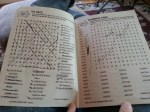
I almost didn’t want to look, but I flipped through my mom’s word search books. In the picture below, she did the word search on the left well. But on the right she didn’t understand the goal of the puzzle, and absentmindedly wrote my little niece’s name, likely because my niece was present and talking at the time (she talks constantly). Sadly the word searches are incredibly simple compared to the New York Times crossword puzzles my mom did for fun only several years ago.

This demonstrates the rapid decline of the brain’s executive function while associative memory remains robust.

In observing dementia in my mom I’m struck with how the small things matter: if my parents had used an electric coffee maker all these years, my mom would still be able to make her own coffee. On the other hand if she wasn’t such an avid crossword puzzle fan she would’t have this constant verbal-lexical exercise that seems so beneficial to her now.

Refinement of mentality on confronting people

I just wrote about when it’s appropriate to confront shitty drivers. Today while walking I had an interaction that corroborates and refines my reasoning.

I saw a man get in the face of a woman on a bike (who had her kids with her), saying “What’s wrong with riding in the street!?”

She rode off, wisely avoiding this guy. I told him there was an exception to the rule if the road is unsafe. Ford Parkway, where we were, is definitely unsafe. Bringing kids on bikes into the street would be irresponsible on this stretch. I asked him if he often shouted at strangers about what to do and what not to do and he said yes! I don’t think he knew the sidewalk law; all he did was shout, “Call any cop, they’ll tell you there’s no exception!” etc. Then he got in his car and drove off.

But cops can’t protect you from distracted or intoxicated drivers. And there was a bike festival (Tour de Highland) going on that morning a block away, so he should have held his tongue.

The sidewalk was wide and uncrowded. Just that morning I walked through the intersection where a pedestrian was killed in 2012 (the driver was not charged. He would have been punished more if he had damaged a sign instead of killing a person.) (http://www.startribune.com/st-paul-nun-dies-after-being-struck-by-truck/164319406/).

So I will avoid being like this guy, shouting over minor sidewalk courtesies. At least we were arguing over what the law says instead of just telling each other to shut up. I will however continue to confront people when I see something unsafe or illegal.

The real killers (drivers) need to be held accountable. Cyclists, who do not kill people, should not be harassed for keeping themselves safe.


Three confrontations with shitty drivers

Very alarming: ​Woman in her 60s edges past stop sign, hits another car, then speeds off. I chase her for a block, shining my flashlight, until she finally stops. I explain she must go back to the intersection and exchange info with the other driver. She seems confused and vacant the whole time. I get photos of her and her plates and give the emergency operator all the info I have so that the other driver, who had left, would be contacted by an investigator.

​Somewhat alarming: woman darts right in my path as she goes for a parking spot, almost hitting me as I walk. I explain what happened and she also seems confused, as if she is doing too many things at once.

Finally, a run-of-the-mill distracted driver: young woman talking on cell phone misses two opportunities to turn left, then almost hits an SUV rolling out of a parking lot, then hits the curb as she tries to park. She is a neighbor and at least she seems receptive when I recount what she just did.

I’m conflicted over whether it is worthwhile to confront drivers (except in the first instance where I absolutely had to). I don’t want to scare anyone. I’m not sure they learn anything from it. And the justice system is not on my side: the recent case of Carlee Bollig demonstrated that a driver in Minnesota can kill two people while texting and still serve zero days in prison.

I think I just need to stay safe until a technical solution such as driverless cars make 30 000 traffic deaths a year seem like just another absurd fact of history.

Highland Park area

I like living in Highland Park, Saint Paul. I like being half a block from the river and having a bustling retail district and light rail connections as well as Minnehaha Regional Park and the restored Coldwater prairie. I like being able to bike to work along mostly parkway and riverfront and even a historic site and state park.

However, this area has serious flaws. As I walked on this beautiful day to get 1) a shot of espresso and 2) some dish soap I had to be hyper-alert for vehicles. It seems like they are either going 40 miles per hour or they are idling in a blocks-long traffic jam on Ford Parkway.

In addition there are some really ugly spots. I see a lot of parking lots, and most of the retail district on the south side of Ford Parkway is in fact a strip mall. There is a huge parking ramp right in the middle of the hill.

Somehow, parts of my neighborhood do not even have sidewalks.

This could change with increased density. Perhaps redeveloping the former Ford vehicle plant will bring better land use. But recently a city councilmember proudly wrote an editorial in the neighborhood newspaper highlighting further building height restrictions he had helped enact for the area.

Birding Minnehaha Regional Park area

Today was a good day raptorwise:

– brown thrasher

– American kestrel

– osprey

– two peregrine falcons (I saw them copulating a few weeks back and I think they have a nest around here)

– bald eagles

– turkey vultures

– waves of yellow-rumped warblers

Seems like a lot of birds are passing through. In addition the toads are trilling and the chorus frogs are chorusing.

Freedom

While walking back from the Minnehaha Falls the other day i thought about Maslow’s hierarchy of needs again. I really like this concept. It seems so right. One version of it i saw recently included “freedom from prejudice” right near the top. This was surprising to me but it’s true, individuals need freedom from prejudice to reach a state of peace and integrity.

I thought about conservatives in this country and about Trump supporters. They claim to be all about freedom. Some even have an appealing message if you look only at their slogans. And some libertarian ideas are attractive to me and to a lot of young people. However, they seem to be selective about freedoms. What about:

  • Freedom from gun violence
  • The freedom of a woman to choose abortion
  • The freedom to study science without religious meddling
  • The freedom of opportunity for people who are born without advantages

Conservatives think their way of life is under threat, that people are out to take their guns and their religion. And as a result their horizons are narrowed. And they miss out on freedom from prejudice.

More housing restrictions being considered for Saint Paul

I weighed in on this with my city council member and actually got a response (from an aide).

(http://www.startribune.com/communities-push-for-limits-on-sober-homes-other-group-housing/374384441/)

…almost identical to article on same topic from 2008:

(http://www.startribune.com/neighbors-can-weigh-in-on-sober-houses/15858292/)

I think local politicians need to recognize that neighborhood groups are not representative of the residents of an area. Minneapolis officials have actually pointed this out, to their great credit.

These groups are founded and run to use political power to protect the real estate investments of incumbent homeowners. Their mission statements might as well be some variation of "Keeping everyone everyone out and preventing any and all change".

I’m sick of these groups.

Dear Councilmember Derp,

I have followed the recent debate over increased sober house and communal living restrictions and I encourage you to vote against tightening these requirements.

People with addictions are considered disabled under the law. In addition the disparate impact concept upheld by the Supreme Court last year makes it clear that local housing restrictions will come under increased legal scrutiny in the future. In 2008 Mayor Coleman warned the Council about the risks of litigation that come with further restrictions. Saint Paul housing administrators also told the Council in 2008 that the current rules were confusing and complex.

In their Powerpoint submitted to the Council, the Merriam Park neighborhood group emphasized intangibles such as "balance" above tangibles such as the dire need for housing for vulnerable groups. At best this represents honest people who want an idyllic traditional neighborhood. At worst it is incumbent homeowners using the power of law to keep out anyone who does not look like them: students, disabled people, those recovering from addiction.

In any case the neighborhood group did not cite any specific problem that would warrant more restrictions.

Please consider this input in your vote. Thank you for your hard work.

Sincerely,

Bob Bobison

3820 Brown Dookie Parkway

Saint Paul MN 55116

Celebrating the Life of Ryan

I said goodbye to a special person recently. Ryan died young of neurofibromatosis, which he had since childhood. Surgeries and other treatments kept it under control for more than 30 years, until the benign tumors that characterize the disease became too numerous and impinged on too-crucial central nervous system structures for him to survive. In fact toward the end he was without hearing, but he used the sign language he had learned in college to communicate, and joke around quite a bit, with family and with his hospice nurse.


The service was fantastic: it was in a new stone building with lots of natural light and it was a bright day. The night had left a coating of snow that melted and exposed the cemetery grass as the service proceeded. Ryan’s uncle and cousins performed Dylan songs. There were good snacks and coffee and photos and watercolor art from Ryan’s dad. There were no arid religious hymns to chant, no mummery. It was about friends and family assembling in joy and remembrance over a maimed loved one. The focus was on him, not on gods and crossings and spirit worlds.


Everything I learned about Ryan’s condition I learned from others. I never heard him speak a self-pitying word. He always engaged in friendly conversation despite his stutter, and he zeroed in on my own interests and recommended movies and books I wouldn’t have discovered otherwise. I never had any interest in Dylan before meeting Ryan but came to appreciate his music because of him.


Each speaker touched on Ryan’s passionate interests, demonstrating my own belief that one’s genuine joys and pursuits make a lasting impression on people. The grandmother was sad but when I spoke to her she expressed gladness and consolation over her other grandsons and over her large extended family. Some people there showed very lively expressions of grief, others were contained, but almost everyone cried as the words of remembrance reached an emotional peak.


I felt profound sympathy for Ryan, then sadness, and finally a sense of fellowship as I looked around and recognized the full significance of all my friends being there with me to say goodbye and to support Ryan’s brother.


This service was on March 19th. In the intervening weeks I have ruminated over the exact sense and meaning of what I experienced in knowing Ryan, knowing he died, and then seeing him off. I came up with three things:


Firstly I will try to emulate Ryan’s blend of humor and fighting spirit if I ever must face a lethal and outrageously unfair medical condition like his.


Secondly I will not look away from the seemingly intolerable truths of our existence, nor will I euphemize when speaking and writing about them. Neither will I be flowery and maudlin for quick effect or false profundity.


Lastly I will exult in Dylan’s music, in friends and family, and in this glorious spring season that was not given Ryan to enjoy.


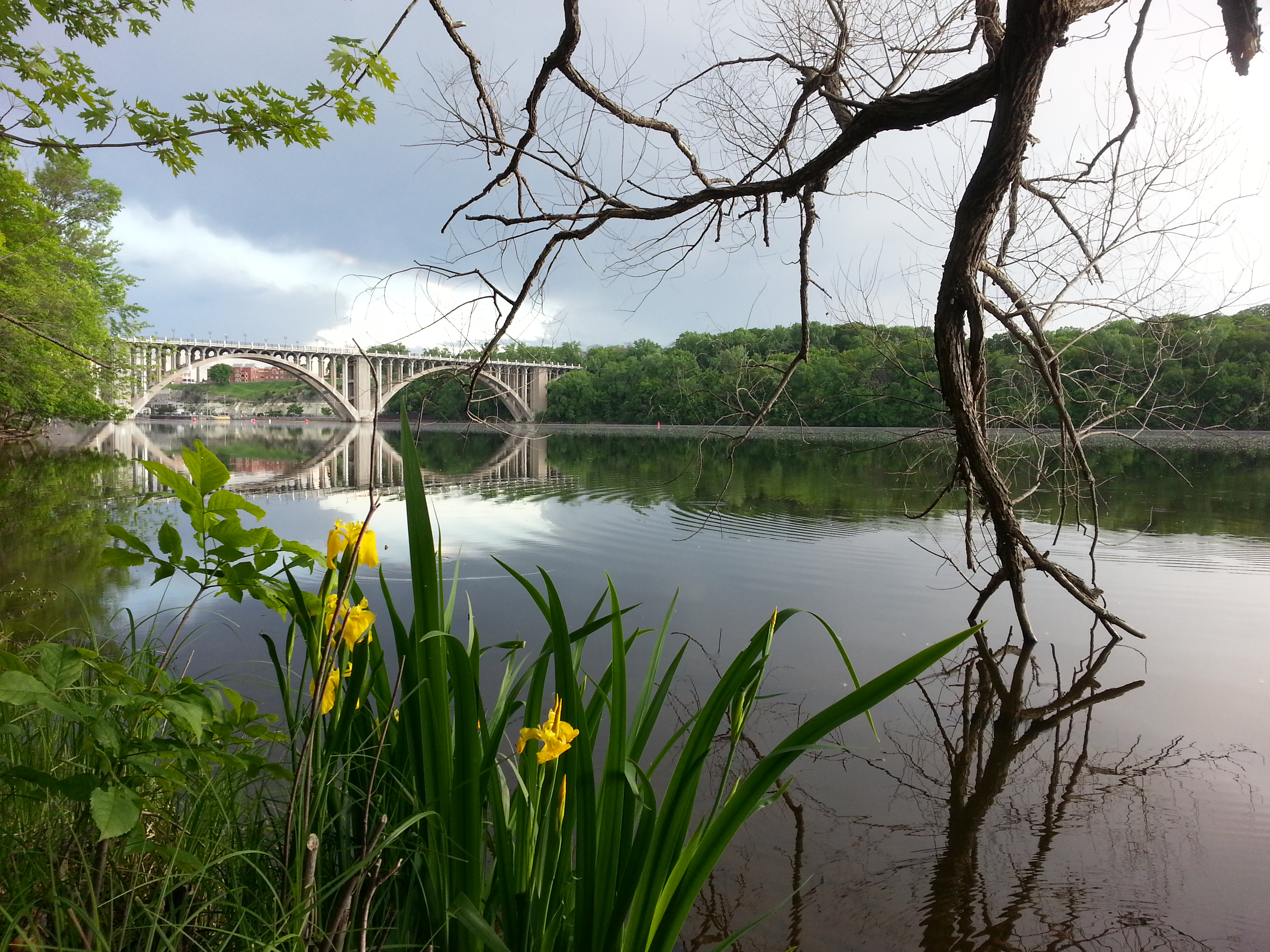
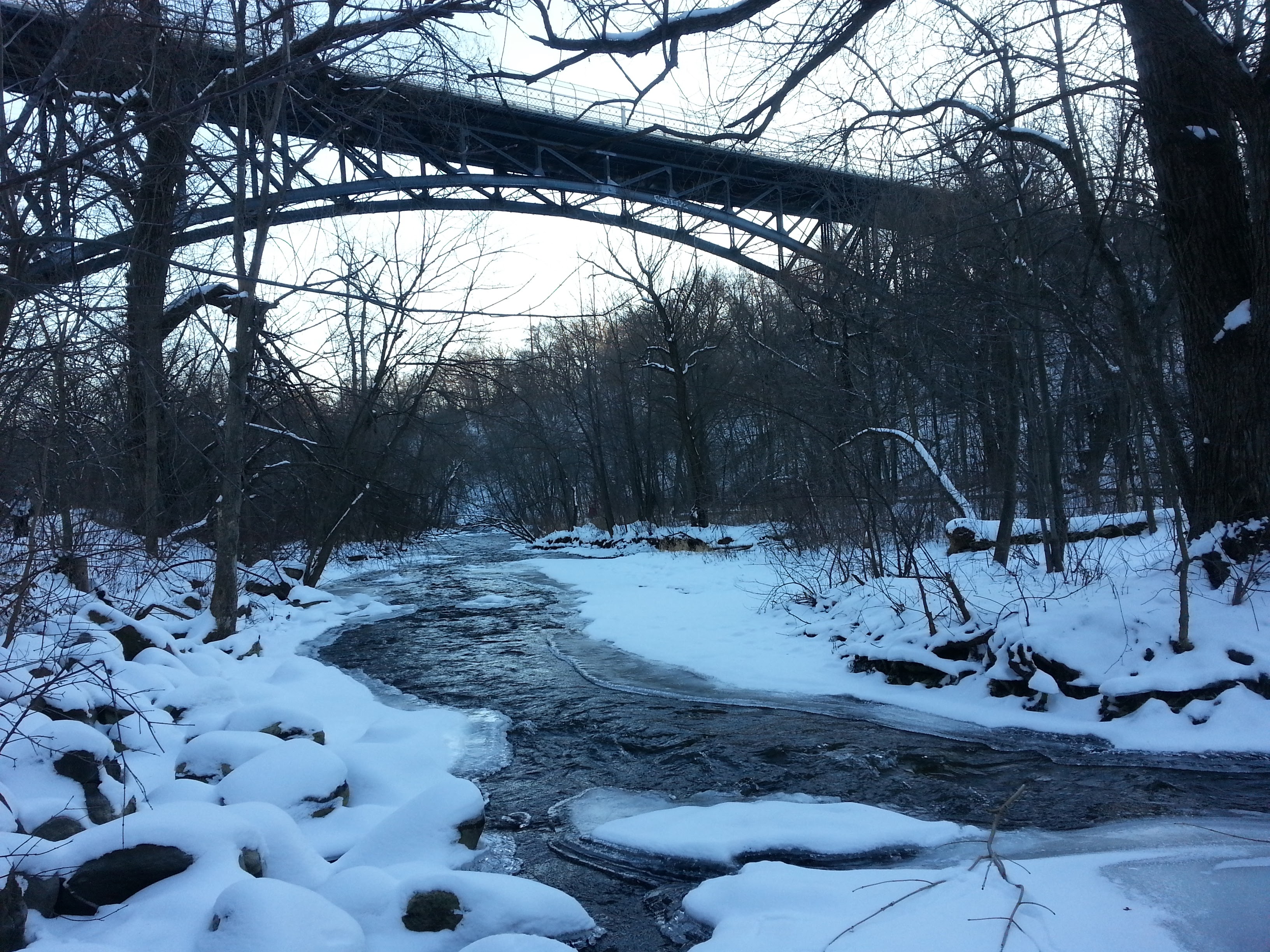
Included: Old Cedar Ave Bridge area