My Paris anglophone book club and I discussed Hurricane Season by Fernanda Melchor. For readers interested in a tragic story with violence and literary themes set in Mexico, my recommendation is that you skip this book and read “Under the Volcano” by Malcolm Lowry instead.
Approaching the book
One member backed out because of the violence and language.
I knew nothing about this book. Before I even tracked down a copy or read a blurb, a member of the group posted that she had put it down after 20 pages because of the violent language. I understood the aversion but decided to proceed anyway. I knew about the violence of Latin America from news reports and gore videos online, and decided to reserve the book anyway. It arrived within a week at Smith and Son on Rue de Rivoli, Paris.
My interest in the area
I knew the book was violent and bleak. I was eager to start anyway because of four factors.
First was my love of Under the Volcano, the masterpiece of Malcolm Lowry (his wife Margerie is credited with a large amount of editing and support). This book made an impression on me when I was 22, and I reread it once and watched the excellent film version with Albert Finney and Jacqueline Bisset. I thought perhaps this book would echo the portrayals of the looming Mexican landscape and the tragic self-destruction hinted at in the very first pages.
Second was my interest in Mexican/Central American ultraviolence. I know that 9 out of 10 of the cities with the highest murder rate per capita are in Mexico. I say this with no satisfaction, as United States cities are in there too and shamefully help to round out the top 100.
But Mexico is especially violent in terms of the proportion of the population affected and the gruesomeness of the crimes. Investigators struggle to explain the brutal executions and mutilations. I watched gore videos for a time when the Islamic State was surging and promoting their highly produced execution and torture videos. I would compare the ISIS videos to the gore videos from Latin America, and the latter were much worse. They included chainsaw beheadings, facial flayings, and bloody prison massacres on an unbelievable scale. Journalism in Mexico is stunted because of the threat of being killed just like the victims of the coverage. Beyond the Wikipedia articles laying out these facts, I was eager for a literary exploration of this violence.
Third are my thoughts of one day retiring or semi-retiring in Mexico after having only $300 000 invested. This country is a neighbor of the USA. It is cheap, and in the same time zone. And the long term visa requirements are very lax. I could continue earning the crap wages I have always earned throughout my working life, and still maintain a decent standard of living there from the age of 45 on. I would just have to mitigate my exposure to air pollution and noise, and avoid getting murdered. Simple, right?
Lastly, when I finally got my hands on the book, the binding and layout were attractive and the critic’s takes were eye catching. The exterior is in navy blue with white text. The body of the novel is in narrow but solid chunks of prose. Flipping through before beginning to read, I could see the text was full of run on sentences with few breaks. The paragraphs ran on for the full length of the chapter. This promised me something different, a new way of taking in an author’s viewpoint that I felt totally open to.
Critics in the jacket and first pages wrote of “the violent mythologies of one Mexican village,” “unheard victims of a society in crisis,” “social corrosion acquires a mythical shape,” “repellent yet compulsive,” “the wreckage of a forsaken Mexico governed by a nightmarish jungle law,” and most aptly, “a brutal portrait of small town claustrophobia, in which machismo is a prison and corruption isn’t just institutional but domestic, with families broken by incest and violence. Melchor’s long, snaking sentences make the book almost literally unputdownable, shifting our grasp of key events by continually creeping up on them from new angles. A formidable debut.”
My impressions of the book
The author is a Mexican woman with a journalism degree but I acknowledge I did not research whether she actually does journalism as a profession. I think she has written one book before, but this is her first novel to appear in English. The translation seems to be part of a British literary group’s efforts to fund authors who face persecution, limited means of dispersal, and silencing.
The book centers around a murder that turns out to be shallower and more meaningless the further you read. Some village kids set out to rob a local “witch” and end up killing her through sloppiness, inattention, wrong information, and drugs. Later chapters approach this murder from the narrow and stilted perspective of other characters, each of whom is represented as a mentally a fraction of a human being.
Gender and race and capitalism come up, but only obliquely and without any consistency or themes. The most horrific crime victims are men, but women are also victimized, by both men and women.
The style is third person and flowing, shifting from shallow person to shallow person. Each character has little motivation and no complex thoughts, so it is difficult to describe a style of characterization. But the unbroken paragraphs are undeniably effective, preventing you from putting down the book even during factual descriptions of rape, murder, incest, and other crimes. The unbroken style helped me to trudge through and finish the book despite my growing feeling of pointlessness.
One memorable writing technique was to begin and end the book with depictions of purity and goodness in males. The first scene is about a group of boys traveling in a troop along the riverside in nature, in a moment of purity and fun. The last scene is of a grandfather (not introduced previously) who sees off the dismembered body parts of local crime victims with a bit of compassion and wisdom, traits that are absent in the characters who haunt the rest of the book. In other words, the book was not a protest novel against men but against a sick society. I think these males, young and old, contrasted well with the males of the adolescent to middle aged variety who terrorized the rest of the book’s events, and were frequent victims themselves.
The characters were loosely defined and were mostly portrayed as listless victims. They had no deep motivations, not even of escaping the horrible little town they were in. They also did not have complex or nuanced thoughts. They were not attached to one another, but drifted about indifferently or clawed viciously at their nearest kindred.
The one obsession I recall among the characters was a person named Brando who watched bestiality porn incessantly and even crept out at night to watch feral dog mating and masturbate. This same character was later portrayed raping his drugged-out male friend.
Another character, although central, was shown to have few thoughts and no feelings to speak of. Despite being raped, he did not react at all. I am concerned when male rape victims are described as feeling and thinking nothing. The author suggests he huffs paint and smokes weed and cocaine. But these drugs do not bring on utter mindlessness and oblivion as far as I know. I struggle to understand the author’s motivations in showing a person like this, unless it is to distance herself from these people who she views as responsible for the ongoing atrocities in her country and assert, “I am not like them.”
The dialogue was sparse and unrealistic. Although marked with extreme violence, Mexico is also known for familism, where people love and take care of each other in large extended families. They do not refer to their own children and parents as “wastes, shit for brains, useless hobbling frog lipped scraggling runts.” (More on the colorful insults below.) It seemed that the author was showing the mutual hatred of people who, it is suggested, basically deserve whatever awful things are coming to them.
The plot and pacing had the method of drawing in and out, approaching the central crime obliquely from 3 or 4 characters, and revealing other awful crimes along the way. In fact, everyone is revealed to be a victim – of murder, rape, incest, robbery, infanticide, and sexual exploitation. The central victim is not quite elaborated on and does not speak for him or herself in any vivid way that might give him/her more personhood.
The themes and messages of the book escaped me. The author may have been showing a society in crisis. I believe she effectively contrasted the innocence of the young boys playing along the river, the young men at work, and the rueful grandfather with the shallow and violent men elsewhere in the book. But the women were just as bad, and would be committing equal crimes if they had the strength. “Vipers, shit-stirring spiteful beasts, and lazy cows,” to use the book’s terms, describes them well.
I think people shocked by the violence coming out of Mexico, Central and South America might come to this book looking for answers and a literary treatment, to get inside the heads of people in the region who face the violence. But I don’t think they will find any answers here. The most horrific crimes in the region tend to be associated with the drug trade and with gangs. But the violence depicted in this book is sometimes unintentional, or domestic in nature. The author has a journalism degree but this depiction of Mexico does not match up or with, or comment on, the most pertinent facts and trends.
The setting was an invented town, which is unfortunate. Mexico has a million splendid landscapes to incorporate into a book and describe in a literary fashion. But in Hurricane Season, the only landscapes mentioned are the river that runs through town. And it is not very vividly described. I got through the whole book not knowing what kind of eco-region the town was in – forested, desert, scrub, etc. Contrast this with Under the Volcano, where the mountains loom over the town in a foreboding way and the book opens with a memorable reminiscence at sunset by a central but detached character who contributed to the tragic fate of the protagonist while deeply regretting his death.
Further reflections
Again, the author is a journalist. Most of the horrific crimes in Mexico are from gang initiations and the drug trade. Yet the central crime was a botched robbery and was not planned. It was carried out sloppily and in a stupor by the local idiots. Why did the author portray it this way instead of modeling after real events and trends?
I question the motives of the author. She portrays these people as mindless fuck machines who think of nothing but huffing paint, raping each other, and murdering each other for pocket change. She also describes sex as about nothing more than mechanical penetration and the desire to humiliate. Perhaps she is taking mental revenge. It is within the power of an author to show a character’s thoughts. If an author shows a character as being morally hollow, thoughtless, feelingless, she can distance herself from them and show how the perpetrators of violence are separate, not like her, different. Perhaps she wants to appear to an international audience as being “not like them.”
The following passage shows one of these hollow, passively desperate people, who are not evil but just stupidly violent and exploitative:
“His eyes weren’t two demonic rings of light but – sunken and bloodshot, hollow and desperate – but totally normal.”
He had just had a dream or hallucination about a demon he thought might have been haunting him all his life and motivating these atrocities. But he found the truth was sickly and banal.
The casual racism focused on racialized physical features was also disturbing, though I am glad it was portrayed frankly. Gringo audiences sometimes look away, embarrassed, from colorism in Latin America. In fact, using the word “colorism” instead of “racism” is a way of denying that it is racism. “Black bitch,” “black and loose” and nasty descriptions of the genitals of the few black characters in the book make it pretty clear what’s up.
Again, I regret the superficial descriptions of the landscape. The only thing I remember about the geography of the town of La Matosa is that it sucks.
I am troubled when an author suggests that the male rape victim feels nothing. This suggests that you could torture and imprison and execute him, as many Mexicans are, and it would be ok because he would feel nothing. Mexican cartels use extreme violence. The police and military respond with extreme violence, and the cycle continues. Literary descriptions of victims have the power to subvert this cycle. But if the victims and perpetrators are just mindless, unfeeling husks, then their punishment does not matter.
This book was mercifully short, but it echoed my experience with the longer books The God of Small Things and with A Little Life. throw in every crime you can think of. Make as many characters as possible a victim. Use the “trauma plot” to flatten and distort. Except in this book, the suggestion is that they all kind of deserve it.
My favorite part of the book was the final scene: an old man buries the dismembered crime victims from the region and reflects that death is the only way out of this hellhole. The chapter was an abrupt change in style from the rest of the book, and this unnamed character was new. But I wish the whole book was like this. Third person, with reference to real trends, good descriptive language, and realistic thoughts from the old man who presided over the burials.
The insults and name calling were one rich and varied aspect of the book. Here is a sample of how the people of La Matosa think of each other:
“Trollop, meddlesome old hags, shameless pigs, evil skank, squalid slags, ugly bint, useless prick, whore of a mother, slut of a mother, pussy, sneak, fucking freeloader, thick as shit and lazy, rotten cow, cuckold husband, shit-stirring harpies, vipers, self-seeking, spiteful beasts, cunt, shit for brains cousin, little dipshit, useless bums and pair of ass-lickers, little chickenshit, ugly, dark skinned, lanky thing, a lizard on two feet, leprous little shit, dirty sluts, two faced harpy, old bitch, strumpet, wasters, useless, spineless shirkers, rent boy homos getting up to their filth, like dogs, in broad daylight, pisshead, mongrel bitch, vermin, wicked little tramp, stinking animal, dopey cow, ratface, rotten dog, gobshites, goddamn numbskull, little slut, cripple fuck, half starved fleabag, old git, poofter, dick eater, top dog big cheese cunt, filthy tart, loose old birds, junkie prick, frog lipped scraggy runts sucking on their black nipples, waste of space, freak, fuckwit, black bitch, animal, fucking dick-eating Chabela, ugly fuck, quack cunts, idiot, ridiculous fucking fool, lazy spongers, fucking piss artist, pack of wild animals, floozy, six mistakes (a mother referring to her children), old half breed, black and loose, hobbling cunt, useless cripple, parasite, brain-dead dipstick, sniveller, shitdick, faggot fuck, hobbling loudmouth cunt, gayboy, wicked good-for-nothing, weasel fag, butt-munching faggot fuck, nasty queer shit, an utterly pointless life, a dead loss, snot-faced ragdoll, gringo fag, nigger, fagstabber, junkie prick, frog lipped scraggy runts sucking on their black nipples, waste of space, freak, fuckwit, black bitch.”
These insults were breathtaking because of their relentless use and how they were applied by every character to everyone close to them.
My experience in the book club
Members were from Brazil, Guatemala, UK, Germany, France, and the USA. Several of the women actually liked the book and were not shocked by the language. An Australian woman attested to the frequent use of the word “cunt” in her country and how she was not turned off. A woman from the UK hated the language. There was no clear gender divide in liking or disliking the book, although at least one person refused to read beyond page 20 because of the horrific language.
I shared that I am fascinated by the contrast between Mexican violence and familism. How can a society that prizes family be so marred by extreme violence? I would like to see this explored. Hurricane Season did not portray this aspect of Mexican culture. Instead, each family was shown to be made of broken animals who despised their kin and sheltered with each other only for warmth and physical gratification.
Someone brought up that “some students were kidnapped recently.” I don’t think they realized that 40 kids were murdered, likely with the involvement of the military. The true scale of the violence is shocking, and it sometimes does not reach us. Perhaps everyone should watch a gore video once in a while, as I did. The mangled bodies of traffic violence victims in the USA are seldom shown. This might make them wake up and act with urgency.
Someone brought up A Clockwork Orange and the violent language there. I thought the invented language of A Clockwork Orange was more horrific than the street language here also. The author, Anthony burgess, invented the terms using Russian to convey a heightened casual brutality.
Other thoughts
Old dilemma between trying new fiction and old
Since this recently published book disappointed me a bit, I return to my old dilemma when choosing a new book: hitting up a reliable classic or trying something new and unexpected. I crave variety and newness, but I also want quality.
When I crack open a staid old epic, I am assured of finely crafted language, deep cultural significance, and a mountain of analysis and the ability to revisit it in other formats such as film or plays, even if I never quite finish the book.
On the other hand, when I try a new author, I might find it forgettable, flash in the pan, and lacking wider cultural interpretation.
Then there is the third option: just sticking to nonfiction, which has been my habit lately. But I always want one book of fiction at hand. I think that making progress in a tome such as Paradise Lost, even if I only get through one passage a week, is more rewarding for me than a dud from the “emerging authors” list. I suppose I am not helping new authors emerge. But is that my problem? I am also doing little to support poets, street musicians, and the multitude of other people producing and publishing free content all over social media (and me on this blog). Some works simply do not stand the test of time. Perhaps they belong in other formats, such as long form journalism, rather than a novel.
How I spend my time in Paris is the same as back home
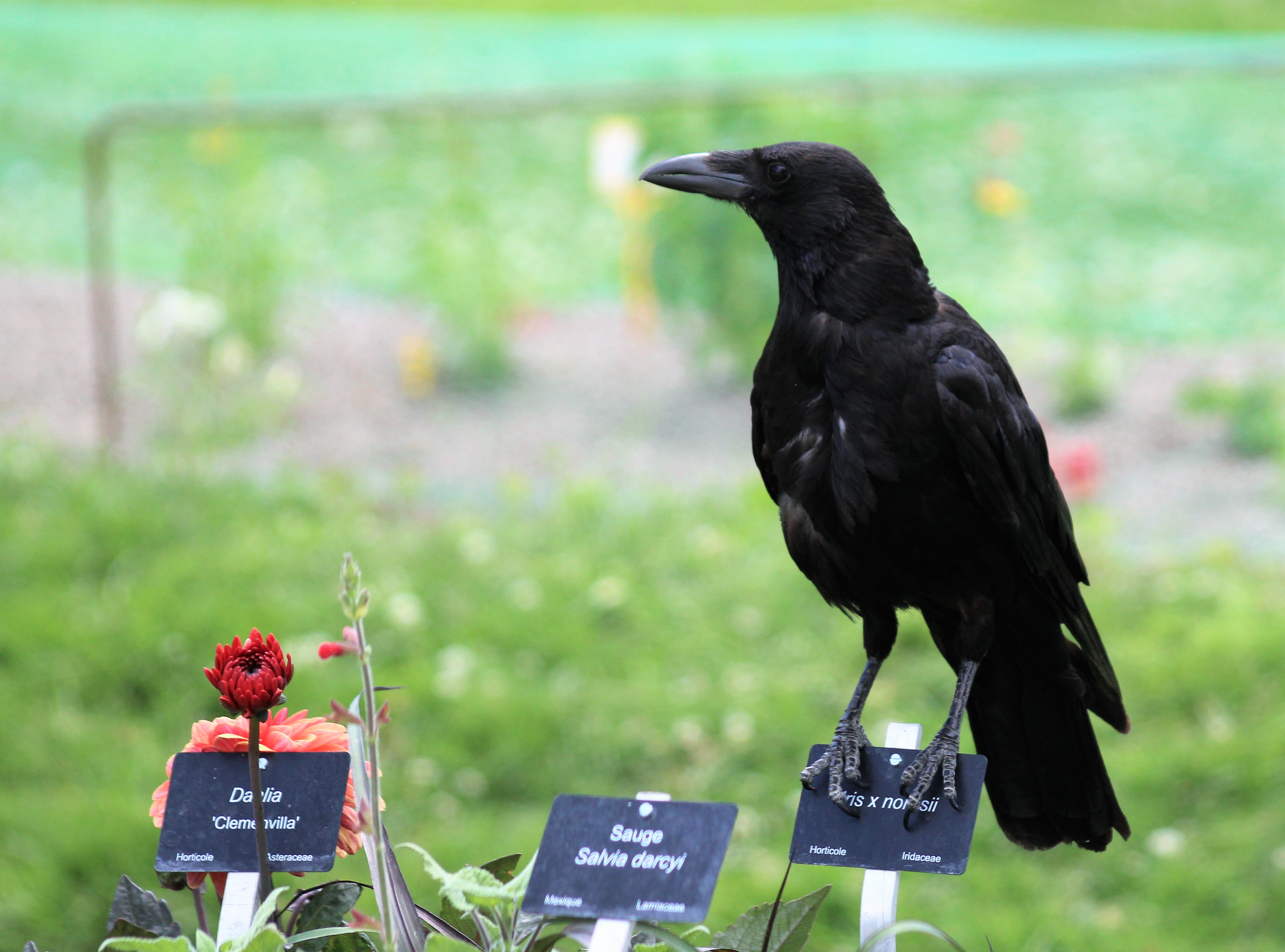
This is a funny fact. I tend to look at birds, read, bike, walk, and do free cultural and environmental activities such as this book club. Being here has the added benefit of rapidly improving my French and giving me a break from excessive hours of paid employment.
Last word
I will describe the book Hurricane Season with its own language:
“Verbal onslaught”
“And Norma walked to the middle of the room with the dress in her hand, overcome by Chabela’s verbal onslaught and by the haze from the cigarettes that the woman chain-smoked even as she talked, never once coughing or spluttering, even when she bent down to pick things off the floor and toss them onto the bed, or as she took items of clothing piled on top of the bedspread and discarded them on the floor.”
The book’s theme: fucking and killing each other at once, amid humiliation and failure, with passive thoughts of escape
“He was sure that Luismi was waiting for Brando to come to him so they could finish what they’d started, en las noches cuando duermo, on that fetid mattress, si de insomnia, their unfinished business of fucking and killing each other, maybe the two things at once. He also thought about the botched efforts to get the money and his eyes welled up in humiliation. And finally he thought about leaving anyway.”
Final recommendation
Skip this one and read Under the Volcano instead.
About the photo
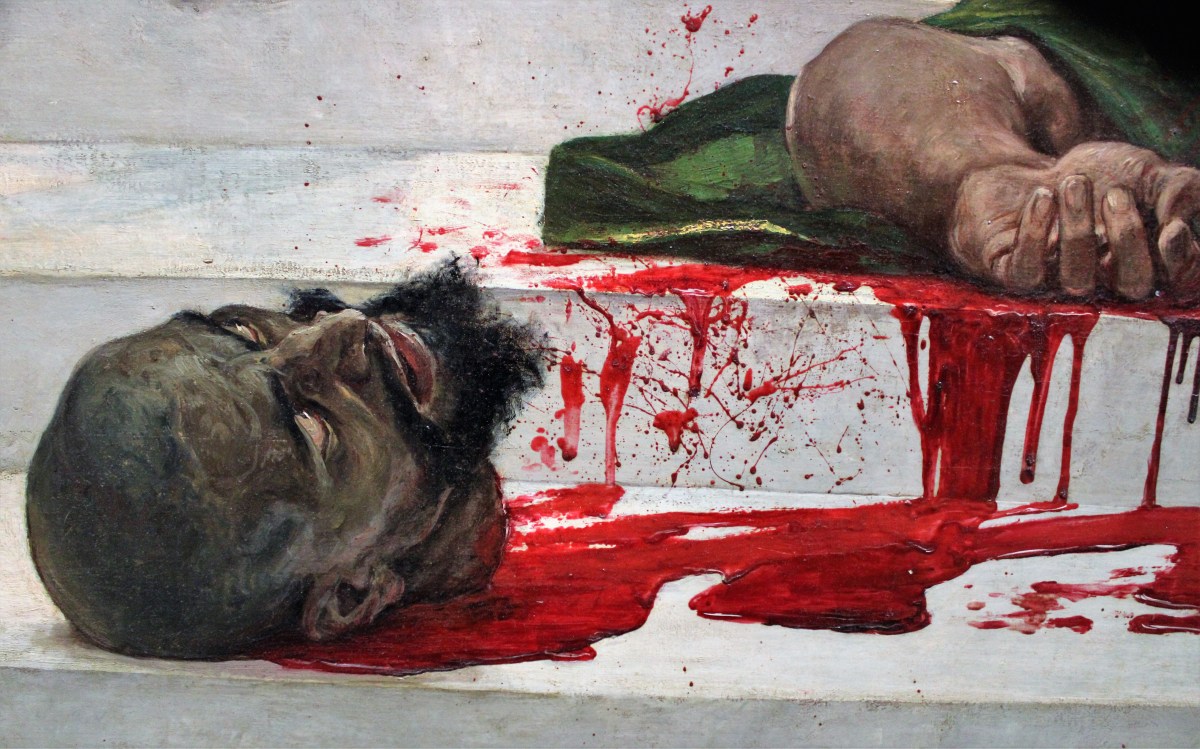
A beheaded man in a detail of a painting at the Musée D’Orsay.



 pseudoisaac