Some recent reading

Fahrenheit 451

I read the stage adaptation in junior high and saw the movie, both as part of an assignment. Recently after the author Ray Bradbury died I checked out the audiobook from the library on a whim and listened to it while exercising and doing house chores. I liked it so much I checked out the book and read it properly because I felt I may have missed parts of it while listening. I then checked out the authorized graphic novel adaptation, which was also brilliant. So apparently I really liked it and wanted more.

The neat thing about these dystopian novels is when the protagonist undergoes a kind of awakening, where he or she is an oddball who has an inkling that something is wrong. Events in the middle third of the book kindle that unease, and in the third part he rebels and becomes an exile from that society or reaches a refuge or somehow throws a wrench into the system he has come to hate. This formula always thrills me.

Montag, the hero, is the establishment type who is an oddball inside. I really like Ray Bradbury’s preface where he describes how the idea for the book began: he was walking with a friend in Los Angeles when a police officer stopped them and questioned them, as if challenging their right to be pedestrians, as if singling out the oddballs as threatening and suspicious.

At the same time the author’s contempt for practical knowledge sometimes seems a little over-the-top.

The Giver

The Giver is a book I read at the age of ten or eleven, and I have long meant to revisit it. I like the dinnertime conversations where the family unit discusses the emotions they had that day and inevitably label them and come to some kind of neat resolution. Later the protagonist scoffs at this little family scene and reflects on how they hadn’t truly felt anything.

Moby Dick

I think this book was pre-loaded on my Kindle. I read the first few pages, expecting to lose interest quickly. But it turned out the narrator was quite clever and funny, and the funny parts were interspersed with moments of true insight. Many chapters follow a pattern where there is some kind of emotional climax at the end. I couldn’t put it down and found myself wanting to underline passages, so I bought a physical copy. But the physical copy doesn’t have a built-in dictionary function to look up the many words in the book that I am unfamiliar with. Plus the Kindle is easier to read in bed. So this is one instance where the physical book and the digital copy are on an equal footing for me, and I find myself reading the book half on the Kindle and half on paper.

I almost feel silly when people ask me what I’m reading, because Moby Dick is one of those books that everyone feels they ought to read, but have little inclination to do so. It seems so bland. I was never assigned it in school but almost would have been grateful if I had. I am about half way through and find that there are endless threads to follow in this book. It is one of those books that makes you feel an awakening inside. I especially like the narrator’s description of his friend Queequeg.

I look forward to finishing it, but it’s so good that I am in no rush to get there. I fear the “book hangover” that I recently found on urbandictionary.com where the real world feels surreal or incomplete because your mind is still in the book’s world. Finally I will understand the many cultural references we have to this towering novel. I look forward to watching a movie adaptation of it (the one whose screenplay happened to be written by Ray Bradbury) and maybe reading a comic adaptation.

Program or Be Programmed

A neat little book by one of the creators of the documentary “Merchants of Cool” (which was shown to me by at least three different high school teachers and one college professor over the years). The book is composed of ten commands for the digital age.

His thesis is exactly as the title implies: everyone needs to learn about information technology despite the education system’s slowness to teach programming languages and digital literacy and digital skepticism. We all must learn a programming language or at least be aware that the programs we use have their own code behind them, their own design and biases, and to some extent their own predetermined set of outcomes, created by the programmer and implicit in the code.

I recall a college class where the room was loaded with projectors, outlets, microphones, and numerous hookups and screens for each student to connect their computers to the projectors. One day the professor asked us to use the technology to put together a presentation on something we were talking about. On other days we didn’t use the computers and connections at all. I think this scenario is sort of what the author is talking about: if we are saturated with technology, we have to at least be aware of it. We have to use it to our advantage, not just use it because it is there. Nor should we refuse to engage with such tools simply because they have very serious downsides.

The focus of the book is mostly on the internet and the culture it fosters. The author writes a lot about the bias inherent in different technologies. For instance, the underlying technology of the internet is biased toward anonymity and instantaneity and a lack of respect for copyright. The author cites “Alone Together,” which I also really enjoyed.

At the old Cedar Avenue bridge today

It can’t hurt to try to write a daily poem, right? Right? An acquaintance told me of an acquaintance of hers who was going to write a poem a day in an effort at self-improvement. I think a more realistic goal is to take a photo a day. Here’s one of a bird at the old Cedar Avenue bridge. It seems he has new epaulets coming in.

Dandelion stalks’ crisp snap,

And clumsy June bugs I’ve trapped.

I’m alive to a new soil and bug and catkin.

In early summer I feel a melting within.

Theodore Wirth Park

A really nice trail run there on Sunday. I feel that the place is an all-seasons retreat. A gem. I go there in the summer for birding and hiking and trail runs. In the winter I ski the well-groomed trails. And helping the foundation there remove garlic mustard and buckthorn gives me a sense of ownership of the place.

Being alone on the trails also gives me a sense of ownership. On this Sunday morning there were few or no people around, probably because of the heavy rains the night before that had downed some trees, flooded segments of the trail and let loose waves of mosquitoes.

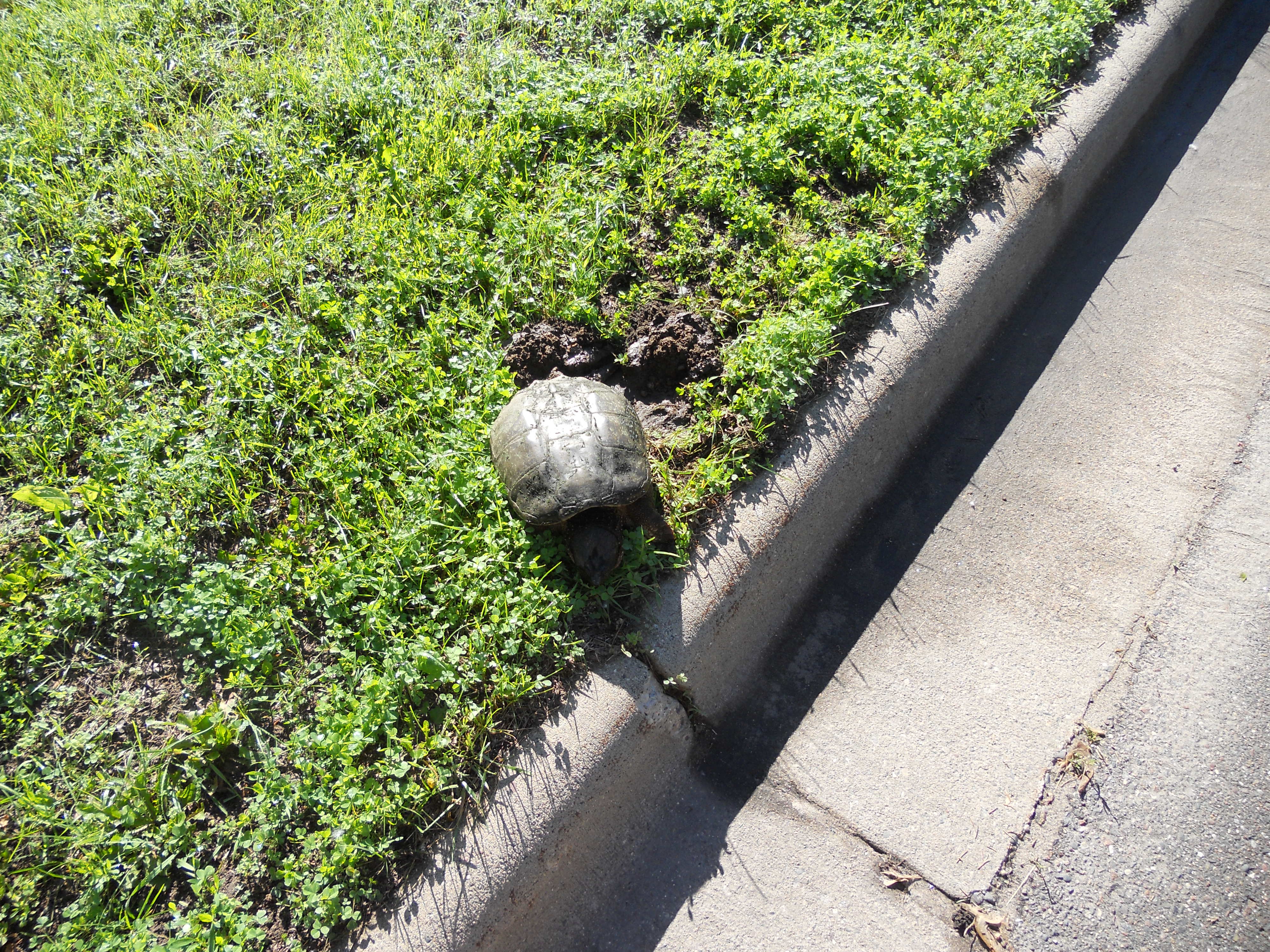
I also found a snapping turtle by the side of the road. She was relatively small and was trying to scrape a hole to lay eggs in. It didn’t seem like a great spot for eggs. It reminded me of the softshell turtle I witnessed laying eggs on Lake Calhoun’s most crowded beach. I guess they know what they’re doing.

Traffic engineers

Public health and traffic engineers

Mon 20 May 2013

Although I don’t want to work in the healthcare sector anymore, I feel rewarded when “tabling” for a sexual health clinic in the area. I like meeting adolescents/young people outside of my other job, which is also with young people but in a more formal environment.

Hearing about the latest in public health and the various sexually transmitted infections and pregnancy rates and so on is always interesting. I like talking with the staff and other volunteers about the latest news in the field. One thing that’s clear is that everyone wants young people to happy, healthy and safe. What they disagree about is what resources they need access to in order to attain that state. Many people believe that adolescents should not have easy access to high-quality, inexpensive or free condoms; or that parental consent should be required for pregnancy testing; or that any positive STI result should be reported to parents, and so on.

And sometimes a parent will stop by and share their opinion that young people shouldn’t be exposed to any sexual health information or resources at all if it is not directly through their parents. I often hear variations on the statement, “Well, if the parents would just get involved with their children, then pregnancies/infections wouldn’t happen.”

But I return again and again to an analogy with traffic engineers (bear with me here). When a traffic engineer gathers data indicating that a particular intersection or stretch of highway yields a lot of deadly crashes each year, they act on it. They do not simply shrug and say, “Well, people are just stupid and they need to learn to drive.” Instead they design and implement a new traffic system for that area so that people don’t have to die anymore just for trying to drive to work. The traffic engineer takes responsibility for reducing needless death and injury.

In the same way public health experts, nurses, doctors, volunteers and others see that young people are getting STIs and unintended pregnancies and other problems and they make the effort to help. There is no deferring to parents who either cannot or will not take the needed measures. If young people are contracting diseases as serious as HIV and hepatitis, then the responsibility to intervene rests with adults, all judgement aside.

Included: A Black Dog Lake (Burnsville, MN) photo I took in January. It will all be overgrown when I go back there later this week. Maybe that bald eagle pair will be back as well.

Iraq war ten-year anniversary

Iraq war anniversary

The ten-year anniversary of the start of the USA/Coalition war in Iraq has come and gone. I have been hearing a lot about it, mostly from the Beeb, aka Auntie, aka the BBC World Service. It’s funny how on this anniversary I get more information and analysis from the BBC than from US news media. They also seem to have a more respectable and nuanced conversation about it. But maybe that’s just the British accent that does it.

I remember being a senior in high school when the tanks were on the ground and the jets were in the air and the "embedded" journalists gave their action-packed dispatches from the desert and from the bombed-out cities. I recall watching CNN and network news for hours at a time, feeding on each new update, hanging on Dan Rather’s every word. I watched correspondents bring out maps and flashy graphics with troop movements and diagrams and analysis from former generals.

Eventually Dan Rather was fired for some scandal. The "Mission Accomplished" photo op became a national embarrassment, and a decade of gruesome roadside bombings followed. The news about Iraq became more deadly and less interesting to read. I once saw a burned-out car on the front page of the New York Times. When I looked closer I was surprised to realize the shape inside it was not a car seat but the charred head and neck of an Iraqi, with his or her mouth wide open in agony.

I asked an exchange student from France, "Qu’est-ce que tu penses de la guerre en Irak?" This was at the height of anti-French sentiment in the US, symbolized by the idiotic "freedom fries" campaign. How typical that our symbol of protest was embodied in a greasy fast food product. I had hoped for an honest response from her but she was too polie to say what she really thought about the latest American war. At the same time, anti-Americanism reached a new height, with considerable justification notwithstanding some regrettable excesses here and there. It turned out France was right. And they didn’t have to receive daily shipments of flag-draped coffins.

In fact, in the US, pictures of flag-draped coffins were treated as obscenity and respected news organizations self-censored. Self-censor seems like another term that came into common use during the war.

Only six months before watching that invasion, I sat in a high school classroom where my British literature teacher explained that he was providing us with the pro-invasion perspective. He said that as high schoolers we were bombarded with anti-war messages by the mainstream media. He believed Saddam Hussein had weapons of mass destruction and that Al-Qaida was operating in the country under his protection.

He explained rather dramatically how there were people in the Middle East who, if they could push a button and kill you, me and every other American, they would do it in an instant. The girl behind me gasped and said, "Oh my god, why do they want to do that?" I recall a lot of such utterances from her. She happened to be a ginger.

Now, in 2013, Iran has become unhinged without a rival next door. The US is dealing with mentally ill and unemployed veterans and a bloated military. Afghanistan, Yemen, the Maghreb, and Pakistan remain havens for Al-Qaida. And the country is reeling from debt, partly due to the unfunded war.

If there is one thing that can prevent this kind of thing from happening again, it is a mandatory draft, without loopholes that allow the educated and the rich to dodge it. I credit Jesse Ventura for introducing me to that idea. Ventura, the author of the not-bestselling book "Democrips and Rebloodlicans," had several good ideas.

I don’t wish to be incomplete. There is one other thing that can prevent this kind of thing from happening again: drones. The military and the weapon makers seem to have taken lessons from Iraq and have decided that the next war will be fought by robotic remotely controlled aircraft. In my opinion American drones are almost certainly carrying nuclear weapons by now. And if the drones are not already carrying nuclear weapons, they soon will be.

Included: Hans, just a few days ago. I can’t believe he recovered from his foot infection. I had no idea rats could fight off any kind of illness. I didn’t think they had the immune system for it. I didn’t think they could compensate since they are so small. I have been giving him high-calorie foods and helping him groom. He seems to be free of acute illness but is definitely in long-term decline. I believe he is comfortable. He smells fine and is not losing hair. He clamors to get out of his cage when he hears me, just as ever. He still seems to crave attention and likes to be scratched behind his neck and all around his ears. He is a very elderly rat. I believe he has less than one week to live.

Hans is aging

My dear rat Hans is showing his age. I got him about a year and a half ago from the humane society, and when I got him they estimated him at one and a half years. So he must be about three years old, possibly older.

This is considered elderly for a rat. I noticed how his hair was a little coarser, he was more content just to rest instead of constantly moving around, and his spine protruded more than it used to.

But in just the last two weeks, he really seems lethargic and unkempt. Rats normally groom themselves fastidiously, but Hans is a little smellier and a little coarser all the time. He sometimes blinks one eye at a time, absurdly. He even limps somewhat, making me think he chewed one of his hindlimb nails too hard. He hasn’t fully swept away from his eyes the porphyrin discharge that his little rat nostrils produce. When eating peanut butter or bread, he extends and retracts his neck rhythmically, using all kinds of accessory muscles to swallow the food. This is normal, but for him the process of pushing down the bolus of food is drawn out to the point where it looks like he might choke.

Ultimately I think Hans has only a few weeks left. A rodent’s life is so short. I once watched a nature documentary in which a scientist professed his love and fascination with rodents. He said they were like humans, only sped up in every way.

I had a professor who mentioned a cross-species observation about heart rate and lifespan. Apparently mammals with a rapid heart rate such as mice live short lives, while mammals such as elephants with a slow heart rate live for much longer. The observation was that the total number of heart beats in the lifespan is relatively constant, no matter what the mammal.

Of course this is not a very scientific statement, much like the often-repeated bromide that "no two snowflakes are alike." It has the scent of truth, and is easy to repeat, but has never been proven convincingly.

But in Hans’ case the "heartbeat rule" is true enough. When I first got him I thought he would never calm down. He was the most athletic of all my rats. He seemed thicker and more muscular. More independent than my previous rat, Carl, who was so cuddly and sedate. Hans was way too adept at stealing my food. And he had serious claws.

And now in sad contrast to those first impressions I watch his bobbing head and his excessive eye crud and his fast, fast heartbeat and I wish he had more time. I wish I knew what his backstory was. At the humane society the volunteer told me that Hans was found in an apartment that had been vacated by the human owner and that the rat was just sitting there in the cage waiting to be rescued. I named him Hans because he is blond like Nordic people and because I think a lot about my fictional Hans Castorp a lot. I wish I knew more about his story.

I wish I had more time.

I knew Hans would not last forever. He is not a living toy. I am okay with that and have initiated rat hospice. For the past two weeks and onward he gets as much peanut butter as he wants. When he is out he gets to just sleep in my shirt as much as he wants. I am very gently with him. And I am making sure his water bottle is very accessible for him, as I don’t think he can devote much effort to milking the thing.

Soon I will come home and find he has assumed room temperature. He will get a decent burial. Or maybe I will make a liquor decanter out of him, I haven’t decided yet.

Cultivating a person is way dumb

I have to confess to a major misunderstanding of how a person develops. For the longest time I thought of a person as being like a plant or a garden that has to be cultivated. I thought that reading, absorbing and reflecting was the way that a person developed. I thought study and thought led to a moment where everything "clicks" and one attains deep understanding, almost like a vision quest or monk attaining enlightenment or a degree ceremony or something. I was aided in this misconception by a culture that over-values long works of fiction.

Two instances in the past few months have helped me realize that a person’s development is measured not by what is in his or her head but rather by what he or she does, produces or makes.

First, I watched a friend who always had a "project" going on. No matter how small the project or how halting his progress in finishing it, there was always one going on. Eventually there was something to look at or share, some kind of object or demonstration. The same amount of time invested in reading Tolstoy would produce an appallingly repetitive and trite conversation instead.

Second, I thought about the extremely elaborate and detailed description of the world that modern science has established. Earlier civilizations had just as much certainty about their own cosmologies, but the difference is that our current one can be used to accomplish things. Ancient people may have had exquisitely detailed descriptions of their creation and deities and so on, but since it was based on nonsense they could not be used for any particular purpose beyond ritual. Detailed, evidence-based descriptions of the world in terms of cause and effect have advanced marvelously, though the ability to actually put that knowledge to work definitely lags behind the knowledge.

Ultimately I think it is doing and acting that matters. No matter how thoughtful and cultivated someone’s mind is, it remains locked up invisibly in squishy wet brain material until it is expressed in some kind of output that one can share or demonstrate with others.

Included: Theodore Wirth Park one February night. I liked the cross-county skiing, sure, but stopping to crack open my thermos of coffee was the highlight. I was suitably layered so the wet flakes coming down didn’t bother me. With the hills there I had to stop regularly to catch my breath.

Space dicks

I have been on Reddit Spacedicks a lot lately. I don’t know why. At first I thought it was morbid curiosity that drew me there. But morbid curiosity is what causes drivers to slow down to look at a deadly crash site. In my case, I find myself going back again and again to look at extremely graphic images that would have caused my stomach to knot up ten years ago. This is not the same as morbid curiosity. The site even shows up in my "recently closed tabs" page in my web browser, which is unfortunate.

I can’t quite put my finger on it, but the kind of sites I have been looking at are not porn and not strictly gore, but rather the weirdest, most unusual stuff I can find. I seem to seek out things that I have never seen anywhere else. Things that various authorities have sought to limit access to in libraries, classrooms, television, etc. Pure forbidden novelty, in other words.

Spacedicks, I ought to explain, is a section of the popular social media site Reddit where non-staff contributors post shocking images, videos, and discussion posts displaying mutilation, humiliation, feces play, gore, and other travesties of humanity that are preserved, replicated, distributed and exposed thanks to digital cameras and unlimited web access. People who twenty years ago would have simply been weird in private are now plastered across this site for weirdos like me to look at.

"Shocking," I say, because the images and videos I see there are meant to be shocking. But for me an image of a man "butterflying" his own penis is not very shocking because I have seen it before. Several times, in fact. Even road accidents courtesy of Brazil and Thailand seem pedestrian (pardon the pun) because there is so much footage of them around. I have even noticed certain trends. For instance, although a country like the Congo may have more outright brutality because of the conflicts there, it is middle-income countries that produce the greatest volume of graphic footage of road accidents, sexual disasters, etc. because they are the ones where the average bystander is more likely to have a camera-phone handy when a human being gets ground up into a paste.

But the thing that separates Spacedicks from the average gore site is that the posts there tend to have a twist. Instead of simply being extremely graphic or having a well-researched explanation from the person who posted the link, they often have a strangely human component. The individual pictured is often looking directly into the camera. Sometimes there is an extremely banal backdrop, with family portraits and flowery drapes and other recognizable household items that you might find at your great-aunt’s place. The impression is that people who like to be shat upon are just like you and me. The only difference is that they made the mistake of letting their misadventures be recorded digitally.

I’ll get over it eventually. But for now I am very attracted to the new, the unusual and the strange, as ever, no matter how weird or gory or poopy.

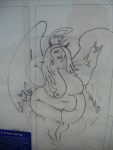
Attached: a graffiti artist drew a full-figured lady in marker at a bus stop on Central and Broadway in NE Minneapolis.

Also a small animal (who was an idiot) made a loop in its tracks down by Black Dog Lake on its way to its destination.

And finally some hackey-sack artists, photographed with permission, permission granted with a shrug, and hackey-sack artists look silly and purposeless in still shots. Just a thought.

Newtown tragedy

As we recover from the shooting of 26 children and adults in an elementary school in Newtown, Connecticut a week ago, I think it is important to reflect on another loss that occurred in 2012. Although it played out over the course of the year instead of in a paroxysm of violence, the impact of the video "Gangnam Style" by the South Korean rapper Psy can be considered tragic as well.

News agencies recently reported that the video has been viewed over one billion times on Youtube, the first video ever to reach that milestone on the site. Take one billion views, at 4.22 minutes per view, 525 600 minutes per year, and an average life expectancy of 78.2 years for an American (Americans are actually 37th in the international life expectancy ranking according to Wikipedia!). This arithmetic gives 103 lifetimes.

Some of the viewings tallied may have been groups of viewers and some may have been videos playing in the background while the computer user did other things. But many other views also must have occurred on other sites, making one billion views a good rough estimate. And the number of views is still rising. In other words, more lives will be taken by Gangnam Style in 2013 and beyond.

There is an unstated assumption here: that the video Gangnam Style is crap. One hundred and three lives were lost only in the sense that the time spent watching that stupid video is time that those people will never get back. But seeing the video at least helps one to get references here and there. And people will eventually get to a "look back and laugh" phase, as with the time when we all did the Macarena. So it’s not all bad.

Come to think of it, I watched it twice myself. And I want my eight minutes and 26 seconds back.

Included: me and a child I found

Maturing a little and not downloading music illegally

I bought a “Beach House” CD, listened to it with full attention, loved it, came to know each and moment of the album. I bought a Mastodon CD and a Ravi Shankar CD. Then I stopped downloading music on Soulseek illegally even though it was so normal among my acquaintances to do so. I felt I had become like a child who was used to getting every music track I wanted immediately, without having to pay for it in cash, subscription, or advertising eyeballs. I even felt like taking was somewhat excusable because I didn’t have any money, even though I would despise this attitude in others. After all, that would make me a Robin Hood who stole files from the poor and gave them to myself. I looked over my digital collection and found 1970s French prog, Enya, the entire Rush library, and thought, “How did I ever accumulate all this?” Definitely not by paying. So I deleted Soulseek from my computer out of guilt, and lost all those music files when my computer died besides.

But I was still going to the library and burning CDs. I knew it was probably illegal, but avoided checking because I knew it would guilt me into stopping. Then I read a blog post by a professor of the economics of music at a college in Georgia. He demolished, systematically, the whiny, narrow, and entitled view expressed in a separate blog post by a music intern at a public radio station. This intern, although living a music-centered life, had admitted to burning hundreds of CDs onto her computer, and never having bought an album in her adult life, and then asked rhetorically, “I just want immediate access to any song I want, at any time. Is that so much to ask?” The professor completely rebutted this and then connected the decline in artist compensation to the illegal but profitable file sharing culture online, where major corporations such as Google get a take of the advertising money while claiming that their hands are technically clean. He also, convincingly, connected the dirty digital revolution with the suicide of a musician friend of his.

So finally I stopped with the library shenanigans because I was obviously being dishonest with myself. The next step will be deleting the files from my computer. There are not a whole lot, but still it will be painful. There is an additional problem: although I now abstain from illegal downloading and CD burning, I am not suddenly helping artists get rewarded for their work: I am buying just as few CDs as before, and simply listening to more podcasts and radio instead. And I am still within the law if I check out music CDs from the library for personal use only within the borrowing window.

Perhaps, like the critics on the radio show Sound Opinions seem to think, the music industry in its traditional form is fucked.

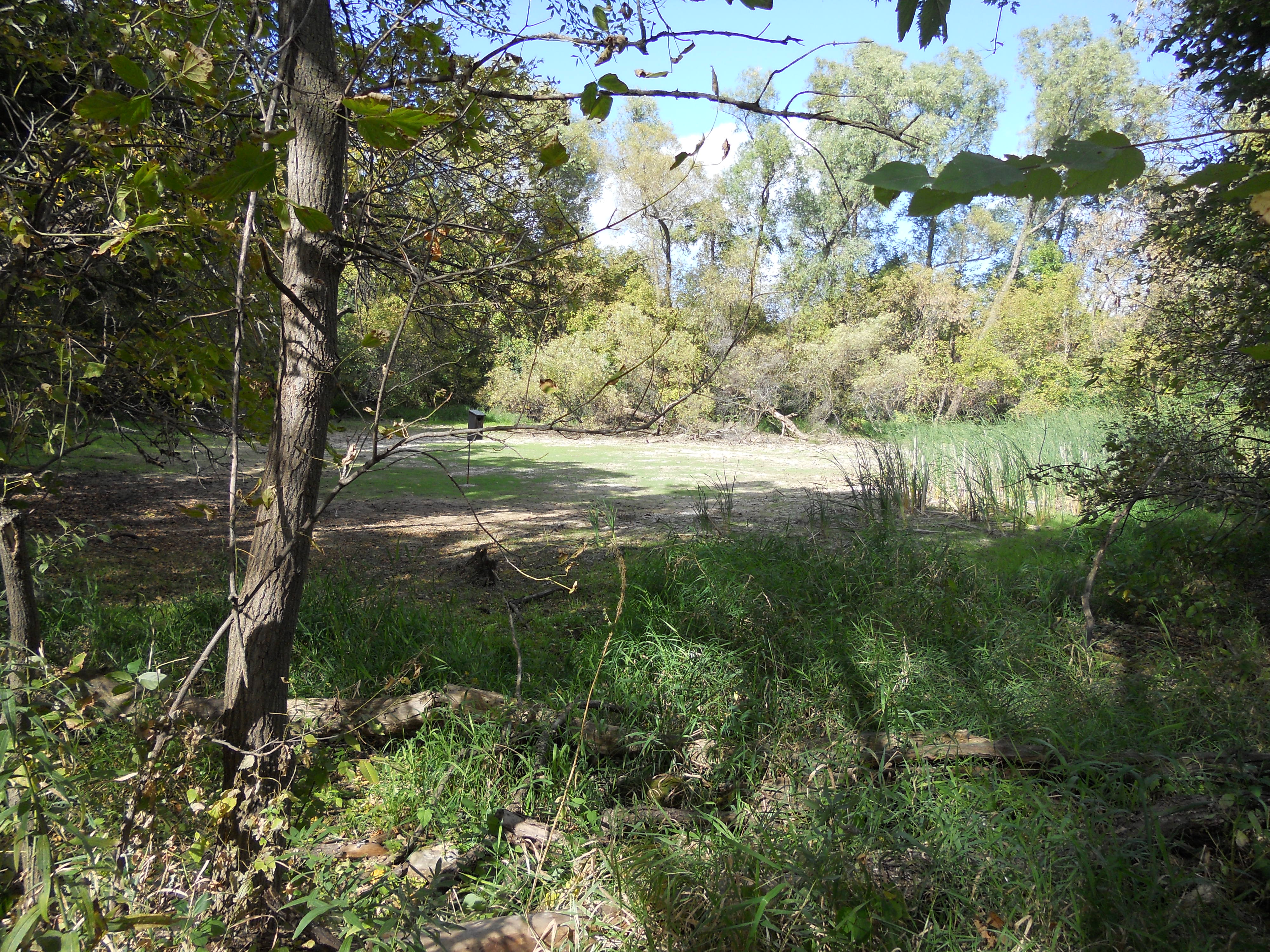
Included: a wood duck box sitting in the middle of what was a pond at Dodge Nature Center in late September. Hopefully we will get some snow soon to alleviate this drought.