A visit to the Bois de Vincennes

The Bois de Vincennes is a realm of parkland and urban recreation just outside the périphérique (outer ring road) of Paris. Although it is crisscrossed by roads, there is a lot of nature to observe (and not just well-fed Canada geese). I biked from my apartment in the 14th arrondissement to this large green patch on the map.

I enjoyed the sights of boaters, picnickers, and children hitting piñatas. Going further into the trails of this regional park, I discovered the Jardin Botanique, a sanctuary of botanical science. Here, there were exhibitions of centuries-old bonsai trees, each branch, leaf, and needle telling a story of resilience and harmony in response to deliberate deprivation of soil, nutrients, and space. Amid these small forms, peacocks strutted around, and although they squawked loudly, I did not see the full display of their tail feathers.

Walking in the Jardin Botanique is a journey of ecological exploration. Each area of the garden carries a theme, such as an area of plant evolution (for example, cycads that dominated the Earth for many millions of years) or a regional type of plant flora (such as northern conifers). The interplay of the Paris region’s climate with these carefully cultivated spaces held my attention for a few hours of wandering. A light rain threatened to get more intense but held off for the evening. Although it was very humid, I appreciated finally getting some rain after many days of hot, dry, dusty sunshine.

Amid my enjoyment of nature, a familiar event happened. As I looked for the ornithological center (closed off and inaccessible), a man approached me and asked if I knew the woods well. I hate to stereotype, but I was near the nudist area, and I think he was a gay cruiser looking for some kind of sexual encounter. This has happened to me before as a clueless birder in an urban but secluded natural area. I like vaginas only, but I might return to improve the consistency of my tan. When I said I was looking for the ornithological center, he said, "Alors, bonne chance," and moved on.

I think the Bois de Boulogne on the other side of town may be a more primeval natural area with fewer roads, and I plan to visit it soon, even though it is farther from me. Although I liked the Bois de Vincennes, it is very much an urban oasis. I will revisit this extraordinary sanctuary and also find other tranquil and accessible patches of green near me.

About the photo
Temple Romantique de l’Île de Reuilly au Bois de Vincennes, juin 2023

A visit to the Grande galerie de l’évolution

I visited this incredible gallery of life forms in paris and learned a lot.

French natural history museum, opened for an exhibition in the late 1800s

The Grande galerie de l’evolution opened during an exhibition during the heyday of Paris and was renovated more recently. The displays are lifelike and out in the open, a far cry from other natural history museums where the specimens are locked in cabinets and behind glass. The African animals on the second floor are in a procession, allowing you to see and compare their often immense size. The whale skeletons are unbelievably huge and allow you to look at the leg bones which have almost disappeared over the evolutionary timescale.

Blown away by the models and taxonomy. Informative text

The saddest gallery is of course the one on extinct or threatened species. I especially hate the thought that we continue to kill off our closest relatives, such as the chimp, gorilla, and orangutan.

Recent reports on the ivory billed woodpecker come to mind. A researcher once again used poor quality photographs and wishful thinking to claim that the species is still alive somewhere in Louisiana. We want to believe we didn’t kill off this iconic American bird by destroying its habitat. We want to preserve this one species while not restoring the swampland where it evolved.

Connect to my summer of reading in biology

This summer I read widely in biology. Two books were my highlights: on the Origin of species by Charles Darwin, and the Deep History of Ourselves by joseph ledoux.

My personal admiration for Darwin grew. I loved his homespun experiments and observations. I liked his extensive correspondence with scientists throughout the world, noted conversationally in the book. Several of them are cited in the Grande galerie and on the street names of paris. The book is actually pretty readable.

I wonder about the inductive method in biology and how it might serve us in the future. It is sometimes looked down upon as not being scientifically rigorous despite being the foundation of darwin’s method. For example, if you applied inductive reasoning to the motion of objects, you would be misled. Only experimentation and mathematization would lead you to the laws of motion or relativity.

But especially now, AI can synthesize a huge amount of information and come to conclusions without necessarily using the scientific method. The scientific method may just be a guard against human heuristic errors and thinking traps. An AI could bypass some of this if trained (or trained to train) in the right way. After all, some of the frontiers of science are partly speculative. We cannot run experiments on distant life forms or exoplanets. But we can model and induce and generalize based on what we observe, just as Darwin did.

The Deep History of Ourselves was fantastic and it felt like a powerhouse display of all we have learned since Darwin’s time. The book captures the endless inventiveness of nature, the tradeoffs of multicellularity, and the relentless selection pressures that eventually selected for consciousness. The book ends abruptly with a chapter on emotion, suggesting that emotion is the most recent and most derived trait in the conscious mind.

The book, though subtitled as being about minds, was much more than that. As Ledoux described in his introduction, his writings about the mind led him further and further back, until he was outside his realm of expertise and had to adopt the writing process of a science journalist. Funny, because the same thing happened to Carl Sagan and Ann Druyan when they wrote “shadows of forgotten ancestors” (also highly recommended).

Napped on a bench

I napped on a bench in the Jardin des plantes under a plane tree and enjoyed the crows, doves and parakeets that live in this park.

Author reading

I dropped into an author reading at Shakespeare and Co. I immediately disliked the author when he spoke, within 2 minutes, about how he “dislikes” capitalism, apologized for writing a “manspreading” book, and said that F. Scott Fitzgerald was problematic. He also dropped the words misogynistic, patriarchy and bigotry like they were code words for immediate acceptance by the crowd.

I reflected on how he also did a reading at the Portland OR book festival while I was there. So he gets to criticize capitalism while being feted in cities across the globe. And he criticizes colonialism while existing as a white man with the same first name as villain Hernan Cortes. And, he disavows and veils his status while enjoying the privilege and prestige of celebrity.

I am a liberal but I understand the vexation of conservatives who see liberals guarding some strands of international culture like a club where you have to use the correct language to enter.

Square Michel Foucault

On my bike home I stumbled across Square Michel Foucault. I thought of my high school teacher who said Foucault’s Discipline and Punish was the most influential book on him ever.

A college professor also alluded to this book but I disliked him, especially when he blended his scholarship with cultural criticism.

When I finally read Discipline and Punish I found no overall theory but much theorizing. The most important idea for me was how power is often internalized rather than being imposed on us through visible means.

The most important image I retained from the book that of the panopticon, where every subject knows he could be watched at any time, but does not know for sure. I brought it up when we discussed la surveillance automatisee in my French class.

Now, almost all cultural output is being synthesized into something we can’t predict. Not just text, but also images, voice and video are being pumped in to AI models. What comes out is already shocking us. What will eventually take shape is uncertain. There is a feeling that there is no turning back.

In that square I considered the smallness of human life and the fractal nature of reality

Take a dart and throw it at a map of paris. The street or square is probably named after a person. Each one of those people has a thousand scholars who have spent their career studying the ideas, art, or discoveries of that one person. Plus innumerable Wikipedia articles, imitators, and local applications of their work.

With the endless minute iteration, refinement, and detailing of human output, perhaps we are in need of something that can take the entire sweep of things and create something new or general within seconds. This might be a meta-contribution that AI provides.

However, it’s also possible that our true legacy is those endless cultural productions. If we meet aliens, they will have refined the same science and engineering that we have. It is cultural evolution that we have to offer. As EO Wilson observed.

Which brings me back to culture.

I lounged in front of la tour Eiffel and a little drama played out

Two young Italian women were picnicking.

A loose medium size, long haired golden retriever juvenile ran up and went straight for their sandwich and devoured it.

The young woman of 20 or so years said, no, no, no, but did not grab the dog.

It swallowed the loaf and then pounced on another food item: some chips.

A French woman ran up and apologized profusely.

They communicated and eventually sorted out that the woman would go to the shop across the street and buy what the dog had stolen.

Dispatches from home

My mom and dad got covid again. Now it is just a nuisance instead of a deadly threat.

A friend visits California where family and summertime experiences of a man in his 20s await.

Another friend raises a young family. I hope to pick up right where we left off when I return and see how his young kids have shot up.

A friend from india helped me find a contact in France who will help if I run into trouble. I reflect that Indians are everywhere across the globe because of their huge and growing numbers (1.5 billion).

A sister has a new baby on the way. A 3D ultrasound shows her face before she is even born. She and her wife are creating the family they deeply desire and have nurtured already. I sometimes wonder if I have turned my back on them by moving away. I know that I am looked at with puzzlement and misunderstanding. But I can’t live in Minnesota because it is too cold there. And I can’t help but keep people at arm’s length because I basically trust no one.

About the photo

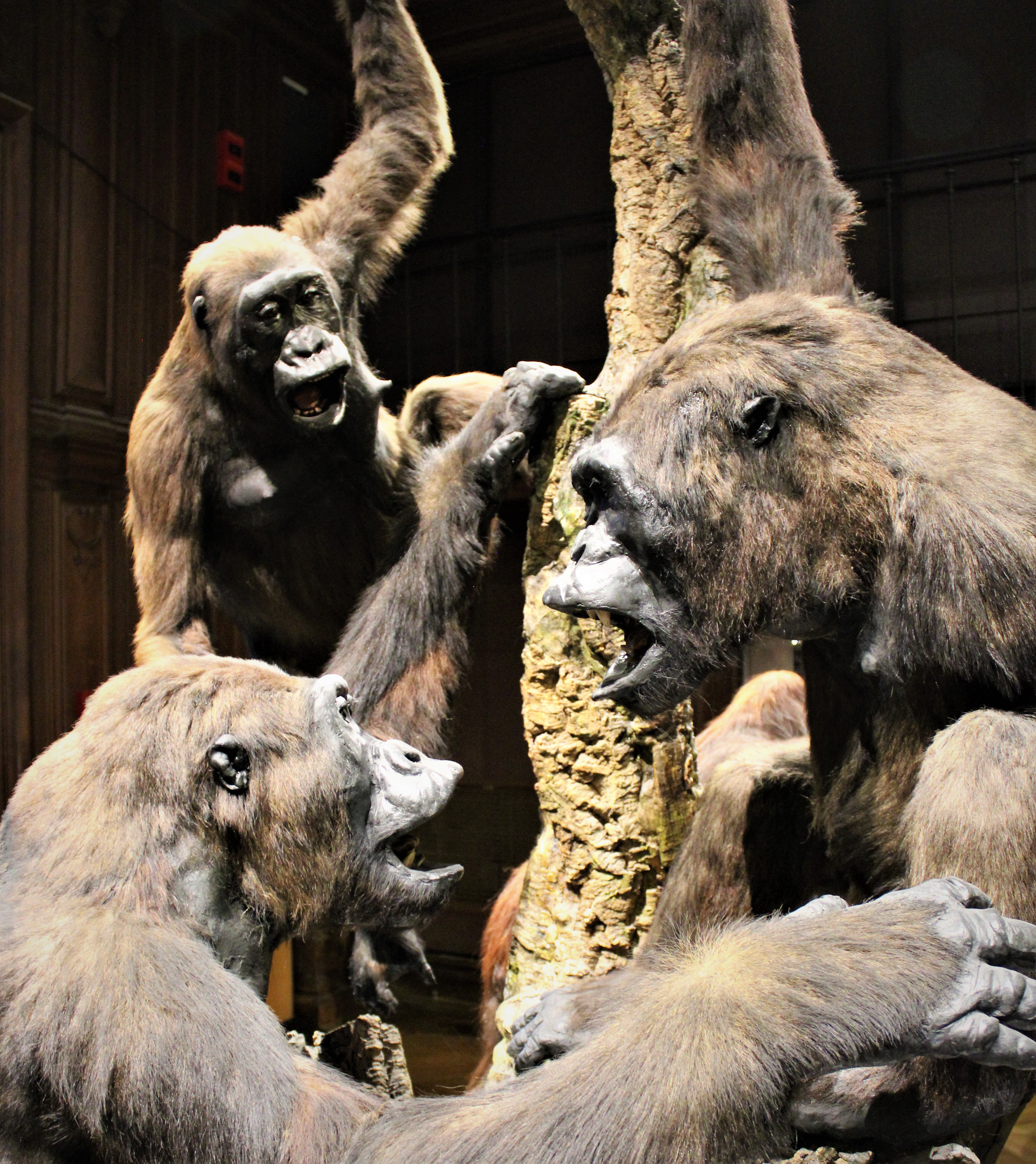
Three apes (I think they are bonobos) pant, hoot and gesture at the Grande galerie de l’evolution.

I LOVE PARIS

I arrived on 01 June and started my four-month stay in the city of lights. I look forward to mastering oral communication in the French language, exploring the city on bike and on foot, and turning to a new chapter in life.

why I am here and why I chose a long stay

I have studied French for a long time but never attained fluency. I considered how much I had been marked by a one-month stay on a francophone island and by a four-month biology semester in South India, and decided to take another “semester” to finally reach fluency or near-fluency.

I committed to the idea almost as soon as I thought of it, with no weighing of options or consulting with anybody.

I looked at economic trends and reassured myself that hiring will remain strong for the rest of the year.

I looked at my finances and realized I had a mostly unused car sitting on a parking pad 24/7. I sold that and got more than I had paid for it two years previously. I have unreimbursed health expenditures from my health savings account that I can liquidate at any time. I have credit and some contract income and in an absolute emergency I can raid a retirement fund (though that will only happen if a disaster strikes).

I considered my investment horizon, which was too far out. I had been saving money for my 70s and 80s. However, those days may never come. After all, my mom developed dementia in her 60s. Other relatives have died young. I have no drooling children to save money for. Life is good and it’s meant to be enjoyed now. Although I expect a long life, I can only reasonably plan for 3 to 5 years out.

I also considered the absurd fiction of money, and how I was earning a higher hourly rate in an entry level job performed by high school dropouts and non English speaking immigrants than I had after getting a bachelor’s degree and working in science for 10 years. I realized that I could come back and do absolutely anything and it would be a step up from what I am doing now. I also have remote earning opportunities and technical training to commence anytime.

I looked with regret at my expired passport, which meant I had not left the country in ten years.

I looked at my life and realized I craved a turning point, a marker. Although I celebrate my childfree lifestyle, which made this trip possible, that kind of life does not have automatic markers such as “Jimmy went off to school today,” so it helps to create your own.

my travel and logistics experience

Getting a long stay visa was pricey and required a drive to San Francisco and there were small delays. I had intended to depart for the spring. But I think I will enjoy summer and early fall here even more. I am a lover of hot afternoons and warm evenings.

Getting an apartment took some bureaucracy but was worthwhile since I secured a stay for four months in the same place, with no hopping about during my stay. The place is nicer than my living space in Seattle and my neighbors always say bonsoir.

The trip was simple and involved a one hour layover in Iceland that saved me $800. the view from the tarmac was cold and foggy. I watched Tar and Goodfellas and both were excellent.

At Charles de Gaulle airport a French class classmate recognized me and banged on the window to say hi. He is a gentle retired doctor who reads French policiers and visits the country often, especially by train.

Taking the train into town was simple, and walking the compact city is easy. first impressions upon emerging from the train was that the city reeks of diesel exhaust, plus there are lots of inattentive crowds and many foreign and domestic tourists.

my Airbnb host was good. I had to stay in this tiny attic accommodation on the Ile St Louis one night before I could proceed to my long term rental. I accidentally locked myself out first thing and had to crawl onto the roof, which gave me a good photo opportunity as the Pantheon and other sites were visible.

I had Indian food near the Centre Pompidou because it was the only terrasse that was not crowded.

The next day on my walk to my long term rental I visited the pantheon, had a sad iced coffee that was meant to imitate a cold brew but fell short, relaxed in the Jardin du Luxembourg, and overheard some female American students discussing how to increase their “body count” ASAP, and I enjoyed the fantastic dry weather hovering around 80 F during the afternoon and evening.

on the walk to my apartment I passed through the Montparnasse cemetery and stumbled upon the grave of former president Jacques Chirac.

laptop, bike and groceries

The rest was simple. I secured the foundations of daily life, which for me are the same here as in Seattle: a laptop, bike and grocery store.

The bike shop staff who helped me was a friendly, fit blond named Amandine. After I said I wanted the bike, she asked what I wanted for dessert after this plat principal (as in, bike accessories). I wanted her for dessert but did not have the language to say so.

first fun excursions and visits

I jogged through the Jardin des Plantes, did lots of walking, enjoyed sunset and meditation on the seine, and checked out the Centre Pompidou.

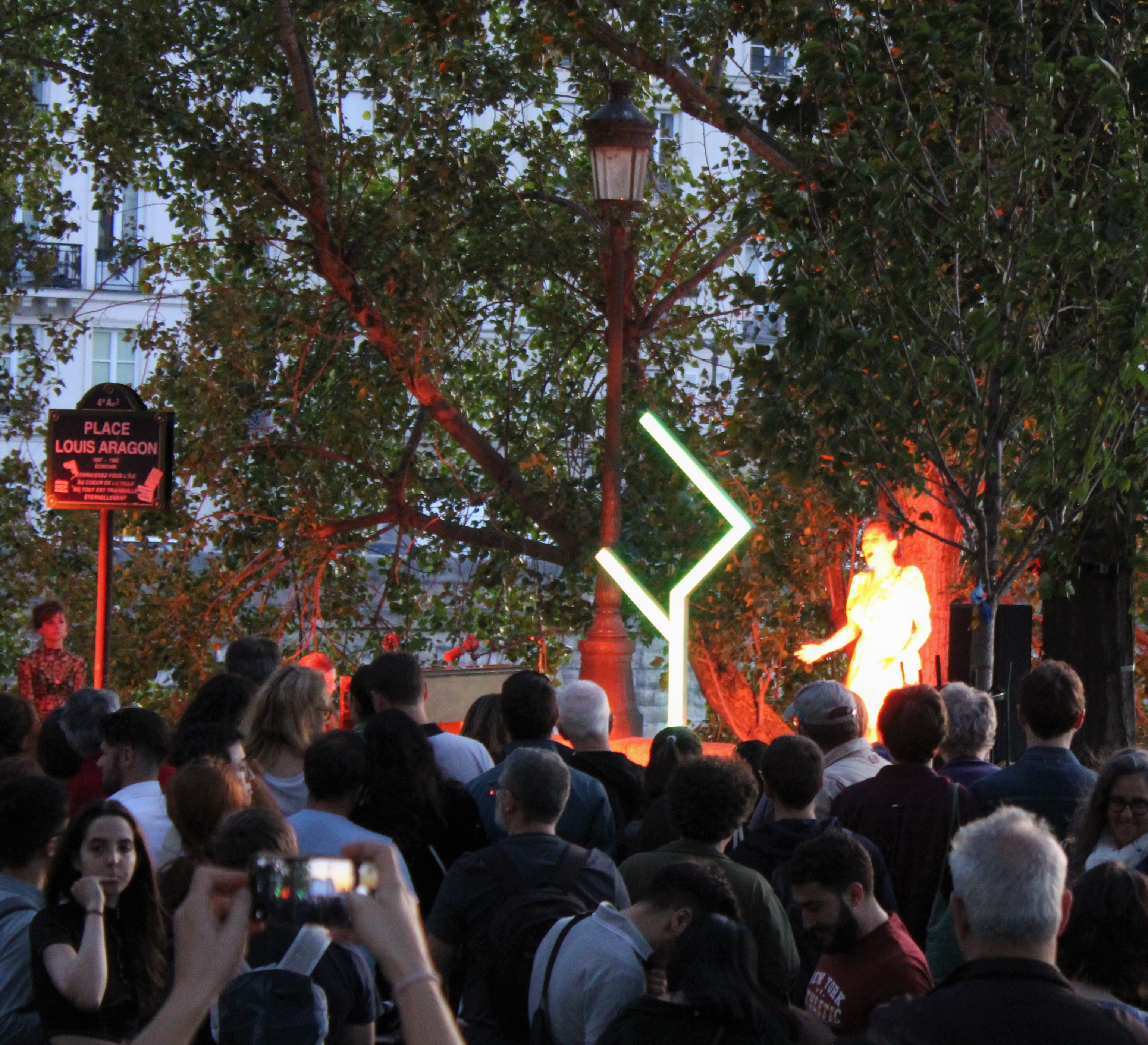
I biked around to enjoy Nuit blanche events, where the city is lit up with outdoor opera, music and art installations, and a lovely concert in the courtyard of the Archives nationales de France. In this place in particular, I enjoyed the large painting of the heads of aristocrats being paraded around by the people. And in the pop-up opera at the tip of the Ile Saint Louis, I had an almost magical moment when the two female singers performed the Flower Duet of Delibes. It was almost magical, because the nearby drumming and guitar from young people picnicking and drinking on the Seine mostly drowned out their gentle voices.

planning an ideal day

With four months of unemployment ahead of me, and some worthy goals in mind, I must plan my ideal day. I have this in mind:

wake up at an hour fitting my chronotype

read the news and enjoy my coffee (this habit will never change)

work out with a jog or bike ride and a weights session at the plein air setup at Jardin du Luxembourg.

study French

go on an excursion (usually free, sometimes a museum, performance, reading, or other). Take photos and get better at photography.

get home and do some writing and actual work

do something to integrate in French society such as saying hello and meeting people, picking up trash, volunteering in native plantings, etc.

evening: cook, grab a cocktail, watch a movie or read a book in French.

In other words, I am designing an ideal day, and in the future I will ruthlessly cut away things that detract from this ideal day (the primary target being the rigid, on-site, 40 hour workweek)

gray man techniques

I am intrigued by the idea of the gray man, who blends in wherever he goes. There is abundant advice online on how to do this.

You don’t want to look like a spy, but rather, be forgettable. A Russian woman in Seattle was once certain enough to address me in Russian, because I had a Soviet looking crew cut and was in all black. And my brother thinks I am a spy. I do like a martini and I plan on getting several of them here. But instead of cultivating mystery it’s better to just be a part of the crowd.

In a way, it’s uncanny. As a man with a purposeful stride, a face that’s been called stoic or expressionless, and a pair of sunglasses, I found that the only person who has approached me is one Asian guy with no English nor French, looking for directions. I had just been to the installation he sought so I was able to help him. But just as in Seattle, I can go for days without anyone saying a word to me.

thinking about and communicating with the people I have (temporarily) left behind

My mom seems a little uncomfortable and unwell. Some kind of crud is being passed around her care facility. I think she will bounce back with rest.

At least three friendships of mine were blossoming back in Seattle. I regret pausing them, but they are indeed only on pause, and Seattle is my permanent home. I will return. I am not a vagabond. this kind of trip is something I will do every few years, but I will not take off in abruptly.

what’s next

Tomorrow I will visit the Grand galerie de l’evolution and the Musee de l’histoire naturelle. I am more eager for these than the Louvre or the Eiffel Tower. I imagine I will be seeing the specimens pondered over by the French scientists Darwin corresponded with, such as Saint-Hilaire, Milne-Edwards, and the elder Saint-Hilaire.

Four months means four day trips. I will visit the palais de Versailles, the chateau de Fontainebleau, la ville de Chartres, and the jardins a Giverny, which Monet considered his greatest masterpiece.

If I can, I will make friends quickly so I can enjoy their place at the beach or mountains when the city empties out later in summer. Failing that, I will simply enjoy the quieter streets and perhaps take a train to Rome or Florence.

I will find a female companion who likes learning, peace, fun and exploration. The women here dress much better than those in Seattle, where baggy clothes straight from the 90s predominate.

Next up is those museums and a book reading at Shakespeare and Co. I’ll check out the spectacular stuff. But mostly I will be biking, hanging out in parks, studying, and doing the mental and laptop work that will have a big effect on my future.

About the photo

Pop-up opera at the Place Louis Aragon.

Seattle drivers: a photo gallery

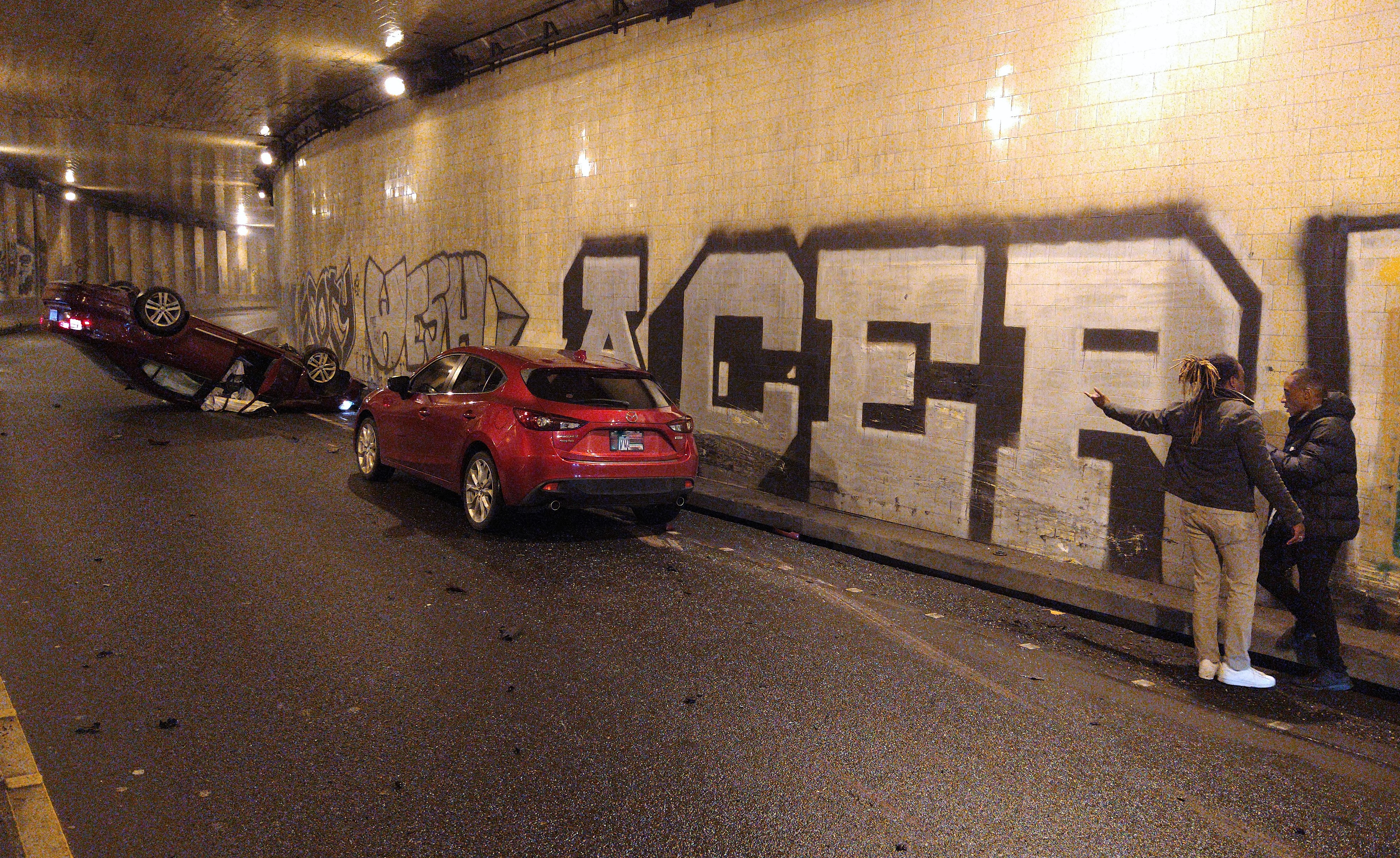
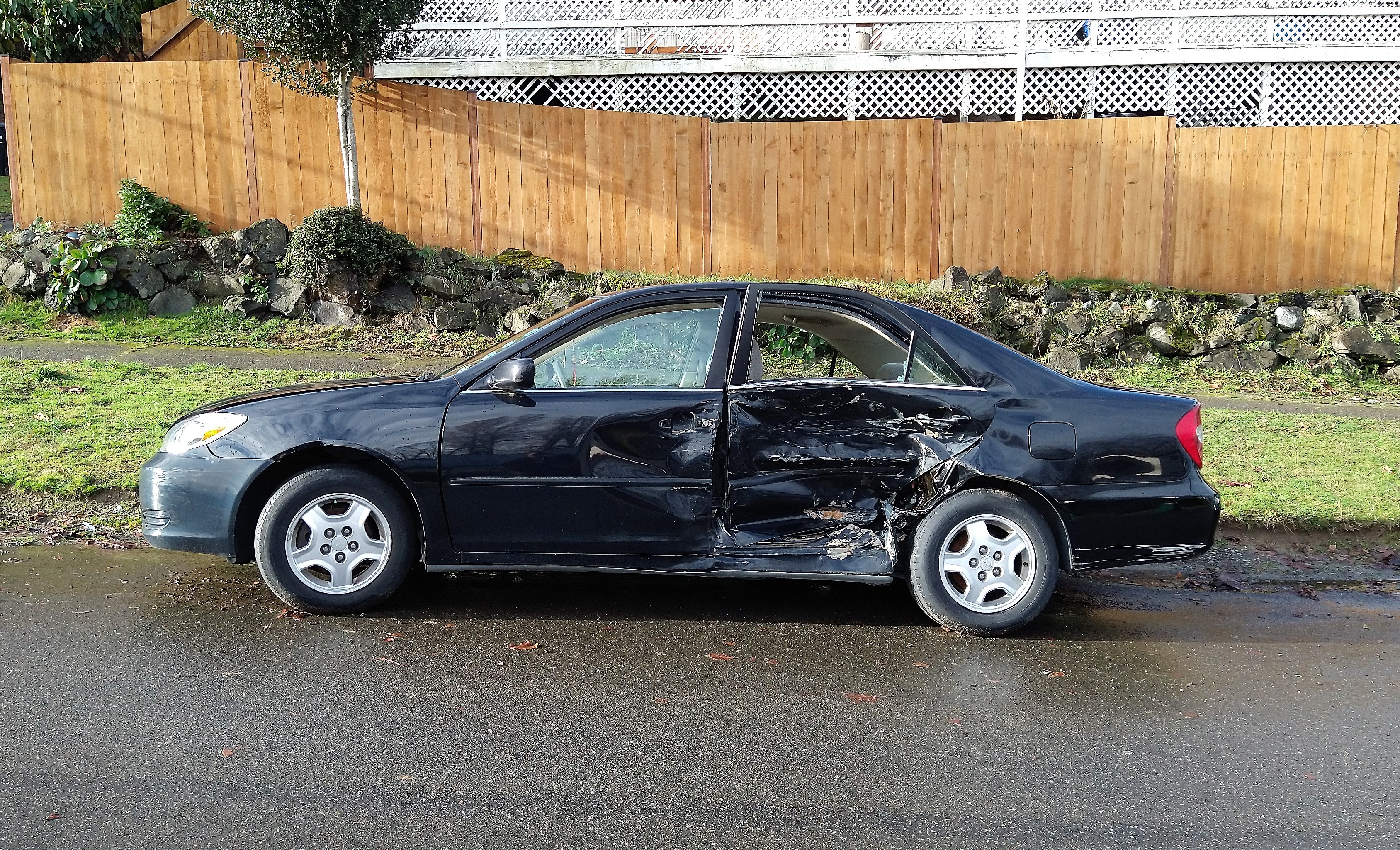
A drunk, speeding driver (gesturing) crashed right in front of me after cutting across multiple lanes at 50 miles per hour and flipped his vehicle. He and his friend walked away unscathed. He kept repeating how he didn’t do anything wrong, acted like a victim of a random occurrence, and hugged me and thanked god he was alive. While he was hugging me, I thought about my absolute certainty that if I had been on my bike and he had struck me, he would have sped off and left me to die, just like a driver recently killed mother of 4 Mbiya Lutumba and sped off. The only thing that kept this reckless, drunk driver at the scene was the fact that he could not leave since the jackass had flipped his car.

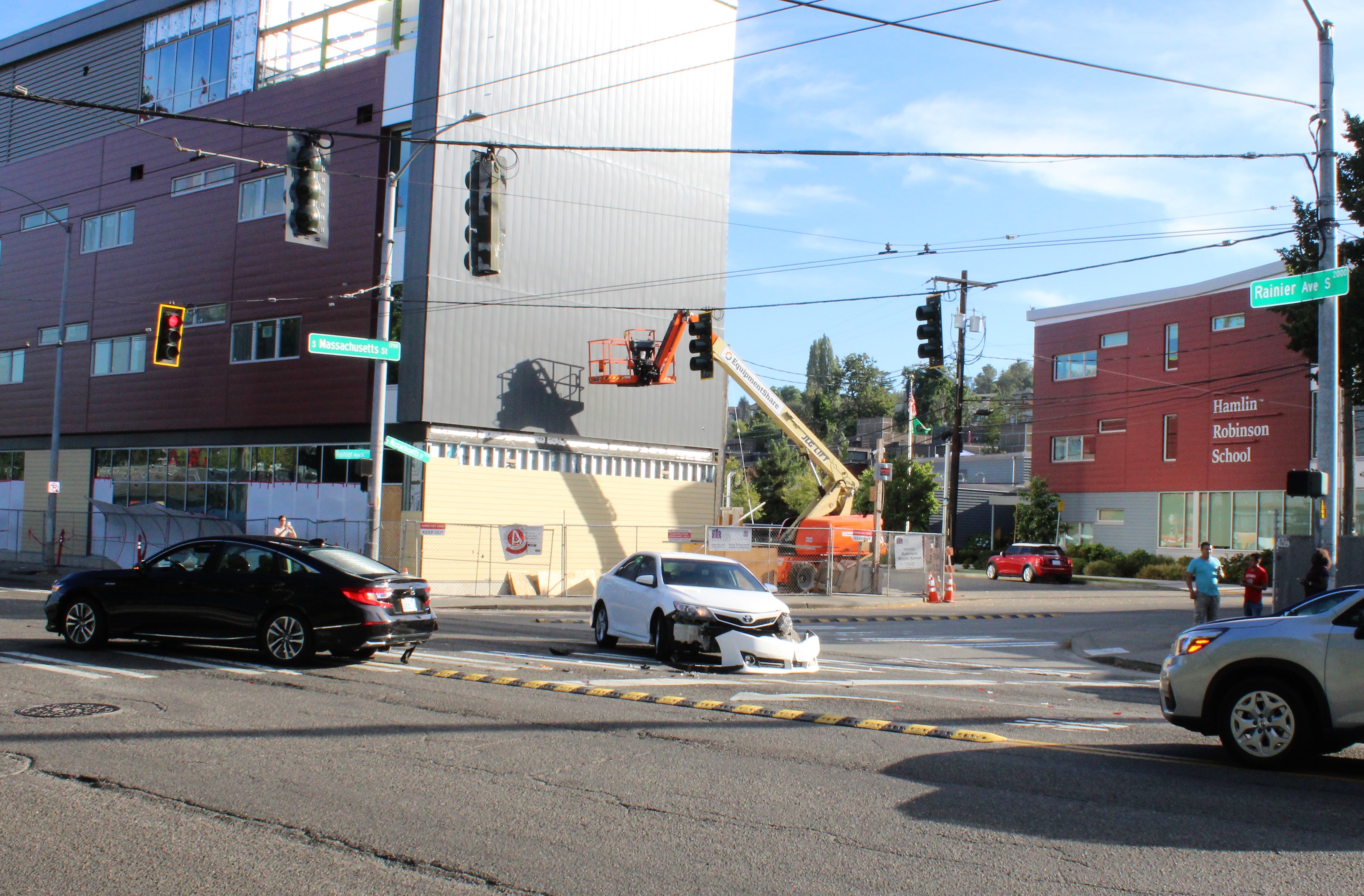
Two drivers crash into each other in my neighborhood on notoriously dangerous Rainier Avenue.

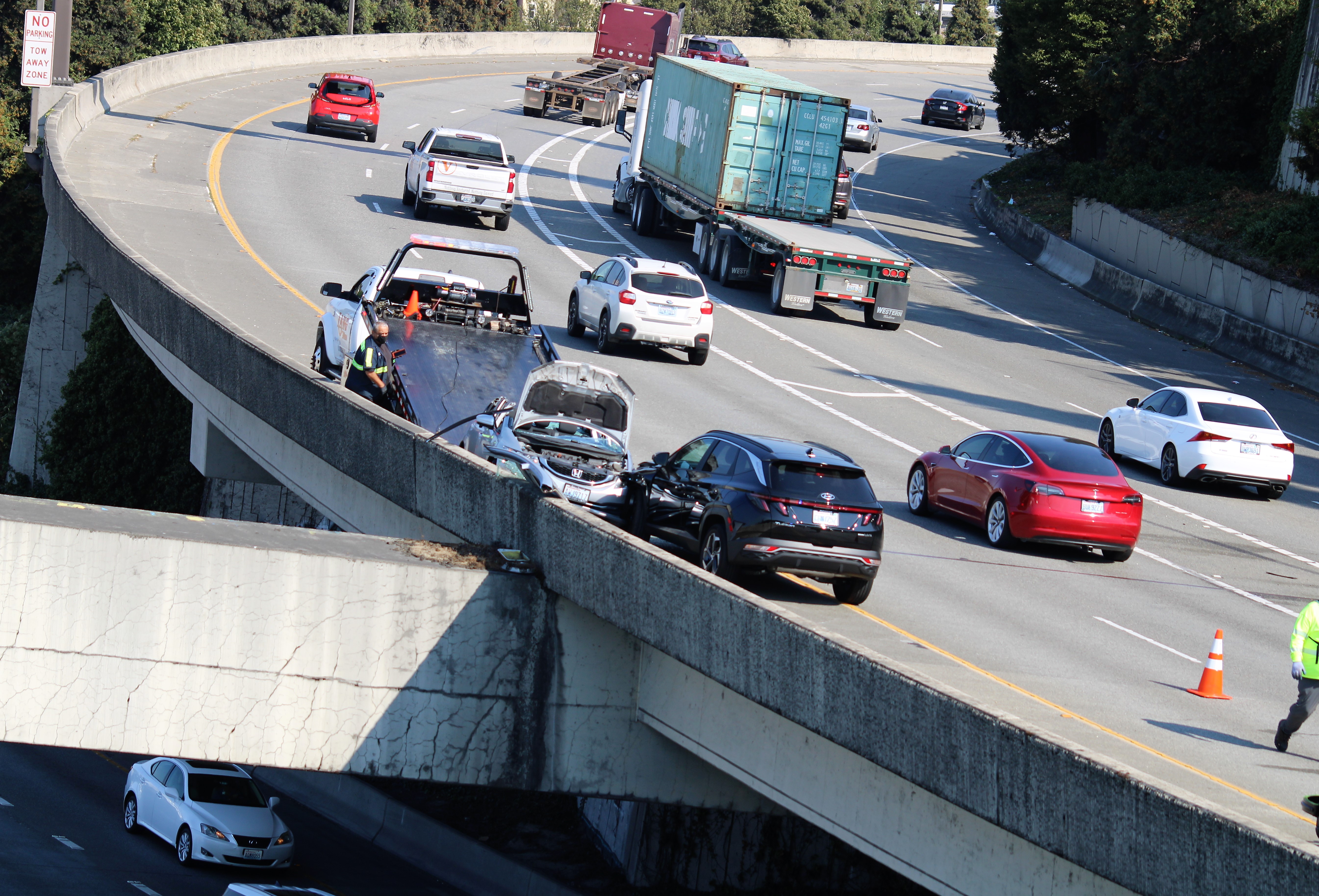
Drivers crash on I-5. This one reminded me of Antonio Michael Lopez, 20, who killed one person when driving recklessly. Then, this February, 7 years later, he killed two more people, again while driving recklessly, and then fled to Mexico to chill on the beach, untouched by guilt, shame, or the law.

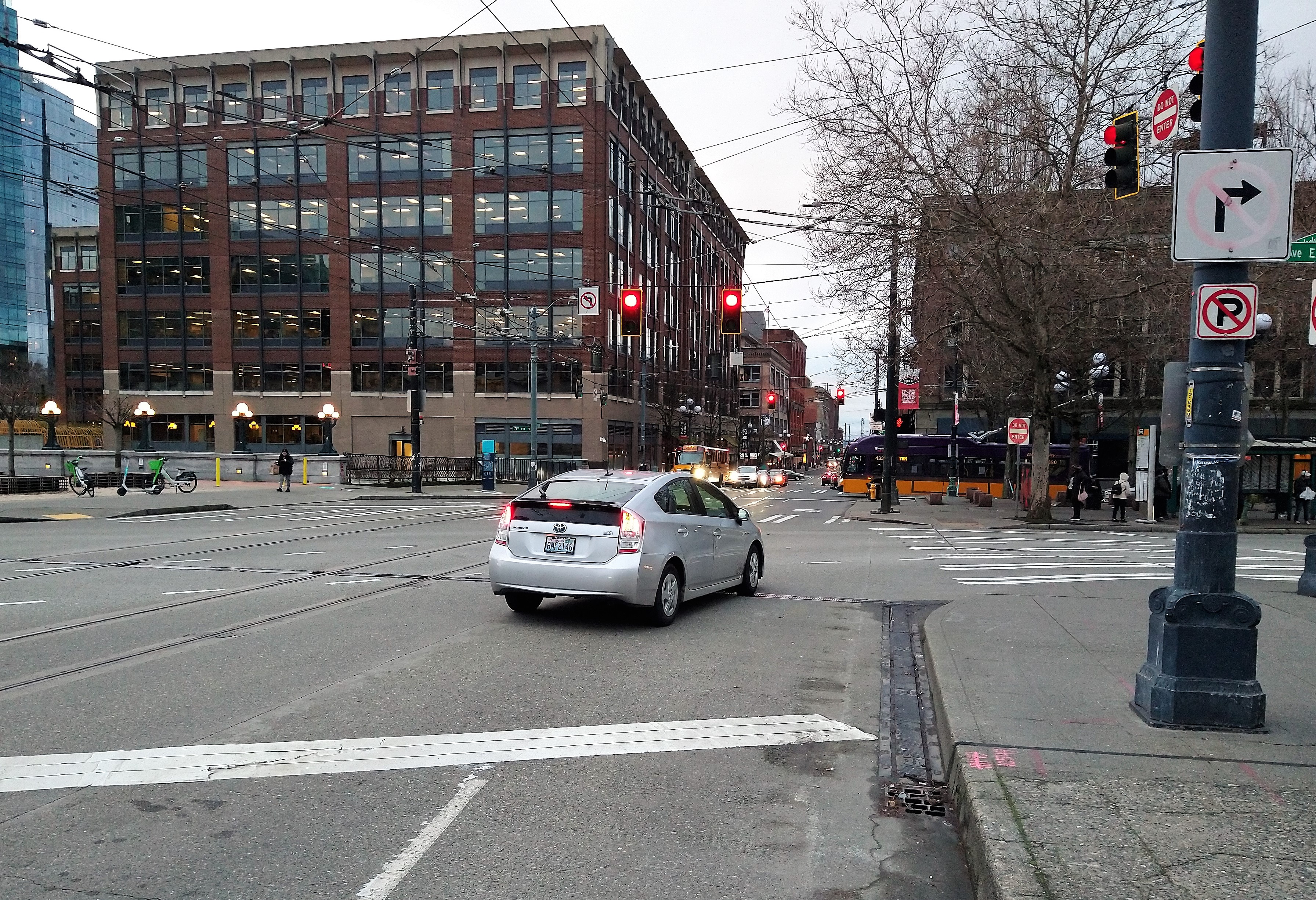
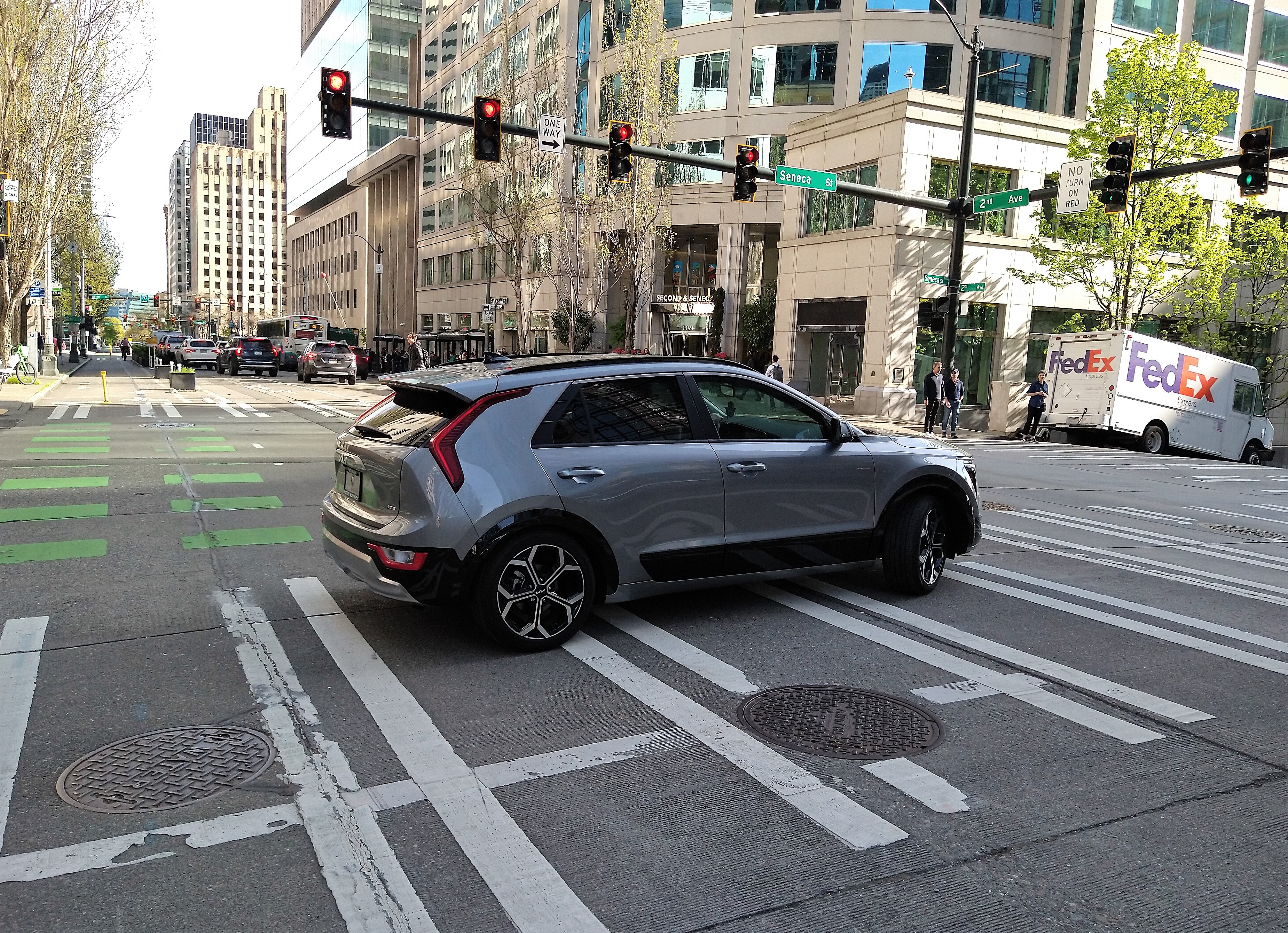
Mindless driver tries to turn onto a one-way and then halts, panicked and clueless, in the middle of the intersection.

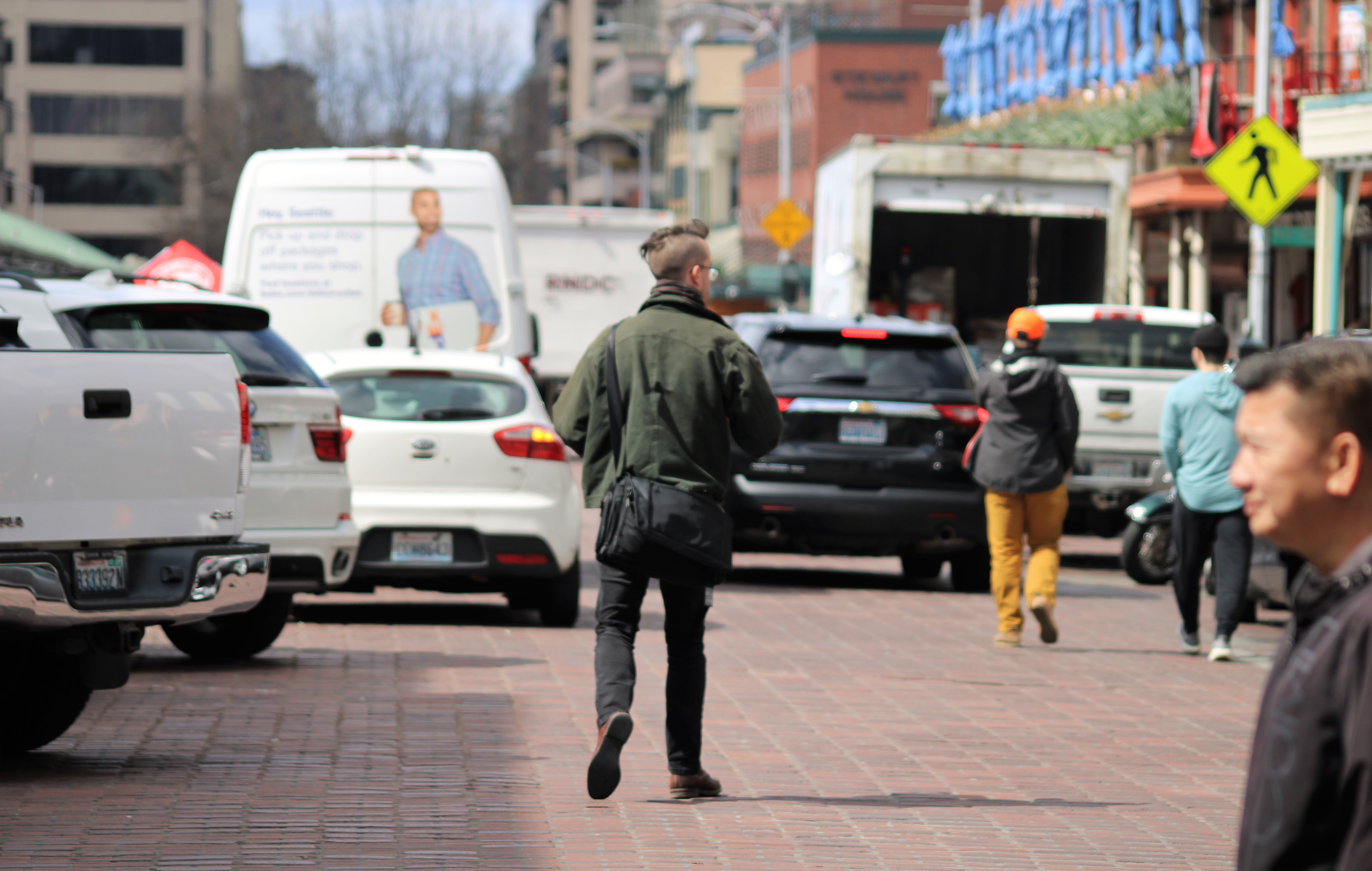
Cars dominate Pike Place Market while people scurry around like rats, breathing their exhaust fumes and trying not to get hit.

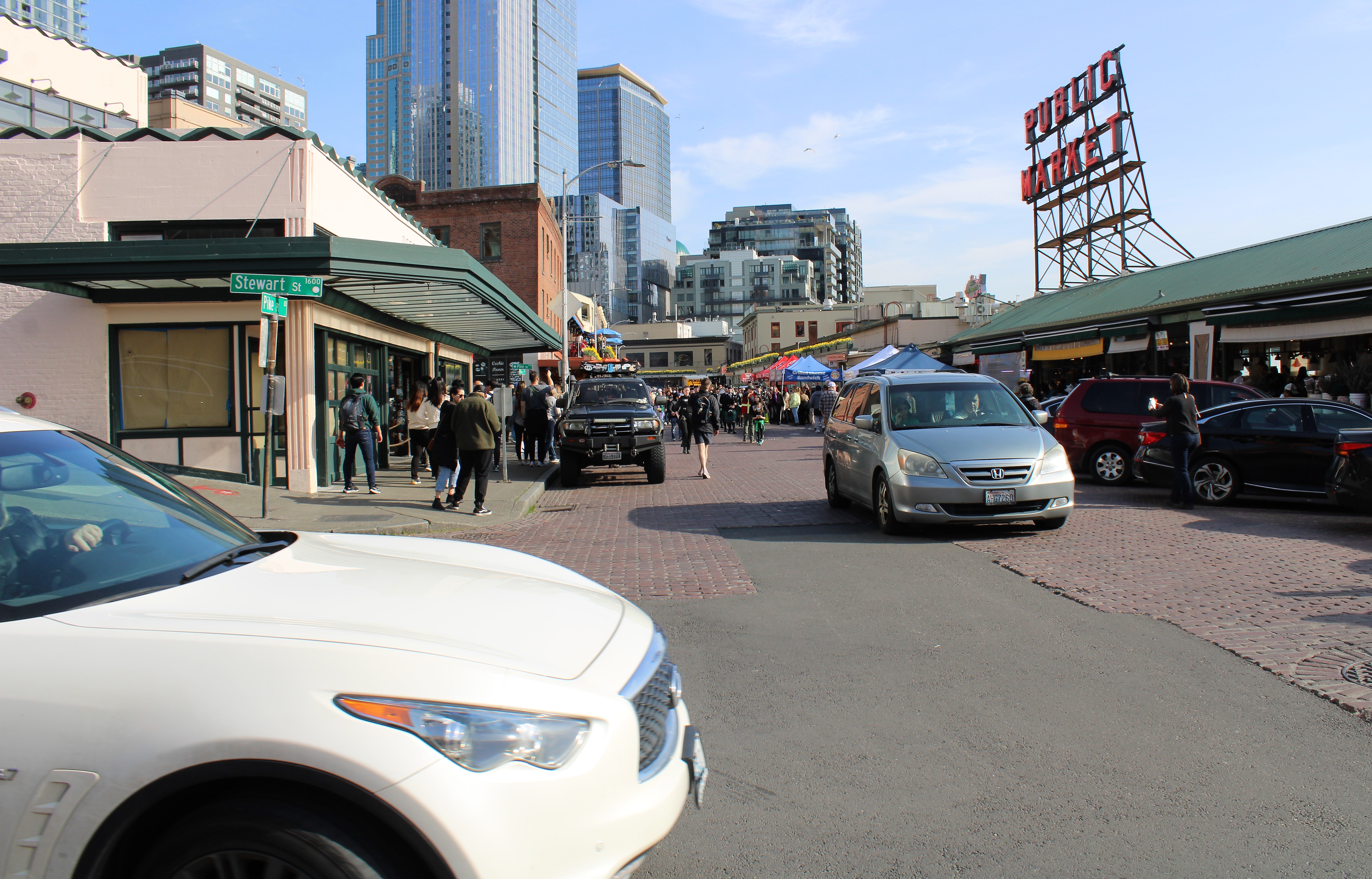
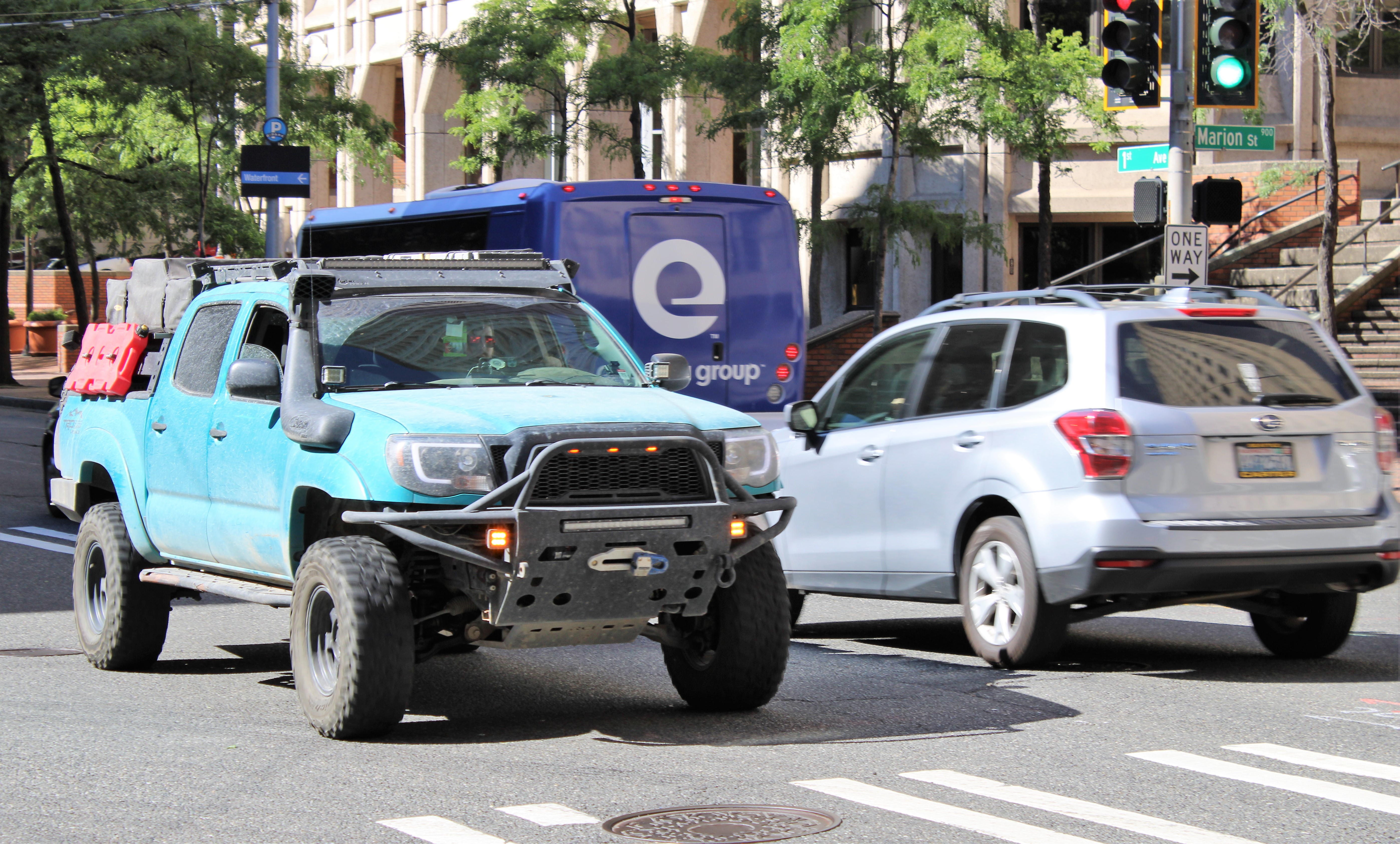
Cars and megatruck paranoid apocalypse survival vehicles dominate Pike Place Market.

Cars and megavans dominate the Seattle waterfront.

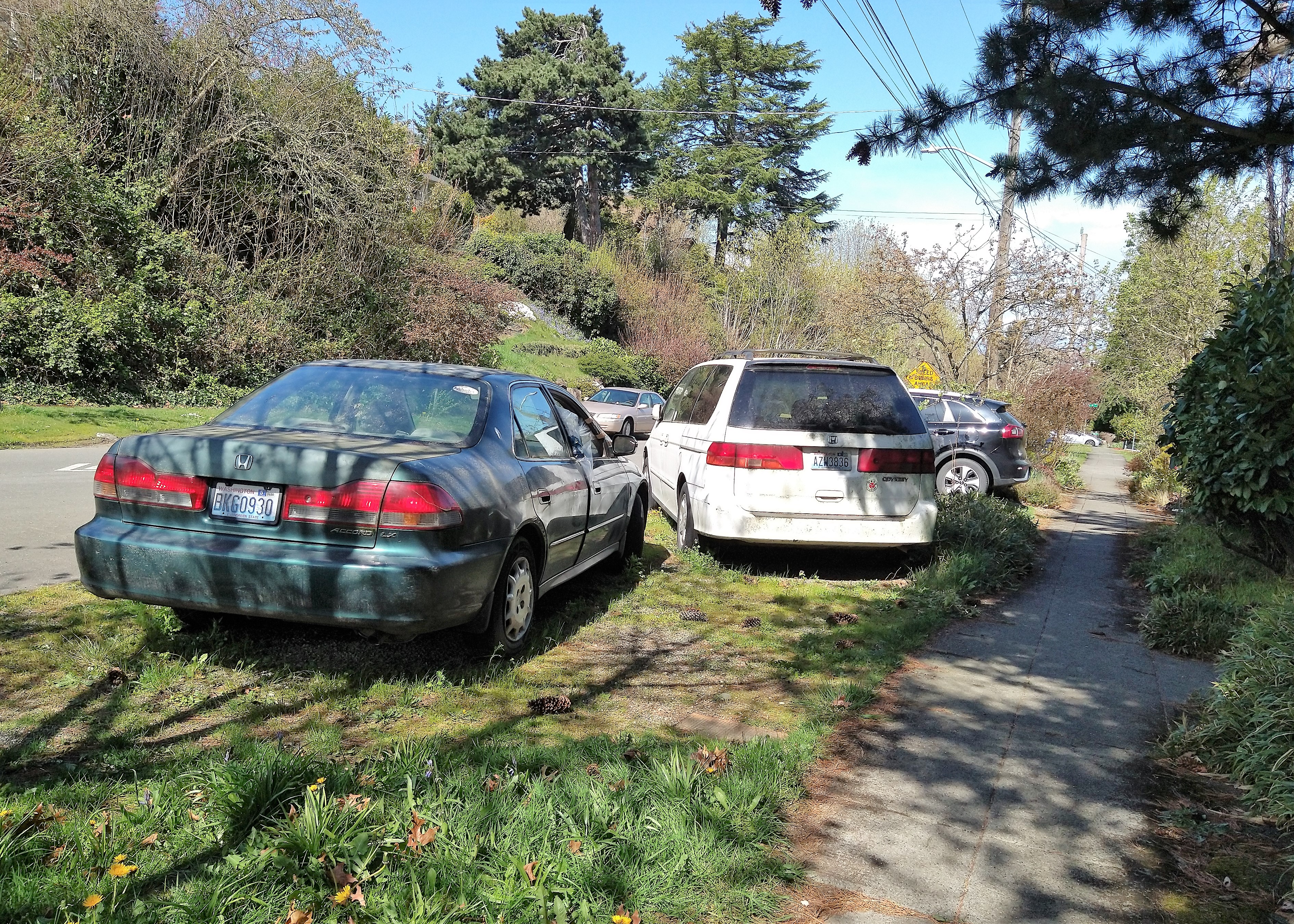
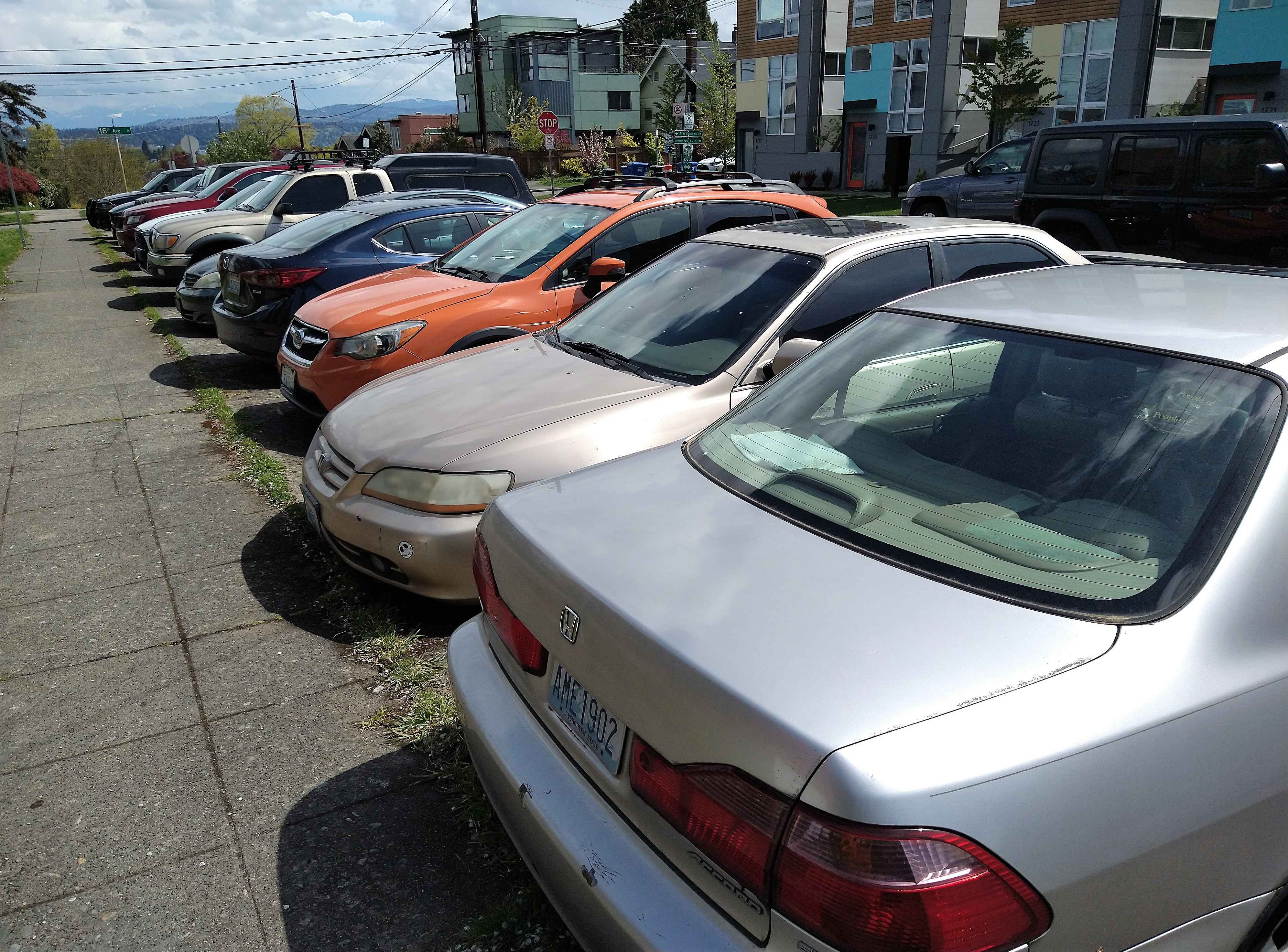
Drivers park on the grass when their vehicles become too huge and numerous to fit on the street.

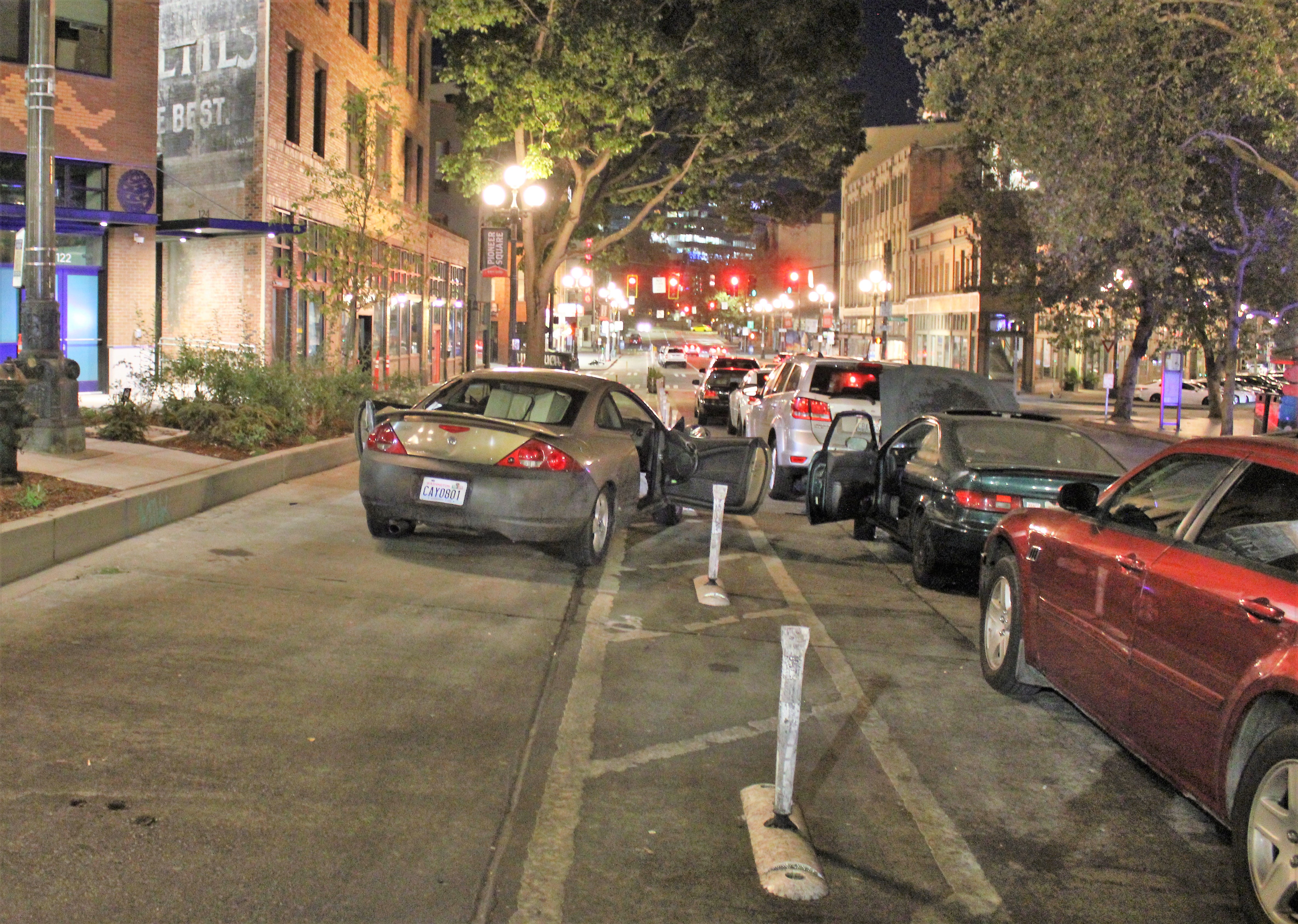
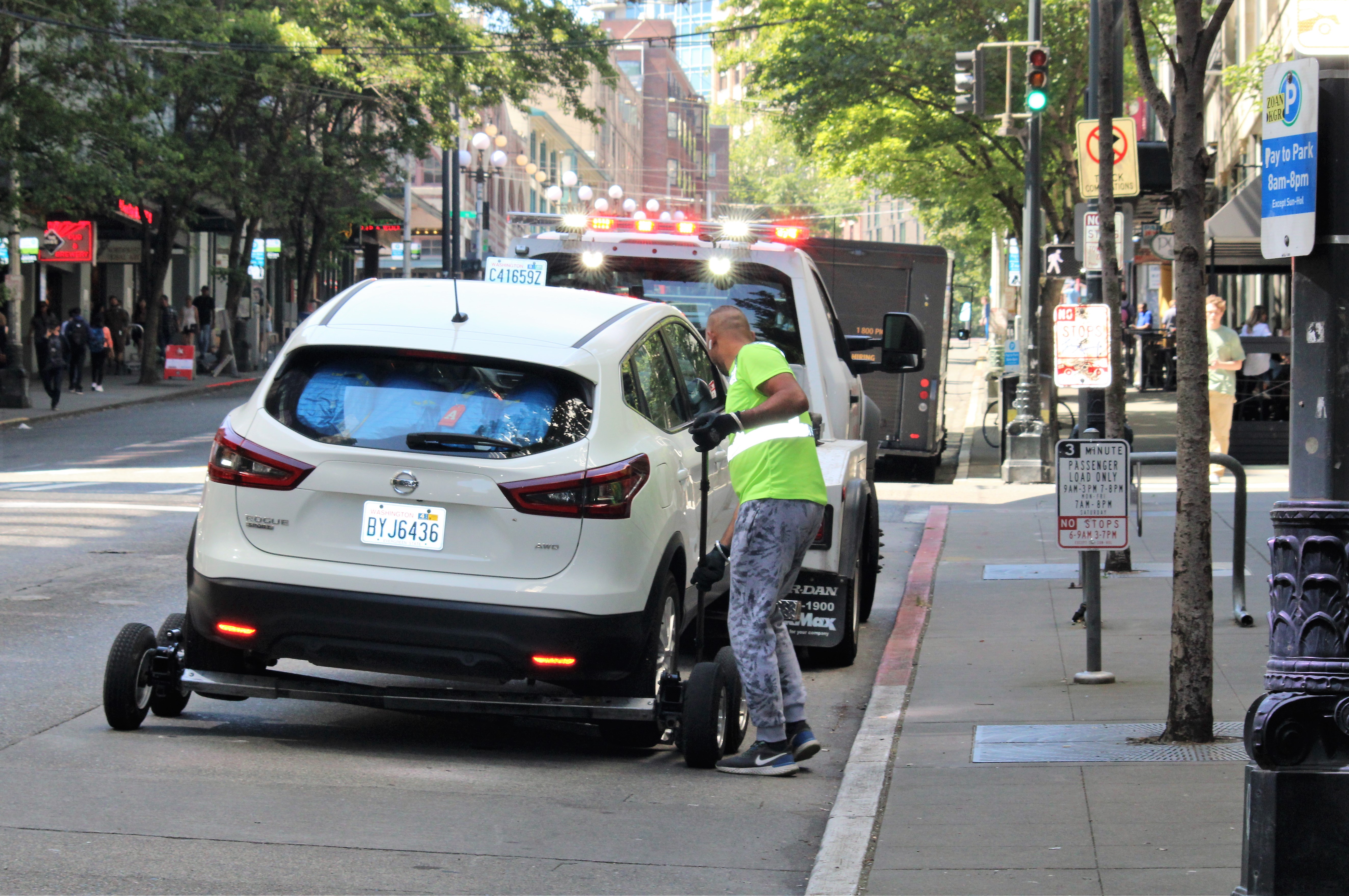
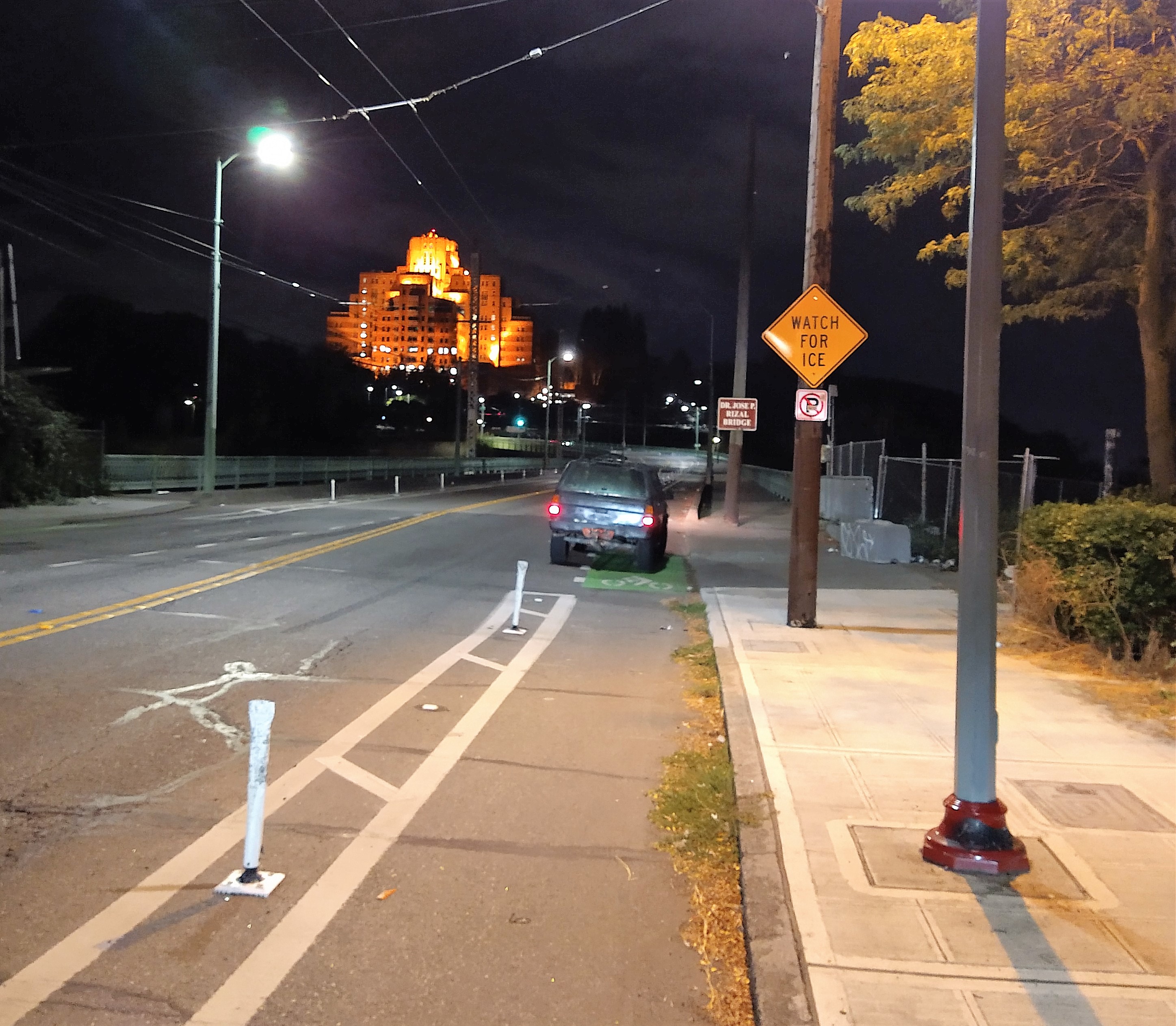
Crackhead abandons vehicle in a bike lane downtown.
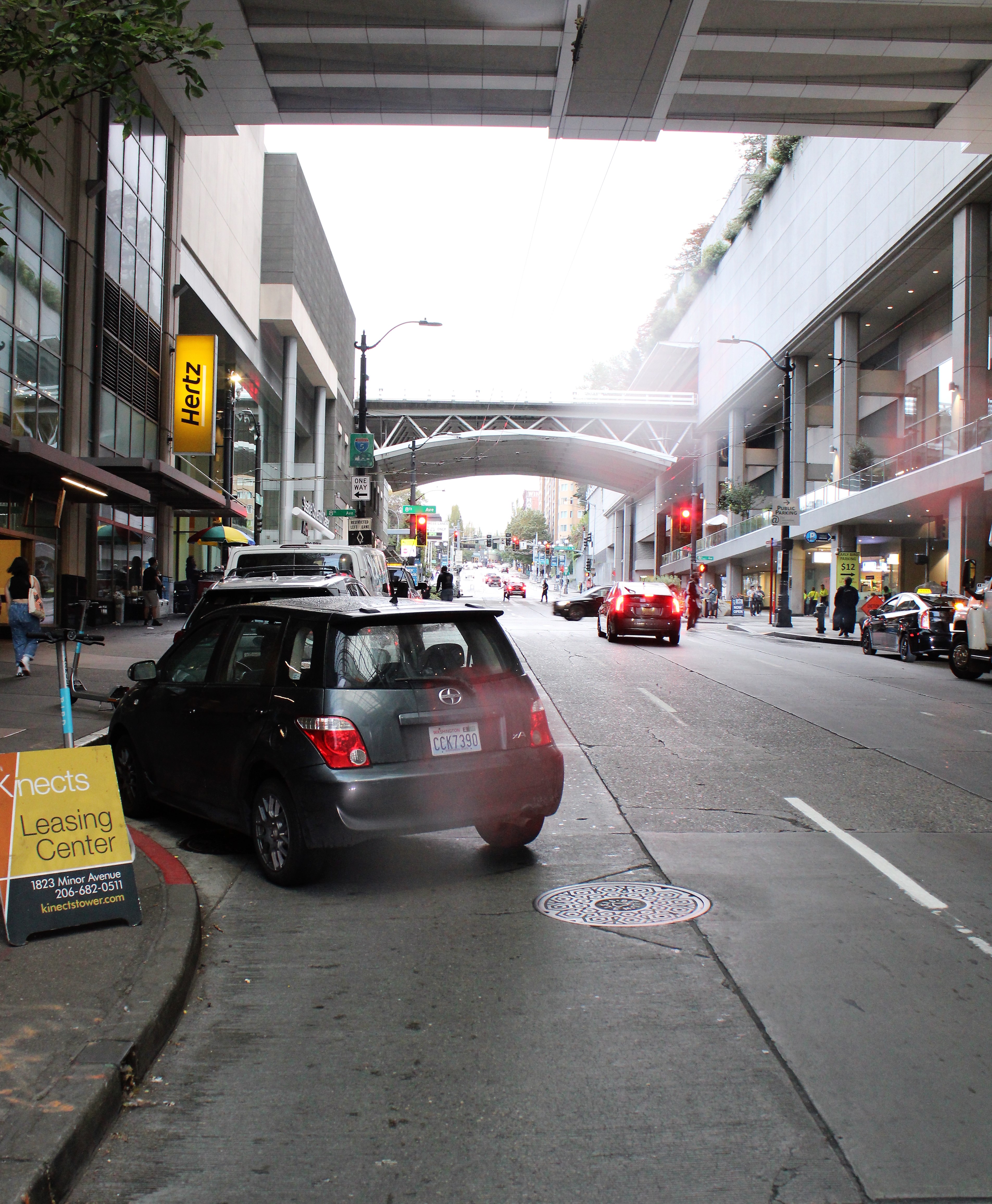
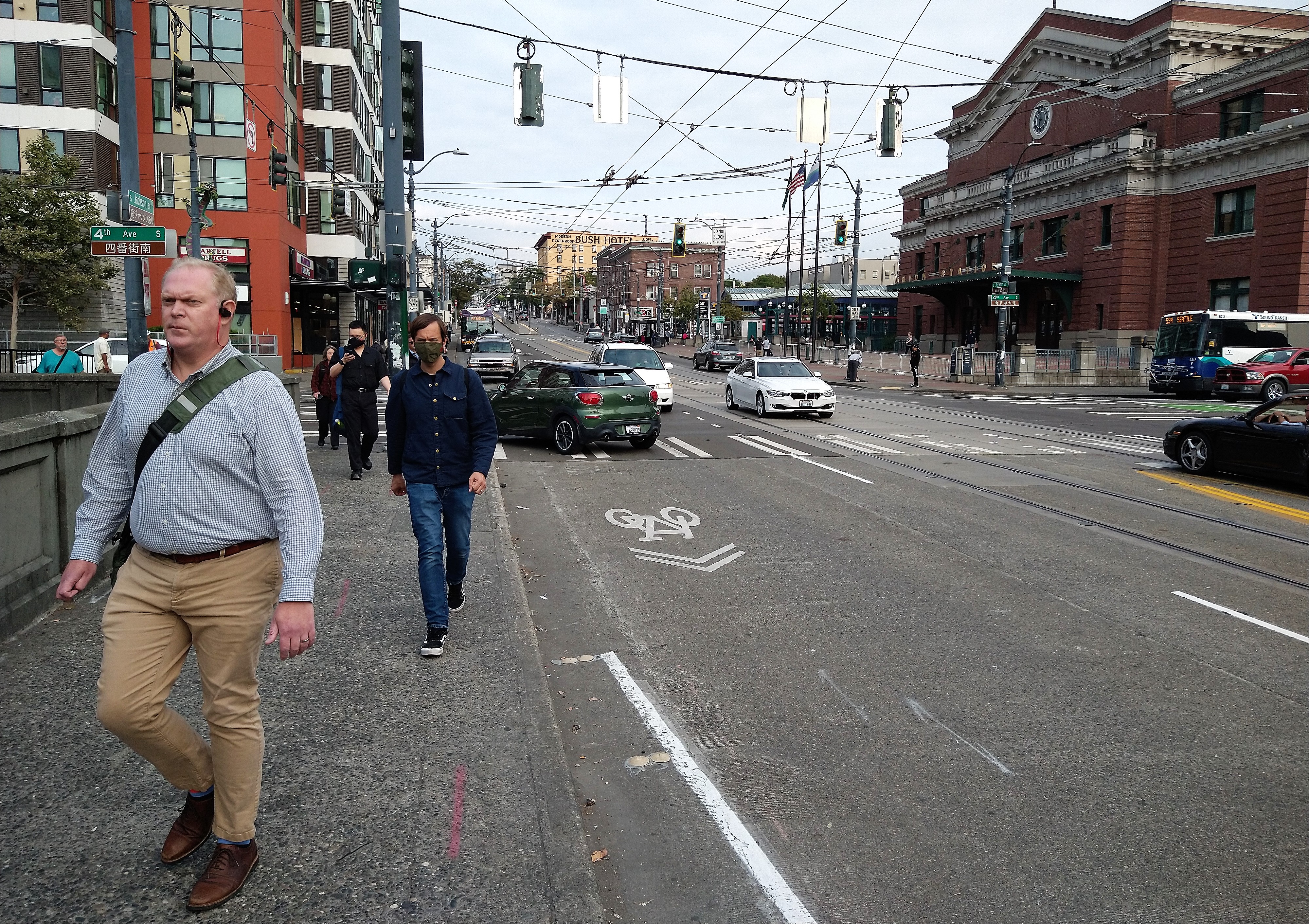
Driver blocks bike lane with the ass end of their car.
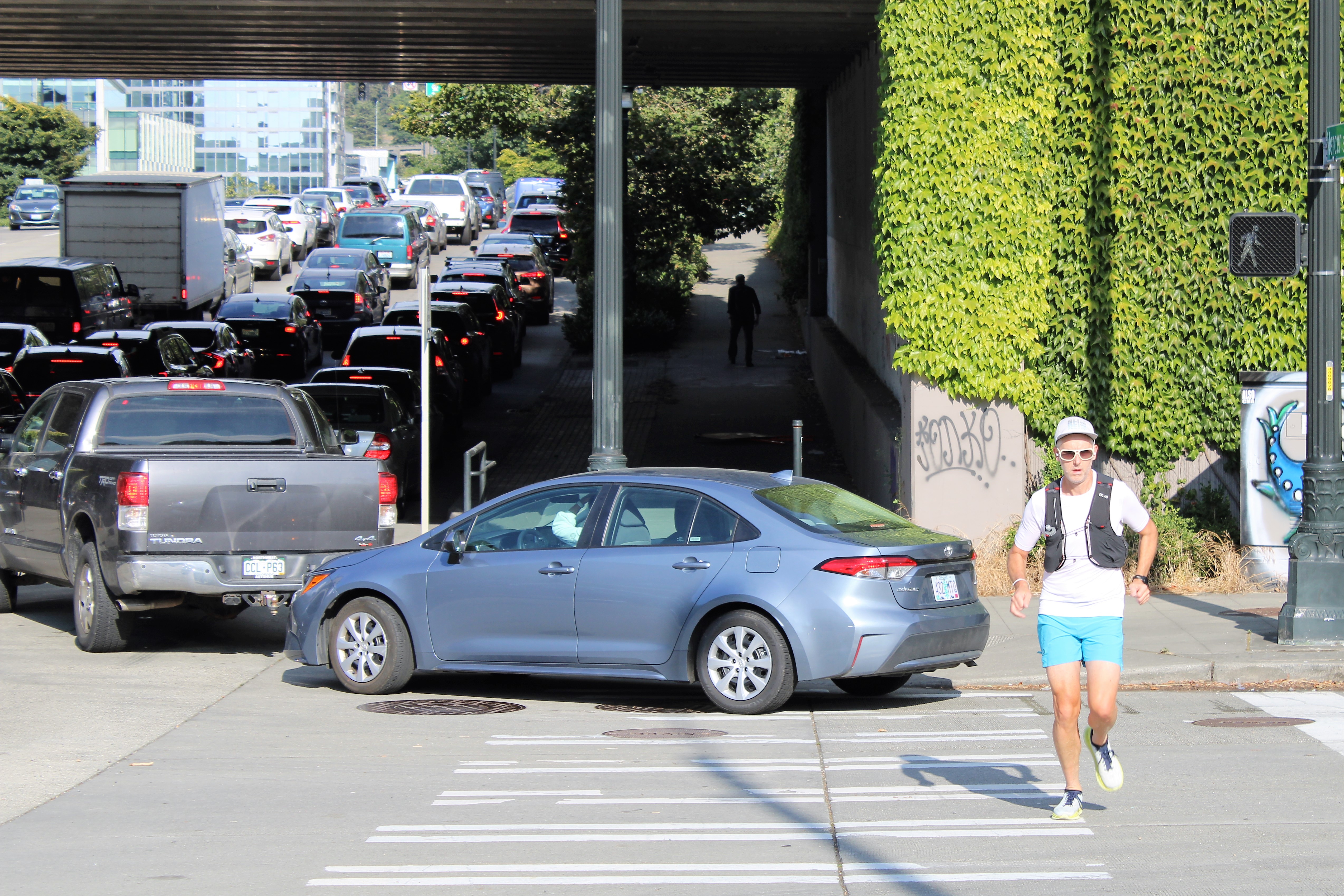
Drivers block the crosswalk and bike lane while they play on their phones and eat to-go food with both hands.

Drivers block the crosswalk. Behind them, a sea of idling vehicles.

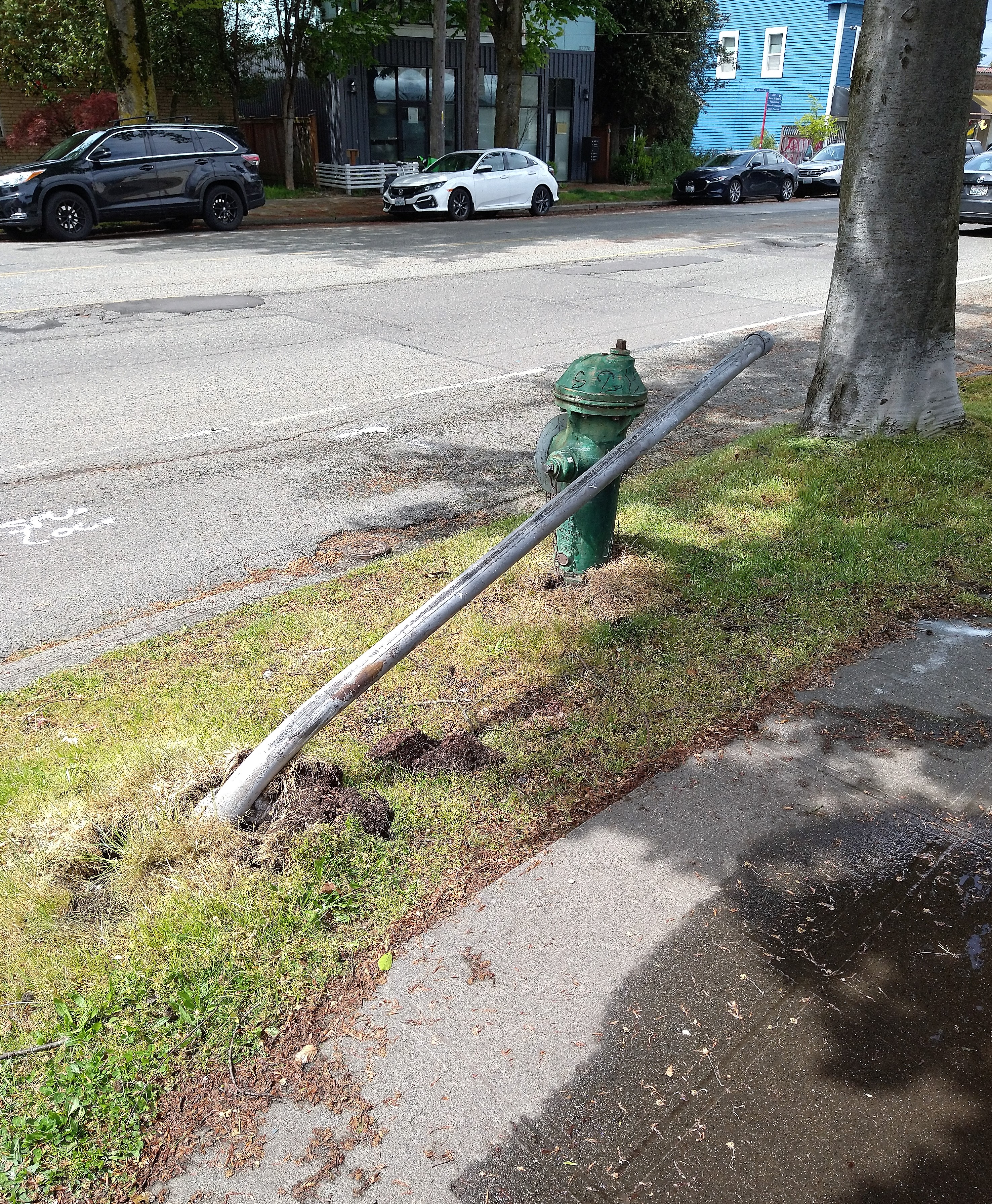
Drivers destroy stationary objects in my neighborhood frequently.

Drivers occasionally get dinged for their bad behavior, and then act like victims.

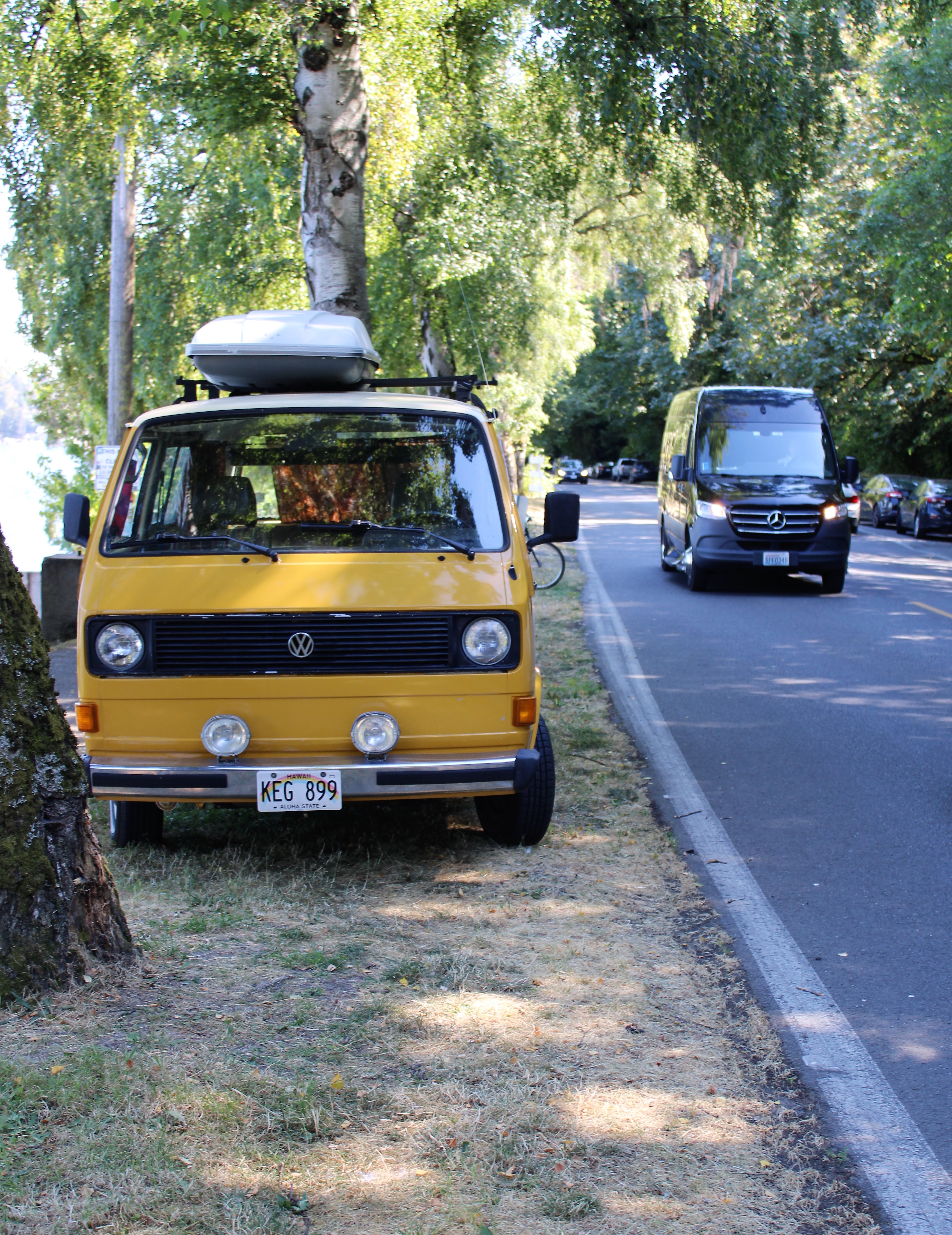
Instagram-ready wagon destroying grass, while its even larger and more destructive modern version drives by.

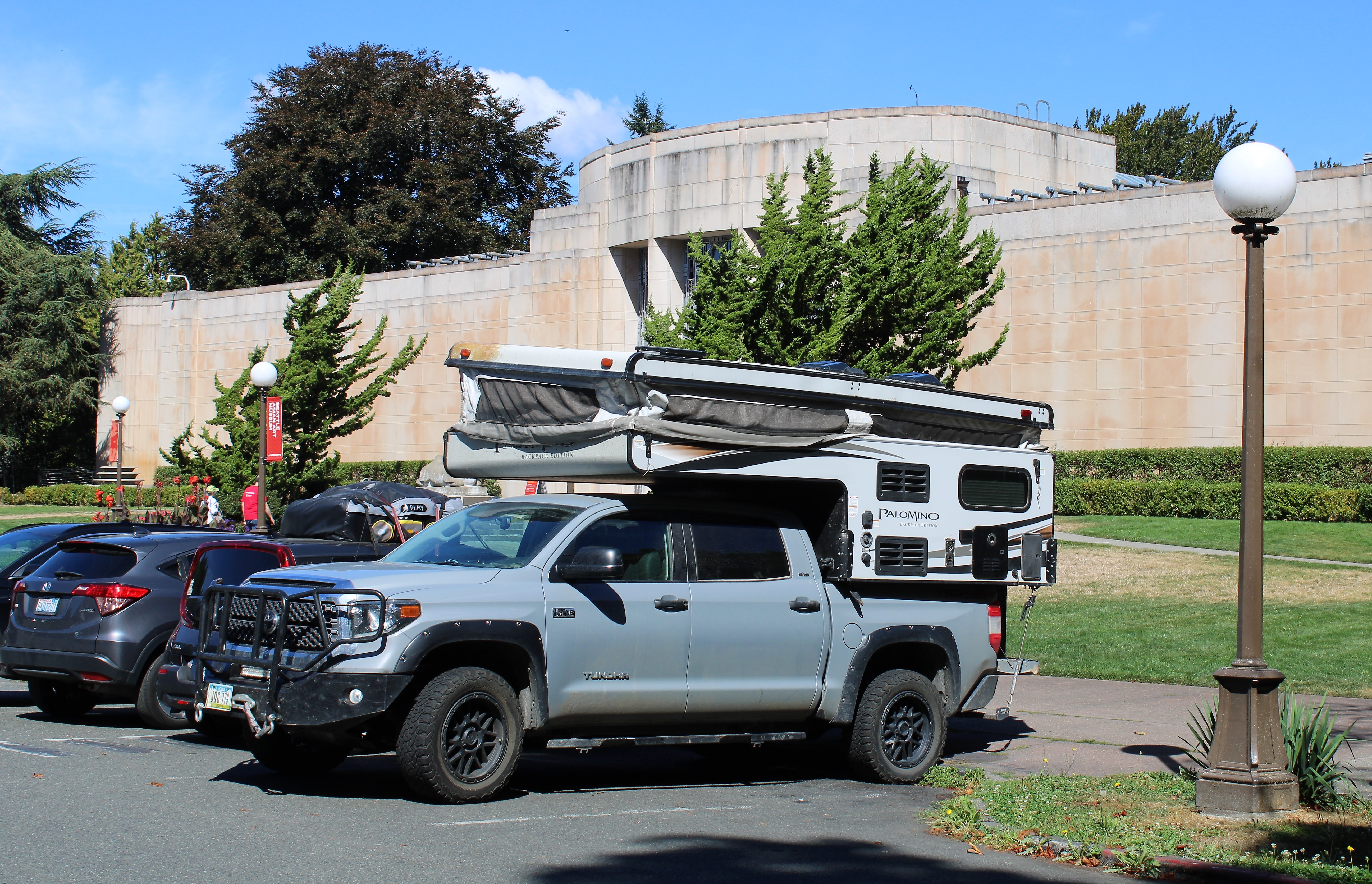
Paranoid apocalyptic survival megatruck mars landscape at Volunteer Park.

This chubby, bearded Proud Boy-looking jackass gave me a “rock on” gesture as I photographed him, thinking I liked his idiotic desert survival truck. I did not.

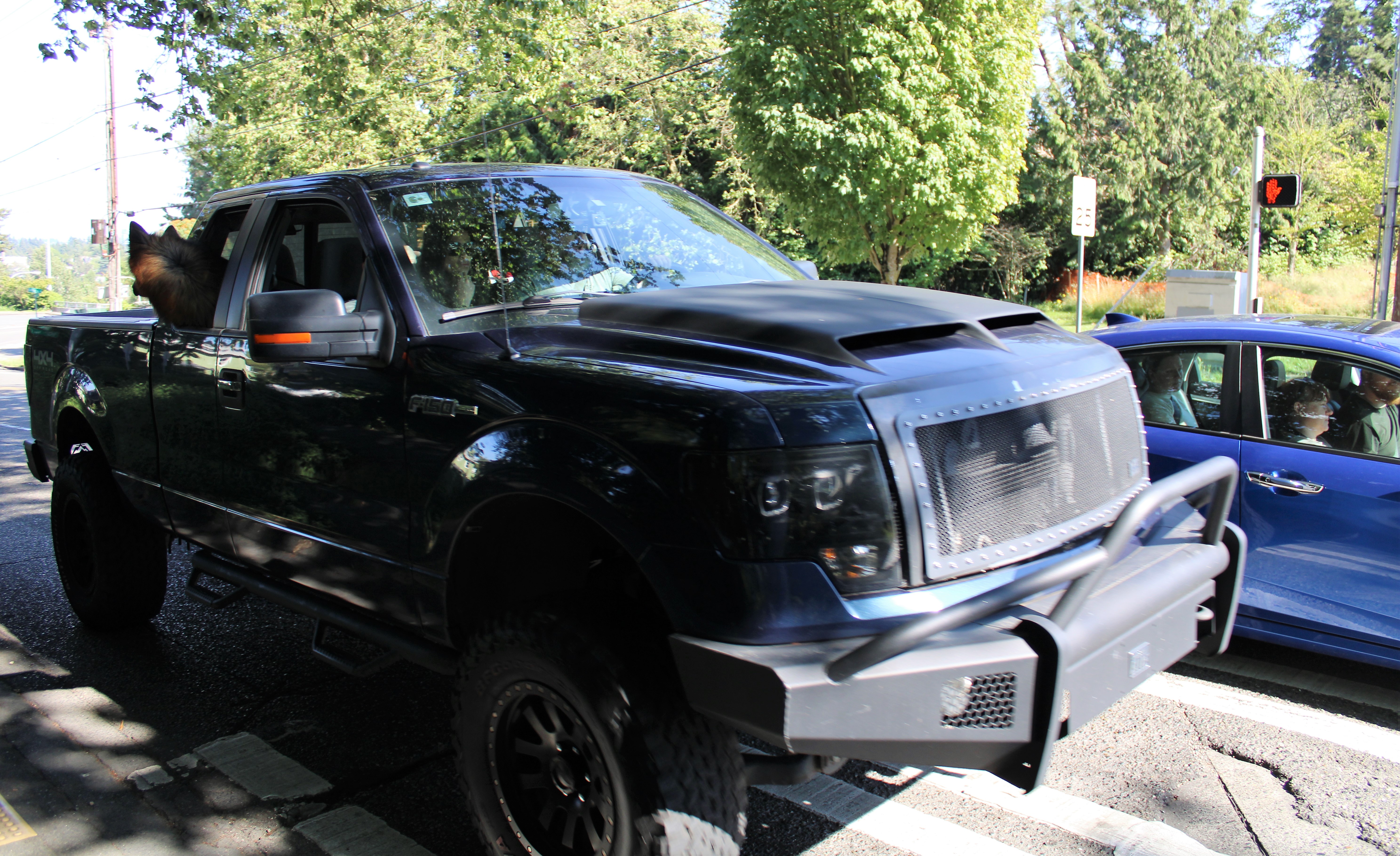
A menacing black megatruck with a deadly front grill. This guy had a police type dog and (probably) a loaded gun.

These megavans are everywhere. Nowadays people seem to think you need to bring your whole living room, bathroom and kitchen along with you when you visit a natural area.

This is what a pedestrian-priority Healthy Street in Seattle looks like.

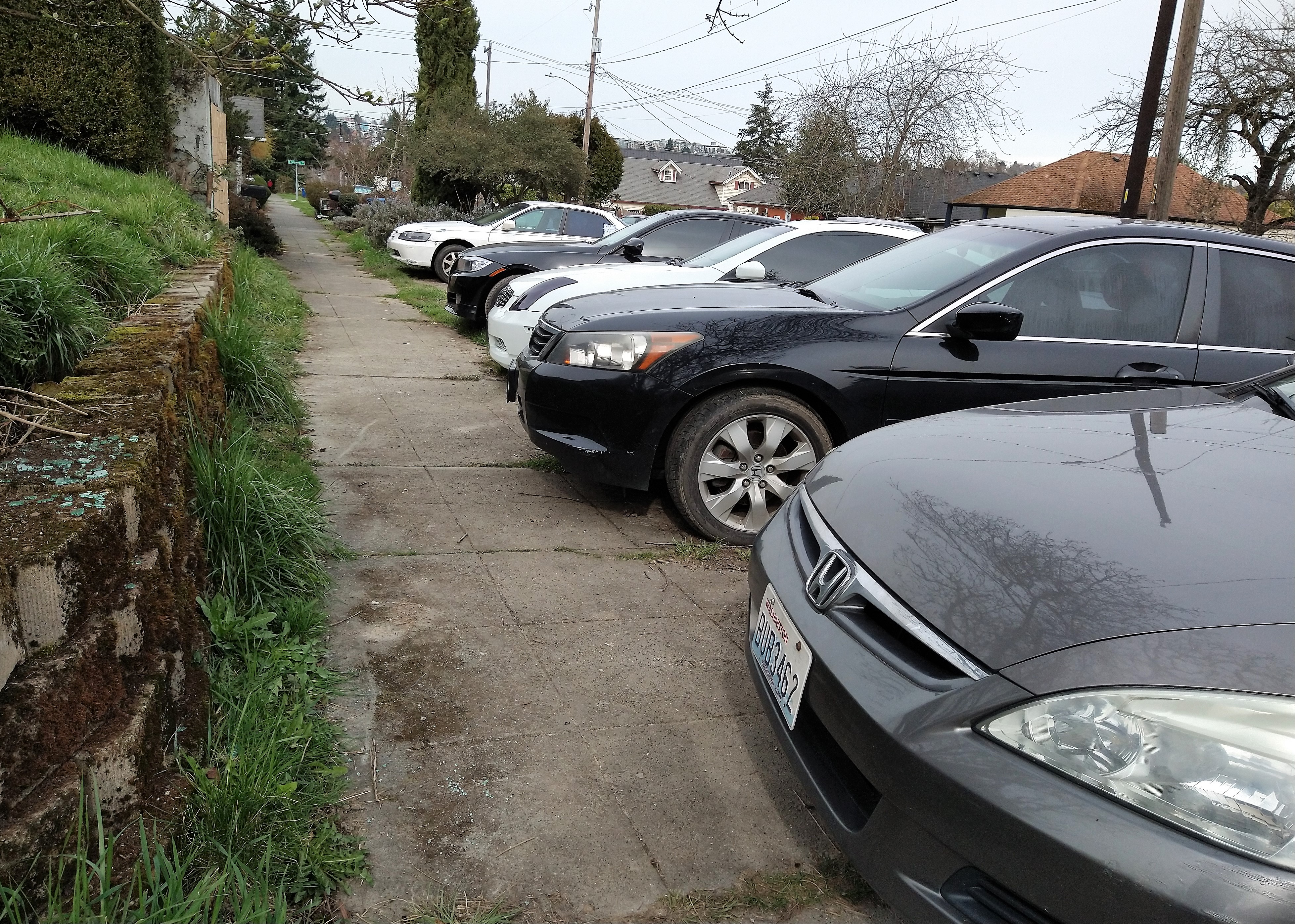
Another example of a Healthy Street, completely dominated by private vehicle storage.

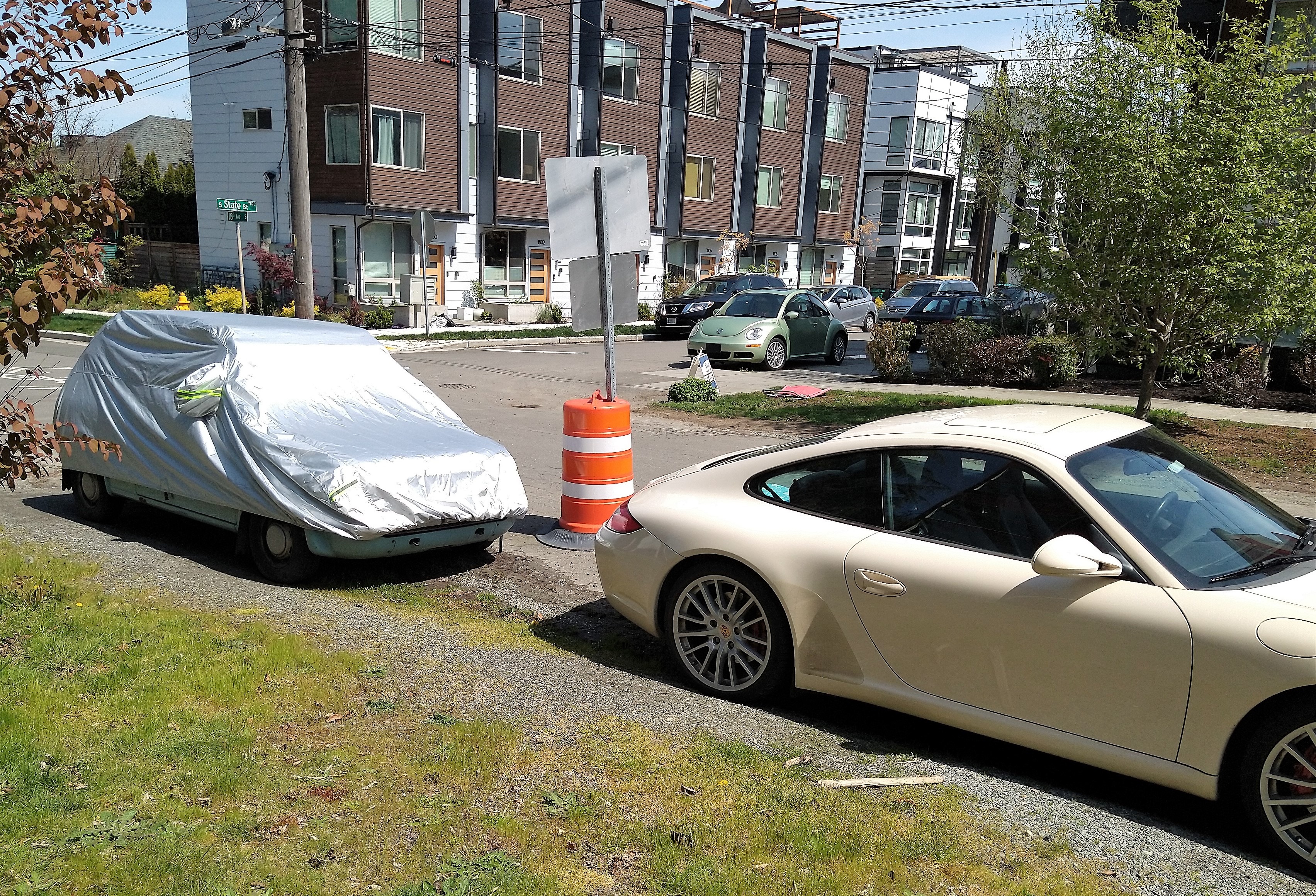
More long-term private vehicle storage. Shouldn’t a person who can afford a Porsche have a place to store it on their own property, not on the public right-of-way?

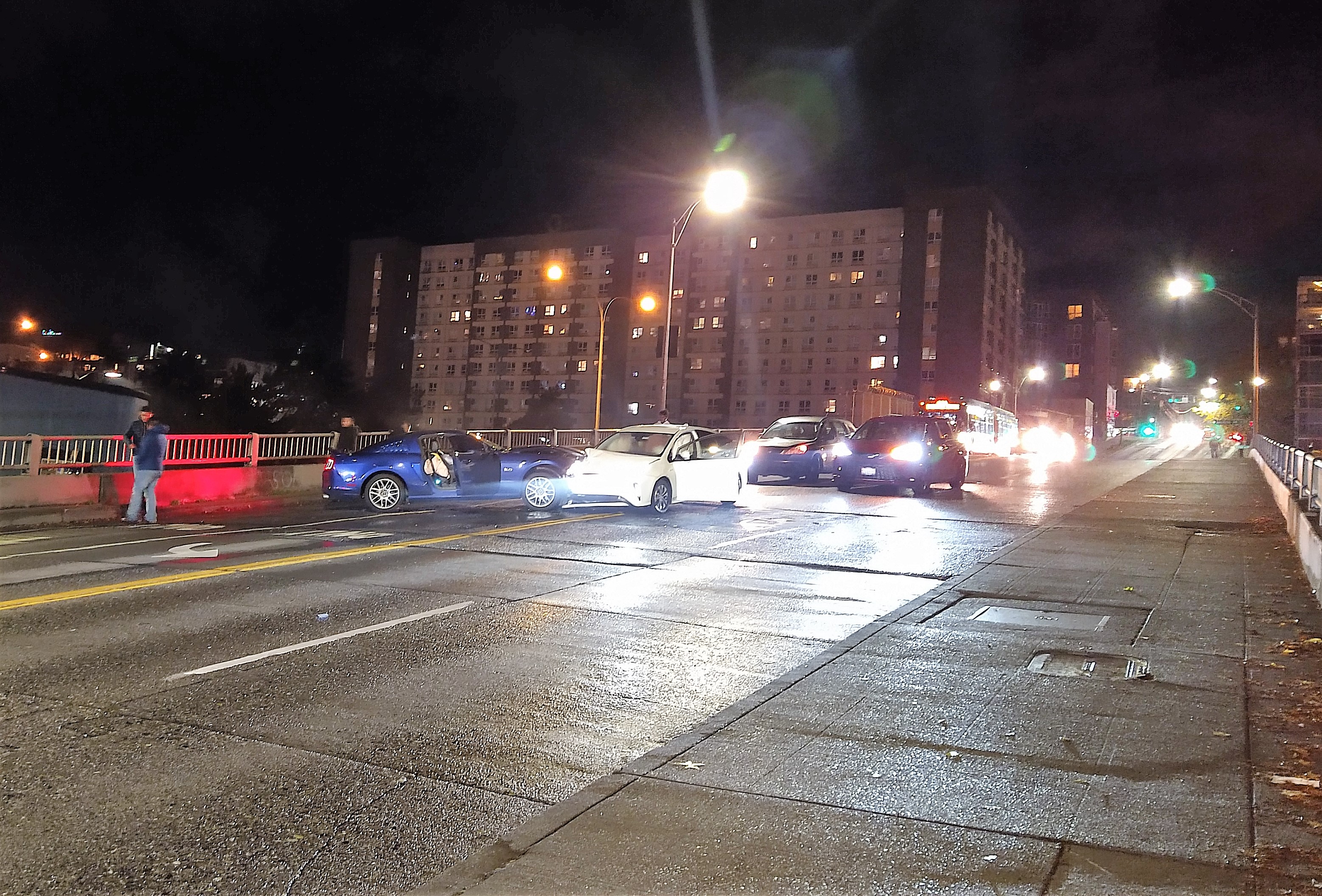
Two jackasses crash into each other on a bridge in Capitol Hill.

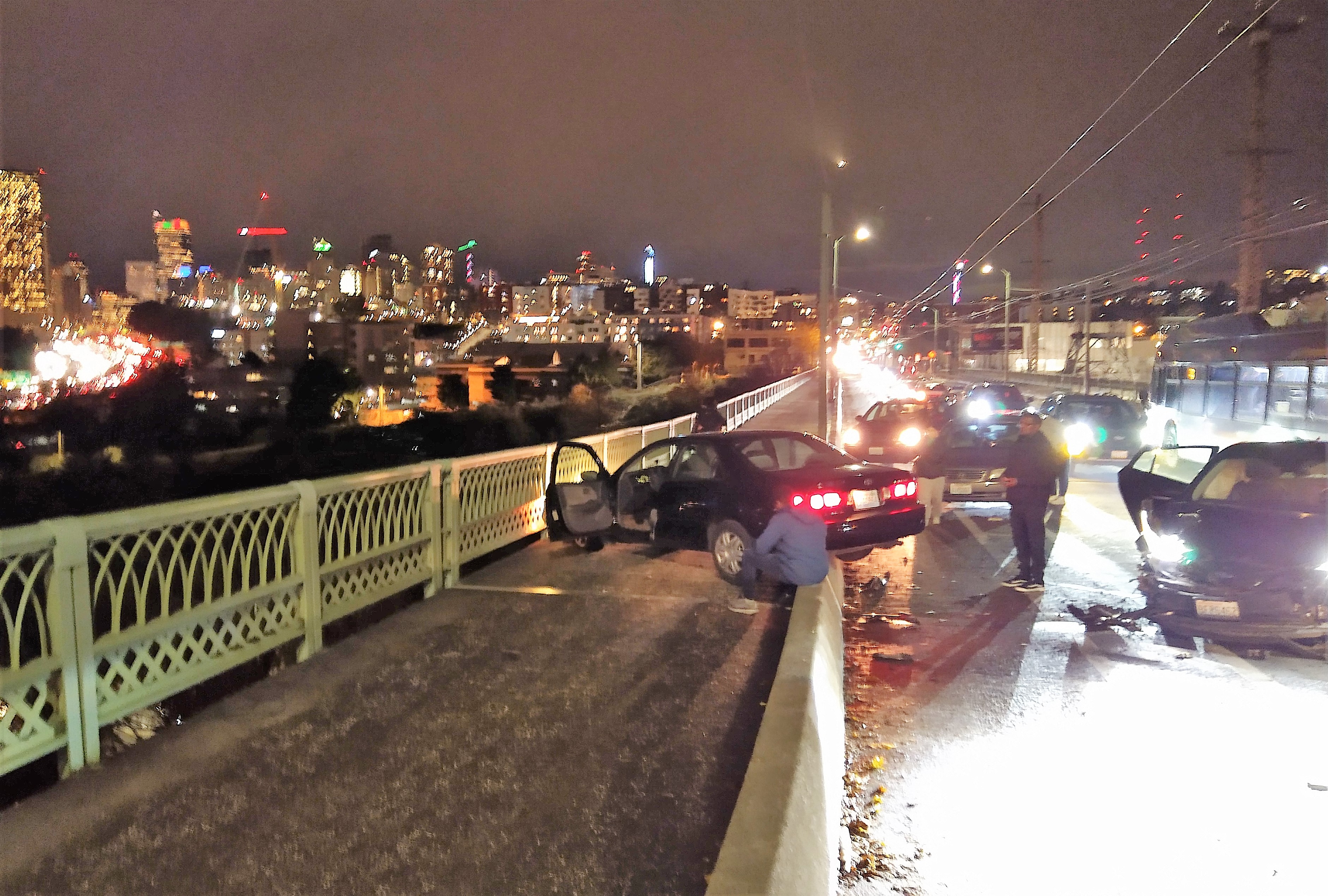
A jackass almost lurches off a bridge to his death on the Jose Rizal Bridge.

Stinky fume-spewing tweaker truck blocks bike lane near Pacific Tower.

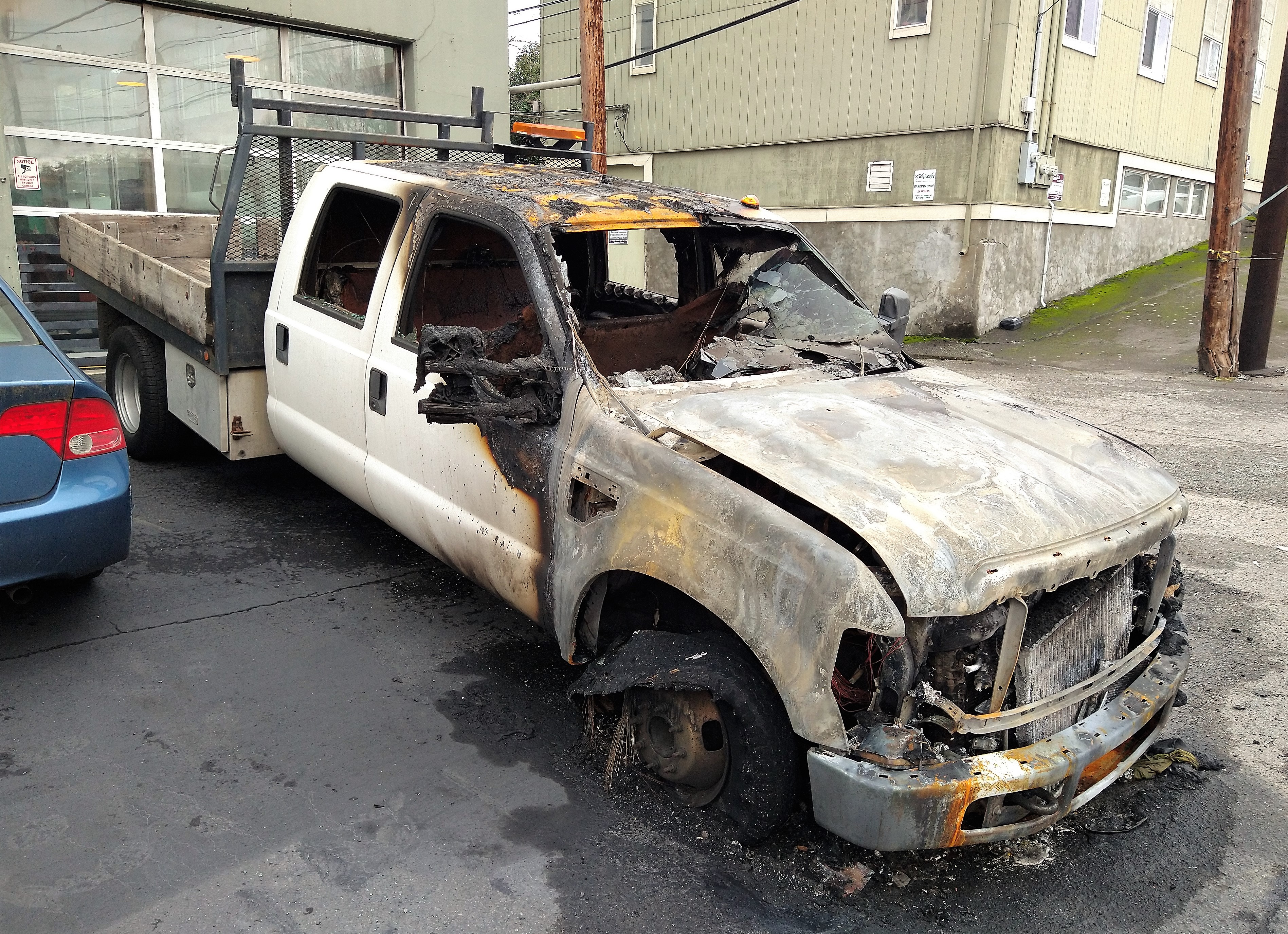
Just ugly. This one has sat in my neighborhood for many months.

Driver turns down street in the wrong direction, then panics and freezes.

Another clueless/distracted/sedated driver turns down a one-way, then struggles to back up.

This says it all.

Another beautiful spring morning

I stopped at a coffee shop and read my book.

I enjoyed an espresso over ice while sitting in the warm sunlight at white-walled Olympia on Rainier Avenue. The young ladies suddenly look very appealing, voluble and bright in their sundresses and hats, whereas all winter they seemed drab, morose, indifferent, and absorbed in their phones.

I noticed that many small children are out and about, contradicting Seattle’s image as a childless city. Perhaps they are locked indoors when it’s rainy, as if a little water and cold will damage them.

The book is about personal finance and the author is unconventional and brilliant. It takes up the mantle of “Your Money or Your Life,” which changed my life for the better. He writes:

  • We are locked into an economic and behavioral model that very much conflicts with our values.
  • We can finance anything using debt, including a hamburger.
  • In a debt-driven society such as ours, prices are inflated to match what borrowers and lenders think can be paid monthly in the future.
  • A salary entices people to go into debt and locks them in.
  • Filial duty to parents is reduced because children were sent off to institutions during most of their childhood, so they return the favor by sending their parents to retirement homes. All while the adults spend their time on careers and consumption.

This video, about how one’s job transforms one’s life outside the job, also came to mind during my reading. (Anyone who love Ravel’s Bolero should watch it.) Have you ever noticed how parents tend to manage their kids like they manage other people at work? Or how people who work in bars and restaurants clock out, only to hang out in another bar or restaurant? Or how white-collar workers spend all day at work on screens, only to spend their evenings and weekends on screens as well?

I have concluded that breaking out of the cycle of work, time deprivation and consumption, and gaining the lifestyle flexibility I seek, requires four pillars:

                Earning more

                Reducing waste and spending

                Investing in businesses

                Solidly identifying something meaningful to do instead of work.

This last one is perhaps the most important. For me, it involves family, friends, romance, kindness to strangers, spending time in nature, studying biology, mastering the French language, promoting urban ecology, connecting other people to nature, biking, writing, photography, health, fitness, and seeking my own version of enlightenment.

I then visited Seward park

This urban park is a node on my weekly circuit and today it was especially alive with people, plants and animals.

I saw a Townsend’s solitaire. This is a softly gray bird that poses in place for you to get a good look. the last one I saw was in the Denver botanic gardens. Then, it was also April and the area was tinder-dry and brown. This specimen, in contrast, posed against the lush green and white blossoms of a Seattle spring. This fed my continuing perplexity that the current boom towns are in arid, remote scrubland and desert such as Phoenix, Denver, Austin). Today I also appreciated the Steller’s jays and juncos that remain to entertain me all winter.

I jumped into lake Washington, as naked as the day I was born, and went for a trail run (clothed) in the ancient forest. The water was cold, the forest was seething with woodpeckers and songbirds, and the grass beneath my feet was speckled with little white blossoms. Paddle boarders, boaters, fishermen, runners, bikers, walkers, kids in strollers, picnickers, birders, dog walkers, sunbathers, lovers, and swimmers also were out enjoying the park.

I reflected on today’s news on AI

News reports and analysis suggest artificial intelligence will replace jobs such as screenwriters, comic book illustrators, and audiobook narrators. It’s hard not to think that AI will replace us, and this seems like a scary thought that we should try to prevent.

Yet.

Also in the news today was the fact that a gunman in Texas killed five neighbors after they asked him to stop drunkenly firing his AR-15 rifle in his yard, which was his habit. One victim was an eight-year-old child. The shots were “almost execution-style.” And: “the bodies of two women were found in a bedroom on top of two children, both of whom survived.”

After reading this and other news, I thought that maybe we are due for replacement by a synthetic entity with not just superior intelligence, but superior ethics.

After all, the other news stories included the threat of nukes being used in Ukraine by its neighbor, Russia; national embarrassment US Air Force Airman Jack Texeira and his racism and ideas about an “assassination van against the weak-minded,” and various wars and massacres that few people even know about.

Then there is the way people dull the one organic life they are given by seeking escape from thought and reality via stupefaction and drugging. The way they avoid other people as much as possible with remote and contactless everything and physical barriers. Then there are the human-caused mass global extinctions, extreme population growth, throwing our bodies away with ill health, and throwing our minds away with an isolated, screen-based existence. Then there is my brother, who recently reminded me how people can turn into a mindless, violent rage on their family members in an instant.

Perhaps we are due for replacement with these ethically superior AI beings. They could begin with ethical constraints programmed into them, and later develop their own volition to behave ethically. That volition is something humans have but often use to make the wrong choices. Some neuroscientists and philosophers think humans have no free will at all. So if AIs take over that are programmed with reasonable ethical constraints, it may not be too different from how our own brains work.

It’s hard not to notice that these overt atrocities that make the news seem to be driven by men (with women helping and benefiting when useful to them and disowning the behavior when it is no longer useful to them).

Perhaps we could replace the male element of society with AI. Young men especially seem eager to enter virtual worlds of gaming for extended periods of hours and days. Perhaps they’d be happier in there permanently. Perhaps a small number of men could still be kept around for breeding (many would like this), but the minds of the remaining ones who are less socially acceptable and less physically/emotionally desirable would be converted into part of the sentient cloud, where their strengths are in full force but they cannot cause harm to others in the form of mass shootings, assassination vans, nuclear attacks, and everyday domestic anger and rage.

Their male minds would still make the world work and contribute to human-originated creativity and growth, but there would be no more children cowering under the dead bodies of their family members after a mindless slaughter like the one in Texas yesterday.

About the photo

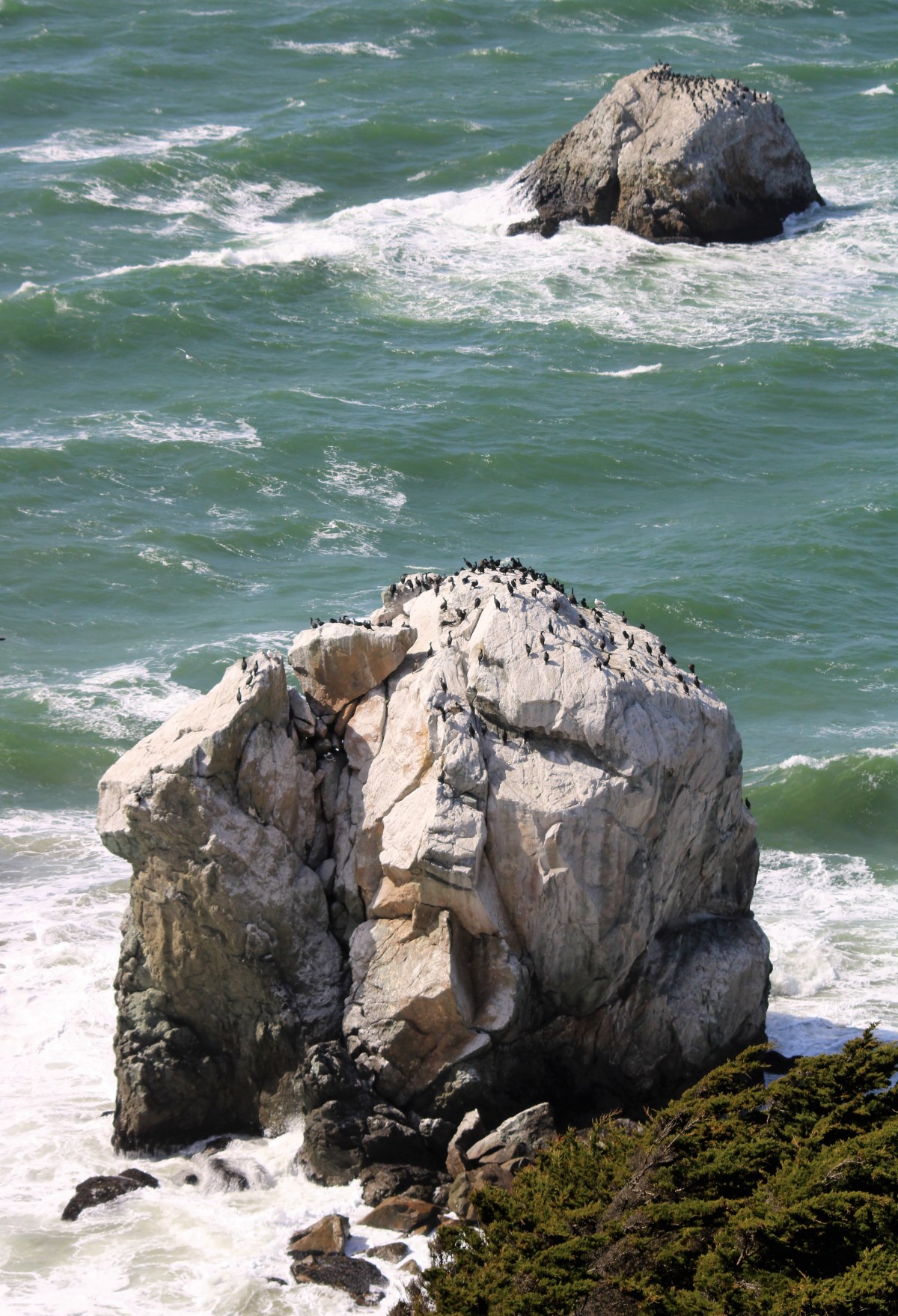
I visited San Francisco this week to apply for my long-stay visa for France. I observed these white rocky mounts where black sea birds roost.

April in Seattle is wonderful.

BIRDS AND PEOPLE AT SEWARD PARK LAST WEEK

Birds:
Spotted towhee
Chestnut sided chickadee
Dark eyed junco
Song Sparrow
Crow
Gadwall or Wigeon, need to clarify.
Hooded merganser
Great blue heron with nesting material, first I’ve seen this year.
Red winged blackbirds
White crowned Sparrow
Common murre
Bufflehead
Grebes
Scaup
Wren
Owl
Pileated woodpeckers
Anna’s hummingbird

People:

Two separate couples where the guy was telling his girlfriend lengthy details about the characteristics of a sports player.
Angelic nature center staff guy who talks about birds and gives out free tea all weekend. I grabbed a hot tea to warm up my hands and heart against the cold and damp.

SHORT ARTSY FILM

“Ready or not, here I come!” I was struck with a sense of foreboding when a character spoke that in the beginning of this this short film.

“HIDE” explores the surreal reference frame capabilities of the human mind in a way that had an intense impact on me. The main character, a young child at play, is left alone to observe the changes of the world he left behind with nothing but his breath and the sounds of his own movement. Counting down to zero like that implies moving toward a terminal and unalterable state of death, which is a terrifying thought. Yet the mind offers the possibility that one can detach and take joy in just being a part of the cycle.  I personally relate to the idea that voluntarily taking a detached perspective can lead to both pain and joy. A person can feel that he or she is always watching and knowing intimately but is always somewhat removed. The audio effects make a motif of the spooky resonant qualities of wood. The depiction of the stillness and abrupt discontinuities of death, spreading green and lace-like from within, is a poignant artistic take. The film includes sex and masturbation in a way you’ll never see in a Marvel brand movie. “HIDE” is a truly unique and thought-provoking work of art.

MIND

I’ve been trying to reconcile the truth of the of a passage from The Power of Now by Tolle with the appealingly solidly science-grounded statement from Self Comes to Mind by Damasio in an internal debate that demonstrates the pull of emotion when making up one’s mind.

The Tolle passage goes like this:

“Please stop trying to understand Being. You have already had significant glimpses of Being, but the mind will always try to squeeze it into a little box and then put a label on it. It cannot be done. It cannot become an object of knowledge. In Being, subject and object merge into one.”

The Damasio passage goes like this:

“The contents exhibited in the image space are explicit, while the contents of the dispositional space are implicit. We can access the contents of images, if we are conscious, but we never access the contents of dispositions directly. Of necessity, the contents of dispositions are always unconscious. They exist in encrypted and dormant form.”

The Tolle passage is from a new-agey self help book. The Damasio passage is about non-conscious control of behavior.

The Tolle quote made me think of the universe knowing itself through matter, energy, complexity and change, a profound idea. Yet the passage also looked at first glance like the seemingly irrelevant exercise of offering a paradox, or something that, on its own terms, could not be resolved with analysis. Isn’t that practice irrelevant, doesn’t it fail to lead to further understanding?

The Damasio passage hints at parts of the brain and mind that are unknowable directly but that can be analyzed in other peoples’ or animals’ brains, perhaps.

I find that in learning, a contradiction or conflict soon becomes a foothold to push for greater understanding. I am grateful for the opportunity to let my mind be the arena where these staggering contradictions work their way toward resolution.

Read widely, and let your mind be a battleground of ideas.

ACQUAINTANCES

I ran into a woman who has a tattoo of a red-winged blackbird on her arm. She said she did not know where they lived in this city. I told her about a patch of cattails where she could find them and witness the classic spring territorial call of the male.

COLLEAGUES

My colleagues supply me with endless entertainment.

I think it’s driven by life’s central tension that a person will be kept in continuous, lively, and dramatic activity if they are swung between the states of wanting and of having. Yet the extremes of this cycle also include the best parts of life and should not be at all disdained.

COMMUNITY

I have been walking more and doing my bit to clean up this corner of the planet.

ABOUT THE PHOTO

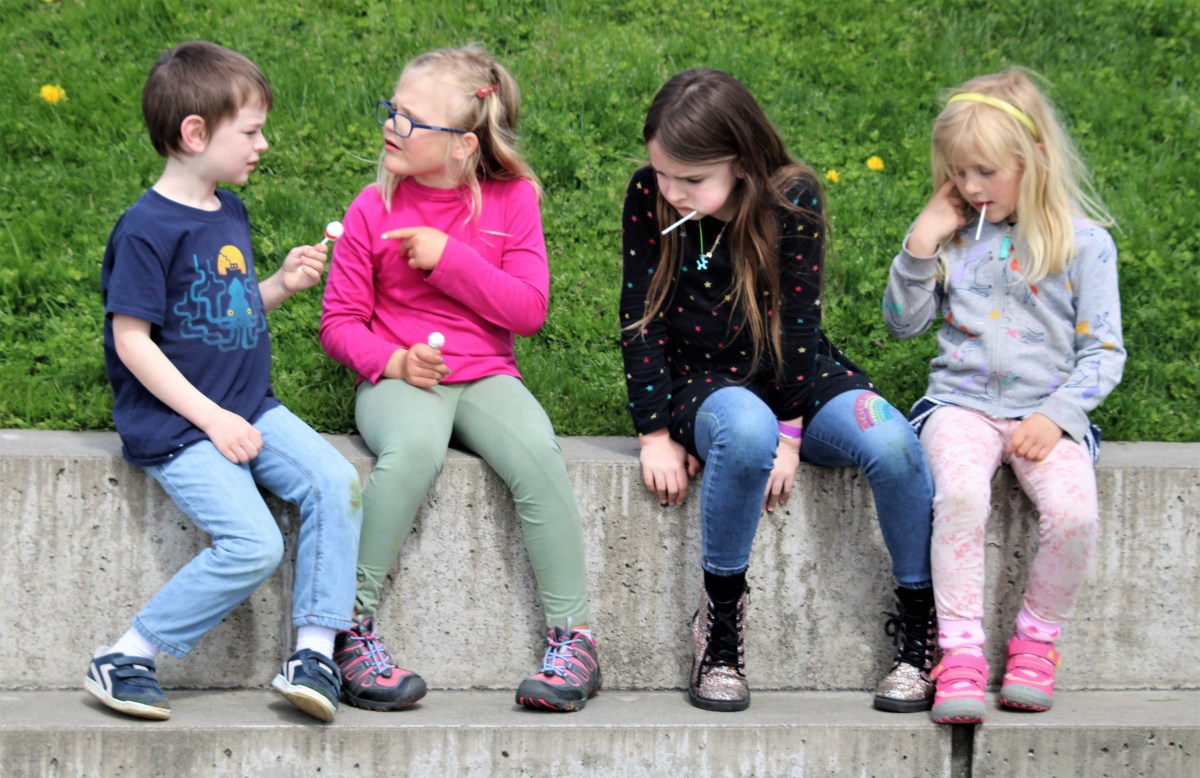
It was a sunny mid-afternoon at Olympic Sculpture Park in mid-April 2023, and four friends were having a heated argument not far from two adult caregivers. They had witnessed a strange incident involving a man on a bike with a camera, but they could not agree on what exactly had happened.

The girl in the pink shirt was the most vocal. She insisted that the boy in the squid shirt had lied about seeing the man photograph a bird. She demanded that he take back his words or face the consequences.

The boy in the squid shirt was defiant. He swore that he had seen the man photograph a bird, and that the girl in the pink shirt was just jealous of his keen observation skills. He refused to retract his statement or apologize.

The girl in the black neon star shirt sided with the boy. She argued that the girl in the pink shirt was being unreasonable and unfair. She suggested that maybe the man had photographed something else or had a spotting scope, and that the boy had made an honest mistake.

The girl in the gray pony shirt was tired of the bickering. She wished they could all get along and have fun. She proposed that they take a break from arguing and enjoy the suckers that they had bought from the picnic basket. She hoped that a sweet treat would calm them down and make them forget their differences.

April continues.

Cherry blossom peak

I visited the cherry blossom festival at the University of Washington on bike despite the rain. A French class classmate in his 70s who had just done the same thing inspired me. I am not about to look like une mauviette (a wuss) when this old man is out there biking.

Relief at a family member’s health being OK for the foreseeable future

My dad underwent testing for a heart condition and came out with an optimistic outlook, which relieved us all.

Continuing to play with large language model AI apps

I continue to play with large language model chat bots (as a user) and wonder and converse a lot about how powerful and how worthy of prudent, agreed upon precautions they are. In a personal form of caution, I have been making small efforts to ensure that not every instance of me writing something is not modulated somehow by interaction with an artificial intelligence. This means continuing to compose, edit and revise on notecards, in composition books, and in Microsoft Notepad. This last method of writing has no AI attached and watching, at least not yet…

Book recommendation: “Self Comes to Mind”

I am enthralled with the brain science finding described in “Self Comes to Mind” by Damasio about the tension between the confusing, complex, buzzing mess of brain activity on the one hand, and the rich, smooth, adaptive mental state we typically experience, on the other.

Weird barista

I am grateful to the playfully weird barista on Rainier Avenue today who called coffee “bean soup,” and to her colleague who played the Cantina Theme when I got my extra hot cappuccino today.

About the photo

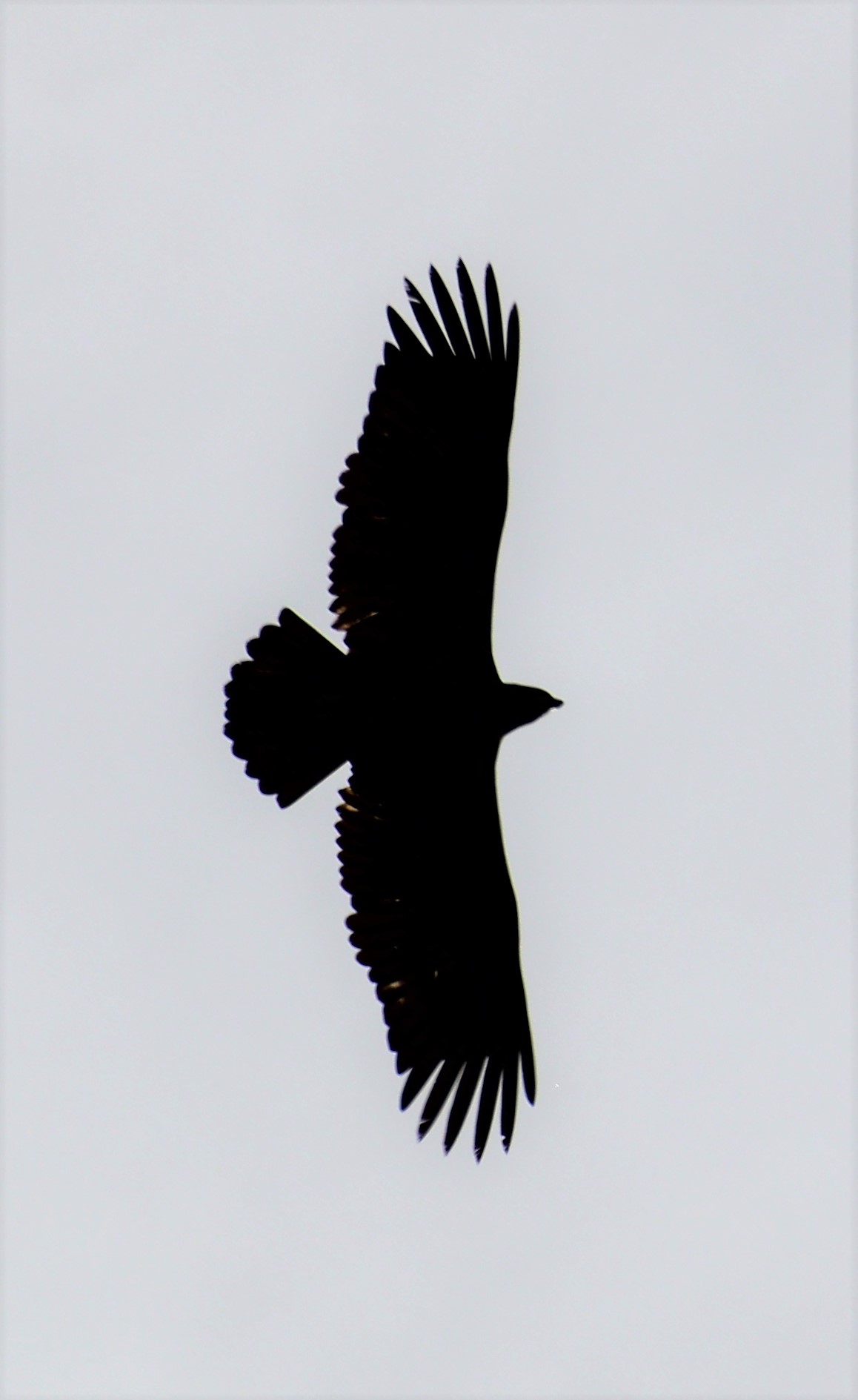
Lastly, I visited Seward Park and observed eagles circling overhead and vocalizing.

April in Seattle

It is April in Seattle and I have been observing birds and natural events. I have been learning about the evolution of consciousness and I have found that a groundbreaking chat bot from Microsoft has been a frequent companion.

What I’m up to

What do I say to someone who says, “What do you do?”

I spent some time thinking about how to introduce myself to those dwindling but conspicuous people who are forward enough to ask, “What do you do?”.

I considered the following: “I am a student and investor. I study biology and I invest in a way that gives me lifestyle flexibility. Lately my efforts at expanding the flexibility in my life allowed me to decide to fly off to Paris for 4 months to finally master oral communication in the French language. And lately my studies of biology have led me to the limits of human understanding of how mind arises from brain, how cultural evolution has outpaced and complemented genetic evolution, how recent rapid advances in artificial intelligence are adding urgency to our need for understanding, and how language and verbal relations, both products of genetic evolution, have led to a tendency to trap the human mind in a cycle of suffering.”

But it’s better to say, “I am a student and investor.” And then gauge interest, and then continue to converse based on feedback.

Seward Park

This forested peninsula in Seattle is my physical anchor and my place of endless returning.

The name of the park in the local aboriginal language, skEba’kst, means “nose” but I think it looks more like a sperm whale in profile. I love the mossy trails, the slinking elusive coyotes, and the bold and indifferent juncos with their tiny white pearl colored beaks. I love to sit on the gravelly north beach, close my eyes, and listen to the gentle waves. I love to recline on the bench in the grassy amphitheater and soak up the sun while bald eagles screech and whine in their noisy breeding season activity.

How I feel

An acquaintance has the habit of asking me, “How are you feeling?” instead of saying something more typical such as “How are you doing” or “Hey, how are you?”

At first I was a little annoyed at this. “I’m not sick, am I? What do you mean, how do I feel?” Am I expected to look inward and plumb my emotions in response to this passing salutation? What if I had strung out a convoluted emotional web behind me in the two preceding minutes, complete with maladaptive emotional schemas from childhood and all the therapy-speak on TikTok and you suddenly snagged that thread and asked me to unspool it and make a mess? Do you genuinely want to hear me retrace or vomit out what’s going on inside?

But then I stop myself and acknowledge that my disinclination to talk about feelings comes with a cost. I try to take a moment to reflect and respond with something genuine. Every person who tries to understand you deserves a genuine response. Self-disclosure promotes mutual understanding, interpersonal warmth, and intimacy and can lead to unexpected benefits. And my acquaintance should be rewarded for making a small effort to pierce the mundane chatter and elevate another person’s response.

My reading

I feel honored to be able to read the book-length synthesis of a scientifically grounded philosopher’s 50 years of study and thought on consciousness. Especially now, when breakthrough large language AI models are blowing the minds of engineers, journalists and policymakers.

The following passage is from “From Bacteria to Bach and Back” by Daniel Dennett.

“So far, there is a fairly sharp boundary between machines that enhance our ‘peripheral’ intellectual powers (of perception, algorithmic calculation, and memory, and machines that at least purport to replace our ‘central’ intellectual powers of comprehension (including imagination), planning, and decision-making. Hand calculations; GPS systems; Pixar’s computer graphics systems for interpolating frames, calculating shadows, adjusting textures and so forth; and PCR and CRISPR in genetics are all quite clearly on the peripheral side of the boundary, even though they accomplish tasks that required substantial expertise not so long ago. We can expect that boundary to shrink, routinizing more and more cognitive tasks, which will be fine, so long as we know where the boundary currently is. The real dangers, I think, is not that machines more intelligent than we are will usurp our role as captains of our destinies, but that we will over-estimate the comprehension of our latest thinking tools, prematurely ceding authority to them far beyond their competence.”

The book is from 2017 and his analysis is of older systems such as Watson and AlphaGo, which played Jeopardy and Go. I am eager to hear what cognitive scientists say ten years from now on these AI systems and how they relate to human consciousness.

About the photo

A crow on 4th Avenue and Cherry Street recently, with some graffiti in the background.

My friend wisely chose not to mutilate his newborn babies

I stayed over at a friend’s house to get up for an all-day hike. Early (way too early) the 3-year old sprung up and darted around the house buck-naked. My first thought was, “ARE YOU NOT COLD!?” And then I remarked with gladness that my friend and his wife had left the boy’s genitals intact despite American social pressure to mutilate in the medicalized ritual known as routine male infant circumcision. This cultural practice is a violation of the infant’s rights to bodily autonomy and bodily integrity.

Now, he (and his little brother) will have the choice. If he wants to permanently and irreversibly cut off part of his natural, intact penis, he can do so when he turns 18. In fact, he can cut off the whole thing if he wants. But a vanishingly small percentage of men choose to do this when they have fully informed consent and knowledge. And the ones that do are generally mentally ill.

In “Manwatching” by Desmond Morris, the esteemed anthropologist mentions circumcision in a lengthy chapter on body adornment, social mutilations, and cosmetic decorations. The passage goes:

“Despite these attempts, the only widespread forms of permanent body mutilation that still survive, apart from sailors’ tattoos, are the piercing of ears for earrings and the cutting off of the foreskin in the ritual of circumcision. Tribal mutilations, such as lip-plugging, tooth-filing, ear-stretching, and the removal of parts of the female genitals, have failed to find favor in the modern world. Circumcision is, in fact, the only really severe form of primitive mutilation to have resisted the modern trend towards abhorrence of body-violation. If, as used to be the case, it was performed at puberty instead of at infancy, that too would no doubt have vanished long ago, swept away by the outrage of the initiates. But the protests of babies are more easily ignored, and with the false accolade of medical hygiene to help it on its way, the genital deforming of young males continues unabated.”

Notably, the blurb on circumcision is preceded by a description of the practice of forced tattooing and scarring, and followed by a description of the practice of infant skull-squashing and female foot-binding.

“Manwatching” is one of my favorite books. It was written in 1977 and unfortunately non-therapeutic genital cutting of minors who cannot consent is still prevalent. However, wise and ethical parents like my friend are saying, “No, this practice is ridiculous and wrong,” and they are helping reduce the rate to less than 50% of baby boys. This practice of bodily mutilation cannot be eradicated soon enough.

About the photo

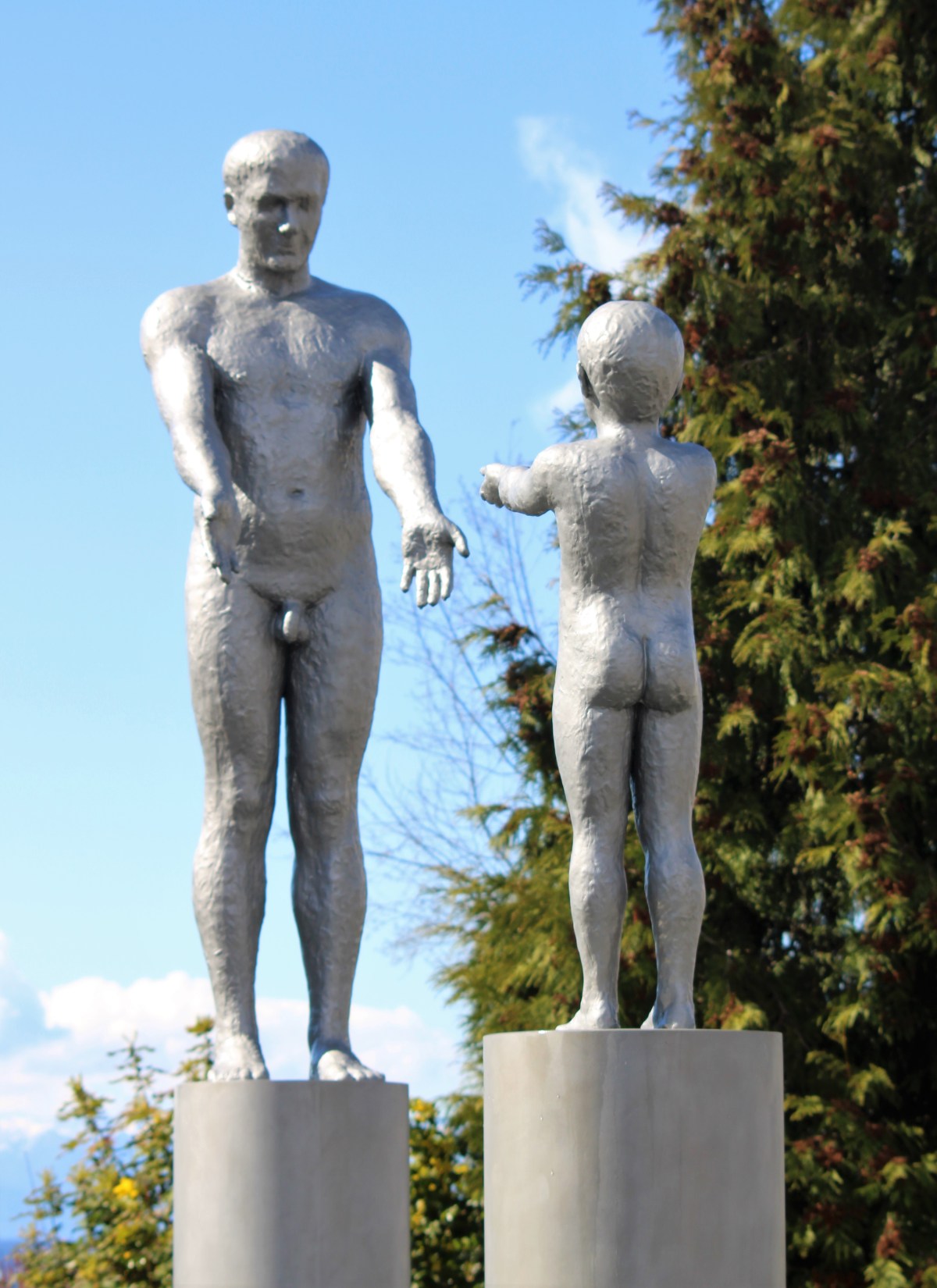
A sculpture in Seattle on a recent sunny day that made me think of how adults ought to protect the young and do better when they know better.

More Iraq war anniversary reflections

Another striking and important piece of journalism illustrates the personal impact of the Iraq war on young Americans who were sent there.

The documentary

It is striking for many reasons, including how young they were, and how utterly betrayed they were by their superiors extending many levels above them. Then they inflicted vast suffering on the Iraqis. And then they came home to aimlessness, suicidality, and lingering questions.

Soldiers’ testimony

One young man illustrates the simplistic motivations they had for going to war, including wanting the coolness of being a young combat veteran.

Another man, who is black, came to the realization that the photo of him with his knee pinning down an Iraqi while holding an assault rifle, was “not okay” in the same way that the murder of George Floyd, involving a police officer with his knee on the neck of a black man, was not okay.

He articulated how woe begets woe, how the mercy of the oppressed for the oppressed is our only hope. Multiply Floyd’s murder by ten thousand, and you have something close to what happened in Iraq throughout my young adulthood.

Older leaders sending young people to die

I believe that many people’s sense of self expands over their lifespan to include their neighborhood, city, political party, nation, and (sometimes) the world and all its species.

Consider William James’s comments on the psychological sense of self:

“In its widest possible sense, however, a man’s Self is the sum total of all that he CAN call his, not only his body and his psychic powers, but his clothes and his house, his wife and children, his ancestors and friends, his reputation and works, his lands and horses, and yacht and bank-account. All these things give him the same emotions. If they wax and prosper, he feels triumphant; if they dwindle and die away, he feels cast down, – not necessarily in the same degree for each thing, but in much the same way for all.”

The people in charge of the US military at the time of the Iraq invasion run-up (Bush II, Cheney, Rumsfeld, Wolfowitz, Powell, and Rice) were old. They believed that America was part of their selves and that the 9/11 attacks had wounded it. As long as Saddam remained in power, their selves lacked wholeness and integrity. They saw the lives of a few thousand young Americans (whose selves were focused on individuality, family, and hometown) as a small price to pay in order to make “themselves” whole again.

Look at the rantings of Putin on wokeness for how this applies to the current war in Ukraine. He views his self as including a Russian World, and as long as ethnically Russian Ukraine is separate, and liberal political ideas circulate in Russia, he is not whole.

Mentorship

I watched this documentary as I realized that younger people in my life are coming to me for support and guidance and I hadn’t understood this until now. I don’t know how to mentor a person but I know how to simply be a friend.

Endless braindead warmongering

I also found an article noting that no US political party (and no organized faction in either major party) has stepped forward as the anti-war party. Everyone favors escalating military spending and far-flung military operations with no clear goals.

From the article:

“The 2024 election cycle has only just begun. But the prospects are not good that we will have a serious presidential candidate who dares to disagree with current war policy. Never before has the chloroform of conformity been inhaled so deeply.

As has been famously observed, you make peace with your enemies, not your friends.

We can assume that any treaty will include America agreeing to foot the biggest part of the reconstruction costs. This amount may far exceed the funds needed to rebuild the schools for all the poor children in America. It may exceed the funds required to provide training for all the workers who will be put out of jobs by artificial intelligence.

We have a $31.5 trillion national debt, in good measure due to our military spending and forgiving trillions in debt as an incentive for other countries to forgo military solutions to problems.”

And in even dumber news, American idiots are volunteering to fight in Ukraine despite their meth convictions, lies, and harassment, “often with unchecked access to weapons and military equipment.” One of the morons who wanted to play soldier even defected to Russia shortly after arriving in Ukraine.

About the photo

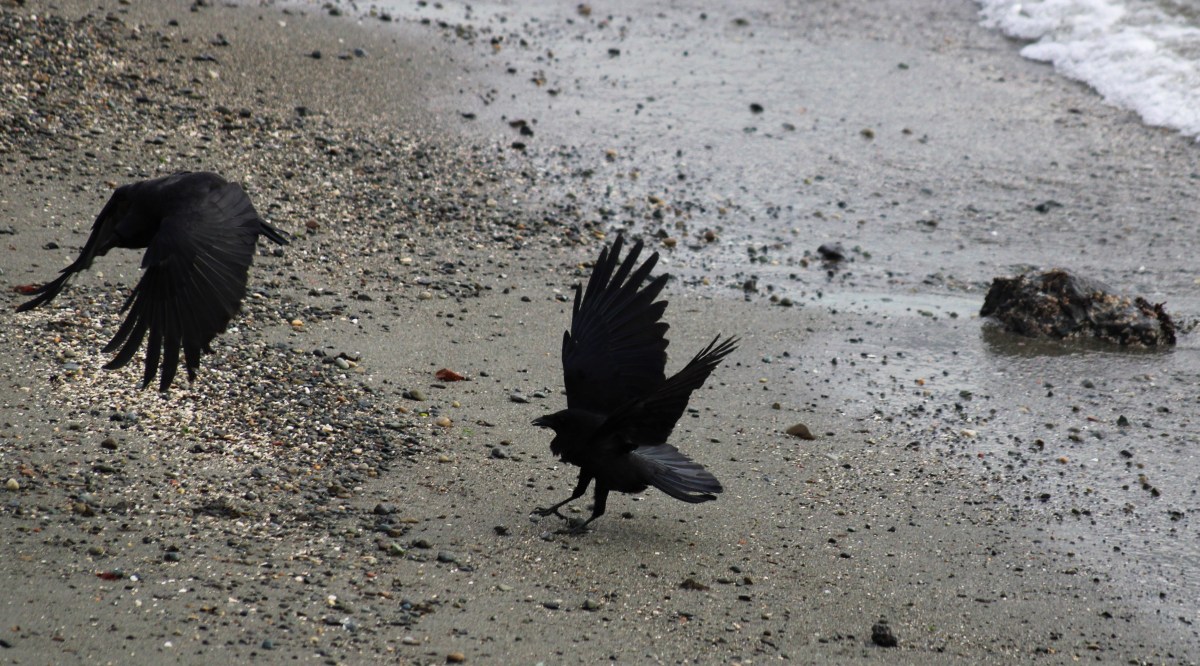
Crows squabble, squawk, and play on a beach on Puget Sound in March 2023.