What I’m up to this spring equinox

I am thankful for the beginning of astronomical spring.

THE PHOTO: A SQUIRREL

This Douglas squirrel munched on (what else?) a Douglas fir cone in Seward Park on Sunday. Other nature sightings included blossoming currant bushes, a spotted towhee, a Steller’s jay defending a nest, and chestnut-sided chickadees.

Someone told me that the little papery protrusions on a Douglas fir cone represent, in indigenous lore, the tails of the forest mice who fled the wildfires by burrowing under the cone’s scales.

IRAQ WAR INVASION ANNIVERSARY

I reflect today with sadness on a pointless and destructive war that cast a shadow over my young adulthood even as I, like most Americans, were mostly unaffected.

On March 20, 2003 and in the days after, I watched the cable news coverage of the US-led invasion of this distant country with some excitement at the night vision footage, dynamic maps of troop movements, and Dan Rather’s anchoring, feeling vague antiwar sentiment but with some trust that we must be doing it for a reason.

Read this article about the perplexing and perhaps unknowable reasons why the US started a war in Iraq. It points to towering hubris, failed policymaking, and failure to learn from mistakes. The author wrote the excellent “To Start a War: How the Bush Administration Took America into Iraq.”

I look on from the fiasco in Iraq to 20 years wasted fighting in Afghanistan. And now the US is sending billions of dollars and flooding the eastern European region with unknown quantities of weapons for a territorial dispute between a Vladimir and a Volodymyr.

I find myself fully agreeing with Republican Ron DeSantis on this point: Ukraine is NOT a vital US national security interest. Neither is Taiwan.

The weapons sent there will fuel conflict for decades. Next will come US-led wars in Africa or perhaps Taiwan. Oh, and then there are all the nukes. The extreme and growing size of US military spending, which both parties have repeatedly voted to increase, means we have more conflict ahead.

RECENT CAR CARNAGE IN THE SEATTLE AREA

On another downbeat note, I have noted recent human carnage on the streets of Seattle, all due to our car culture:

  • Man killed in hit-and-run on Aurora Avenue in Seattle. The scum drivers sped off after killing a person.
  • Driver killed after car goes off overpass in Georgetown. This one is fairly ridiculous. The fucking idiot was speeding, of course, when he drove off an obvious ledge to his death.
  • A driver kills two men and then flees.
  • A driver kills a woman in a hit-and-run in SODO.
  • Drunk driver kills him or herself and two others in Puyallup.

I think hit-and-run drivers are the scum of the earth. But when you watch the news coverage, it turns out that every driver is potentially a hit-and-run driver. They are everywhere. The only way to reduce this carnage is to reduce the number of cars on the streets, slow them down, and separate them from moving people.

If you pay attention to car crash stories in the news, you realize the carnage is relentless. There is a recent safety initiative in Washington State with lots of good ideas, but we have a long way to go to reduce the destruction wrought by drivers and the design of our streets.

One person who is tweeting every incident of traffic violence on Seattle streets is Ryan Packer. Many of these serious incidents don’t even make the news, so these tweets are their only online mention.

CURRENT READING: THE EVOLUTION OF MINDS

Reading about the evolutionary origins of the conscious mind in “The Deep History of Ourselves” by LeDoux led me to “From Bacteria to Bach and Back” by Dennett. An example passage, following a discussion of complex acts of deception in predator-prey interactions, goes like this:

“The time has come to reconsider the slogan ‘competence without comprehension.’ Since cognitive competence is often assumed to be an effect of comprehension, I went out of my way to establish that this familiar assumption is pretty much backward: competence comes first. Comprehension is not the source of competence or the active ingredient in competence; comprehension is composed of competences. We have already considered the possibility of granting a smidgen or two of comprehension to systems that are particularly clever in the ways they marshal their competences but that may play into the misleading image of comprehension as a separable element or phenomenon kindled somehow by mounting competence.”

I would recommend “Deep History” for the clear writing, the art, the “single idea” nature of each chapter, and the narrative journey from the cooling of the early earth to human emotions. I trust a scientist over a philosopher any day. The Dennett book is good too, and is based on biology, but I am reading it simply for its different perspective and approach.

LAST WORD

I am grateful for the childfree lifestyle that allows me to sit down and read a goddamn book in the first place. My friend (bless his heart) had a recent sleepless night when his kid injured his other kid’s skull and they had to go the the emergency center. Then there was a another sleepless night over croup and another emergency center visit. Then he had to track down his crazy baby mama who had threatened to leave forever and then hitchhiked to the transit station in the dark.

Yet they say we need to procreate so that we’ll have workers to feed to the economy. Or perhaps to go fight in Europe, the Middle East, or Taiwan. Fuck that.

Birds, books and bikes > babies.

Harbor seal

The photo is of a harbor seal: I finally got a photo of one of these smelly cute little fuckers surfacing near Olympic Sculpture Park.

I am currently enjoying spring. I recently heard the quip, "Living in Seattle is like having a beautiful girlfriend who is sick all the time." I think she’s shaking off her winter ick now. Tomorrow will be sunny and warm and I will soak up every minute of it.

I’ve been enjoying daily bike rides, birding, and reading my book in the sunshine.

My current reading is EO Wilson’s "The Meaning of Human Existence." I have no problem picking up a book with a grandiose title like that since it comes from a cautious and wide-thinking biologist who founded at least three theories within his field and shares my materialist perspective.

An illustrative passage (from a chapter where he addresses the driving force of social evolution and pugnaciously refutes another theory of natural selection) goes like this:

"The origin of the human condition is best explained by the natural selection for social interaction – the inherited propensities to communicate, recognize, evaluate, bond, cooperate, compete, and from all these the deep warm pleasure of belonging to your own special group. Social intelligence enhanced by group selection made Homo sapiens the first fully dominant species in Earth’s history"

A father’s perspective on the attempted suicide of his daughter, a medical resident

A father’s call to action in a recent article made me feel several feelings. 

The dad is a doctor and he was rushed into the intensive care unit to see his daughter, a surgical resident who had swallowed a bottleful of antidepressant pills and was now delirious with frightening writhing and contortions. 

He and his wife were spurred on to parental combat by what they saw, as in past episodes that were less dire. Then, they reflected on what they and others had done and failed to do. 

The daughter made this attempt at self-annihilation after previous bouts with depression and suicidality. What pushed her over the edge was her training program’s brutal hours and workload and unsupportive culture. 

Quotes from the dad 

The following passages stood out: 

“A general surgery residency, however, quickly unmoored her, making her vulnerable again to the undertow of depression. Work hours, often exceeding 90 per week, left no time to establish care in a new state. A 5:00 a.m.-to-7:30 p.m. schedule precluded online appointments. Prescriptions lapsed. The stressors of caring for the gravely ill during a pandemic turned an already-impossible job into one saturated in toxicity and hopelessness.” 

“Meanwhile, her residency program’s culture, like many, promoted dishonesty in duty-hour logs and unquestioning acquiescence to leaders and loyalty to coresidents. When her program lost four trainees, her workload increased.” 

“Once again, establishing care, medication, outpatient therapy, and the simple self-care of eating, sleeping, and stress management alleviated her symptoms. Feeling obligated to her coresidents, she resumed full-time duties after 6 weeks. Her program director assured her she could graduate on time if she limited her vacations during the next 3 years. Implicit in the bargain: no relapse. But without time for mental health care, her symptoms recurred.” 

“On day 5, her program director called me, asking when she planned to return: she hadn’t answered his calls or emails, and he had a schedule to finalize. His concern ended there.” 

“12,000 U.S. physicians, at a rate of one per day — twice the suicide rate of the general population.” 

“Though my daughter clearly had risk factors, the culture of the profession thwarted attempts to mitigate them. Practitioners in other fields pride themselves on protecting one another. Yet we purported healers tolerate stacks of body bags filled with our dead colleagues, after people like me have failed to understand the depth of their suffering.” 

The saddest detail is the lack of support from fellow trainees in the program 

The saddest detail for me was how basically no one supported the woman. One resident stopped by. One sent a text.  

“On day 2, a close friend from residency stopped by to check on her. “I’ll let the residency program director know,” she said. I saw no other physician friends during her stay.” 

“She was sent a link to a policy manual. No meeting occurred. But the most painful and telling response came from her coresidents, administrators, and educators: nothing. Beyond one text from one coresident, radio silence. The community abandoned her.” 

To put a finer point on it: suppose you are going through a difficult program with a group of people who have known you for months or years, and they find out you tried to kill yourself and were hospitalized, and none of them reached out? How would you feel? Where is the solidarity? 

Brutal work hours and a link to Cialdini’s findings on hazing and initiation 

Doctors in the US face a brutal training period that lasts over a decade. The training has elements of hazing and initiation. It promotes bullying and hypercompetition. And once they go through it, they tend to inflict hazing on the next generation of doctors, consistent with the psychology of commitment described by Robert Cialdini. The following example is from college fraternities but holds true for US medical training: 

“We see escalating commitment most clearly in the elaborate hazing rituals practiced by American college fraternities and sororities. Pledges are subjected to harrowing ordeals where they are beaten, exposed to extreme weather conditions, forced to drink to excess, deprived of food and water, and other elaborate forms of painful initiation. Hazing like this has resulted in severe injuries, psychological trauma, and even death for many college students. 

Why do these organizations continue subjecting their members to what can only be described as ritualized torture? It’s not that frat boys are uniquely sociopathic or deviant (as their detractors would like to believe).  

The psychology of hazing is really all about group cohesion: the pledges will value their membership in the fraternity more if they’ve gone through excruciating lengths to earn it. Researchers believe that the roots of this lie in cognitive dissonance—the mental burden of carrying two contradictory beliefs at once. The worse the hazing is, the more your mind needs to convince you that joining the group will be a positive, fulfilling experience. Thus, hazing binds new recruits closer to the group through escalating commitments: you invest more into the group, because it’s impossible to stomach the idea that you went through all this hazing for something you don’t actually want. The escalation of commitment bias works in favor of group loyalty. 

The fraternities strongly resist any attempts to substitute their hazing rituals for some other, more socially acceptable activity, like community service work. Like the Chinese Communists, the fraternities don’t want to give their pledges a mental “out.” They don’t want new members to be able to tell themselves that they’re going through the ordeal for any reason other than their loyalty and commitment to the group. That’s what the psychology of hazing is built on. Fraternities want the pledges to own the commitment intrinsically.” 

Doctors are leaving the field. Difficult process of winnowing. AMA blocking solutions. 

“In my daughter, medicine lost a practitioner of unquestionable skill, commitment, and compassion.” 

The daughter was extremely smart and hard-working, and she treated patients and nurses well. She thrived with basic self-care, such as keeping therapy appointments, medication, eating and sleeping properly, and being with family. Her elemental powers of resistance were intact, but were weakened by the environment she was in. She would have made a great doctor, but now the field will lack her contributions forever. 

Doctors are leaving the field in greater numbers. The US medical system is ranked last in quality among industrialized countries. Medical educators see their job as winnowing candidates out through difficult trials. After all, for each person who fails, there are hundreds willing to make greater sacrifices to take their place. 

Yet others refuse to enter the field, viewing it as a way to sacrifice your 20s to hard work, only to receive a lifetime of hard work in exchange. 

And to make matters worse, the American Medical Association (which does not represent all US physicians) lobbies to keep the number of new trainees low and to restrict the scope of practice of midlevel practitioners. 

Side note: infant genital cutting and “unquestioning acquiescence to leaders” 

I can’t help but include my opinion on infant circumcision. 

I am totally opposed to non-therapeutic genital cutting of non-consenting persons, which includes infants. The practice is a violation of the rights to bodily autonomy and bodily integrity. 

The perspective article includes the phrase, “unquestioning acquiescence to leaders.” 

This unquestioning acquiescence to authority is one of many reasons why genital cutting of male infants is rampant in the US: a culture of medicine where residents venerate their “attendings” (as their mentors are called) and repeat what they were trained to do unquestioningly over their career, in a way that contradicts evidence, ethics, and common sense. 

The above note on brutal initiation rituals holds true with infant genital cutting. Parents also think that since the dad went through this blood ritual, the son must be subjected to it also, otherwise the cognitive dissonance remains unresolved: “Why would someone have inflicted harm on me by cutting my genitals needlessly? That makes no sense. If I don’t cut my son, then I have to grapple with the idea that something pointless was done that harmed me. So, we must continue the tradition by cutting our son.” 

Endless wisdom from The Magic Mountain 

The Magic Mountain by Thomas Mann treats very humanely of disease, suffering and the sometimes-questionable role of the doctor. The following passage is about a character who abided by a code, to both his honor and detriment, and later felt “shame and self-reproach” for faltering to a powerful affliction: 

“What or whom was he dodging when he hid his once so open gaze? How strange that a creature feels ashamed before life and slinks into its den to perish, convinced that it cannot hope to encounter any respect or reverence for its sufferings and death throes – and rightly so, for joyous birds on the wing show no honor to a sick comrade in their flock, but instead peck him angrily, disdainfully with their beaks. That is base nature’s way – but a very human, loving mercy swelled up in Hans Castorp’s breast when he saw that dark, instinctive shame in poor Joachim’s eyes.” 

Last word: “It’s time we started looking after our own” 

American doctors go through rigorous training to pursue a career healing the sick. I don’t mean to disparage them as indifferent bullies. But the culture, especially during training and residency, needs to change. 

The article ends with a call for doctors to do as members of other fields do and look after each other. 

About the photo 

Two women with the same outfit on the Seattle waterfront in Fall 2022. 

Sophrologie class

I joined a class in sophrologie, a version of mindfulness with a French twist.

The concept


Sophrologie is a blend of wellness practices, including Buddhist meditation, Zen and gentle movements based in body awareness.

The class


We took our seats in a semicircle and listened to the teacher’s explanation of the practice and followed her in focusing on the breath, which she said is a good place to start because it is always with us (“Toujours avec soi”). We went slowly through seldom-used movements of the shoulders, diaphragm and wrists that led to grounding in the present and linking and returning of one’s mental state to the senses.

The teacher


The teacher was a woman who spoke in a mix of French and charmingly imperfect English. She is from Paris, where I am heading soon for 3-4 months to hone my French oral communication. I might find a group just like this.

With our eyes closed, we had only to release endlessly humming inner preoccupations with the outside world and be guided by her voice as she repeated, “Inspirez… Retenez… Et détendez.” (“Inhale… Hold… And relax.”)

Last word


I am more and more open to practices like these: disciplines that are focused on health but have an expressive/aesthetic side and are thus a humanistic pursuit. I like these in-person groups that center the mind/body in direct experience.

About the photo

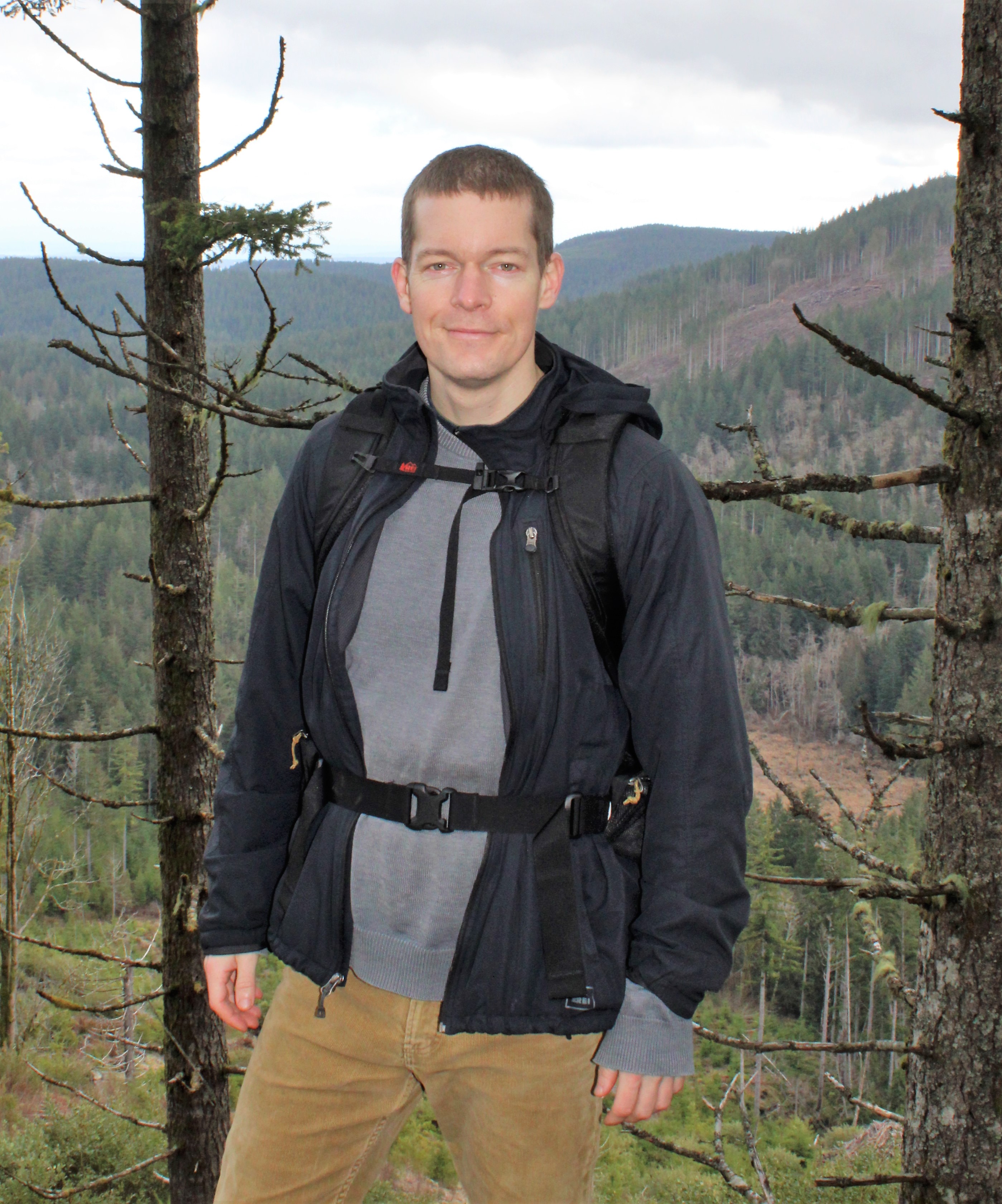
Hiking outside Bremerton, WA, with a friend who is a new dad.

Recent small joys (Feb 2023)

There is a lot to be thankful for.

My moviegoing buddy

My friend is a man of extraordinary verbal intelligence.

When you combine this with the ridiculous amount of time he spends on political Twitter and movie fan websites, the result is that I drink in high-level analysis and opinion of the films we see. On our walks back from the theater he peels away layers and motifs I hardly noticed and offers trivia about the actors, directors, and consistent or changing themes of their productions. He draws out overarching styles in the director’s films, visual symbolism, and the vibe of the music. He ought to run a critic’s podcast, but this would take away from his insane amount of pot smoking and YouTube browsing.

A couple of recent favorites were The Menu (hilarious and satisfying) and M3GAN (I love seeing a robot dance and murder people).

The other day we saw Infinity Pool and snacked on a piroshky or two. I was drawn in after the fateful handjob scene and then absorbed in the gory, nihilistic playground depicted in the film. I laughed and laughed, especially during a climactic scene where the main character whimpers while suckling at a breast smeared with the blood of the clone of him that he had just pulverized with his fist. But although I found it hilarious, my subconscious was affected, judging by the strange dreams I have had since.

Mass Effect

I am engrossed in this trilogy of video games.

The story has links to biological evolution, AI, and a political system of alien races, all in a context of hard sci fi (with some exceptions to make it interesting). The emotional impact of choices in the game is greater than with Fallout, another favorite.

I keep finding other fans. One acquaintance has sunk 25 DAYS into the game. Each person loves a different aspect of the series and is eager to talk about it.

I lost two cherished squadmates in the game recently and I realized I will be regretting their loss and dealing with the consequences of their absence for the next 30 hours of playtime. I wondered what I had done wrong to see my trusted and effective ally Garrus get dragged off and killed by brainless insectoid aliens under the control of an even worse enemy. The dread of space, the biological horror, the mysterious looming threats, the tensions between unity and separateness pervade the games and change the way I see the world.

It seems like this game was expressly designed to appeal to me and draw me in. I keep finding more things to like. I’m very glad it was remastered to make it accessible to another legion of gamers.

The world of thought and ideas at my fingertips

My hunger for knowledge and understanding is insatiable and I live in a world where I can learn about anything. I seek out specific domains of knowledge and sometimes I let myself get drawn in without being deliberate. I have learned so much about psychology, the evolution of conscious brains, the beauty of Chopin’s Nocturnes, Polonaises and Preludes and Satie’s Gnossiennes; speculation on human competition with AI, the rebounding of global cooperation in the face of covid, political repression and war; and the process of mastering another language. How, I wonder, did it devolve small, simple me to contemplate big things like that?

Part-time work helps me devote time to learning. After I graduated from college, I worked only part-time for five years and consumed books and media constantly. When I moved into full-time work, a lot of this learning went away and people I knew even commented on how they saw me less and missed me. The weeks, months, and years went by in a blur because my job (and most jobs) are usually the same, day in and day out, unlike the rest of life, which is rich and marked by significant events and ever changing. I now work only 80% of full time and I don’t think I will ever go back. In fact, I will steadily reduce my work hours until I am at zero. I don’t have to wait for legislation or society-wide change. Full-time work (or more) has the potential to deaden you and displace some of the best things in life.

Biking and walking everywhere even during Seattle’s mild winter

I love my bike, a white 90s Trek frame with refitted components, cruiser handlebars, and 650b size tires.

Food and drink

Like ideas and knowledge, all the food is at my fingertips (Indian, French, American, Japanese, Russian) and all the cocktails and beer (but not wine, which is gross) including negronis, sours, and the occasional lovingly poured and settled Guinness.

I like to sip a wet martini with a twist and a dash of orange bitters at the top of Smith Tower and watch the vast Puget Sound at sunset. I also love picking up hot and spicy Mumbai street food or sitting with an extra-hot cappuccino and a library book.

Meeting interesting people in unexpected places

I relax my defenses and become alive to the inner world of others as revealed through conversation and shared experience, including their slight discontent, their reason-giving and explanations for what they see, their strange assumptions and their peculiar desires. Some of them become confederates, some request for things, some all but ask to be friends (belying the idea of a “Seattle freeze”), some want to know all about me, some are restrained, and some are a bit predictable or “of a type.”

About the photo

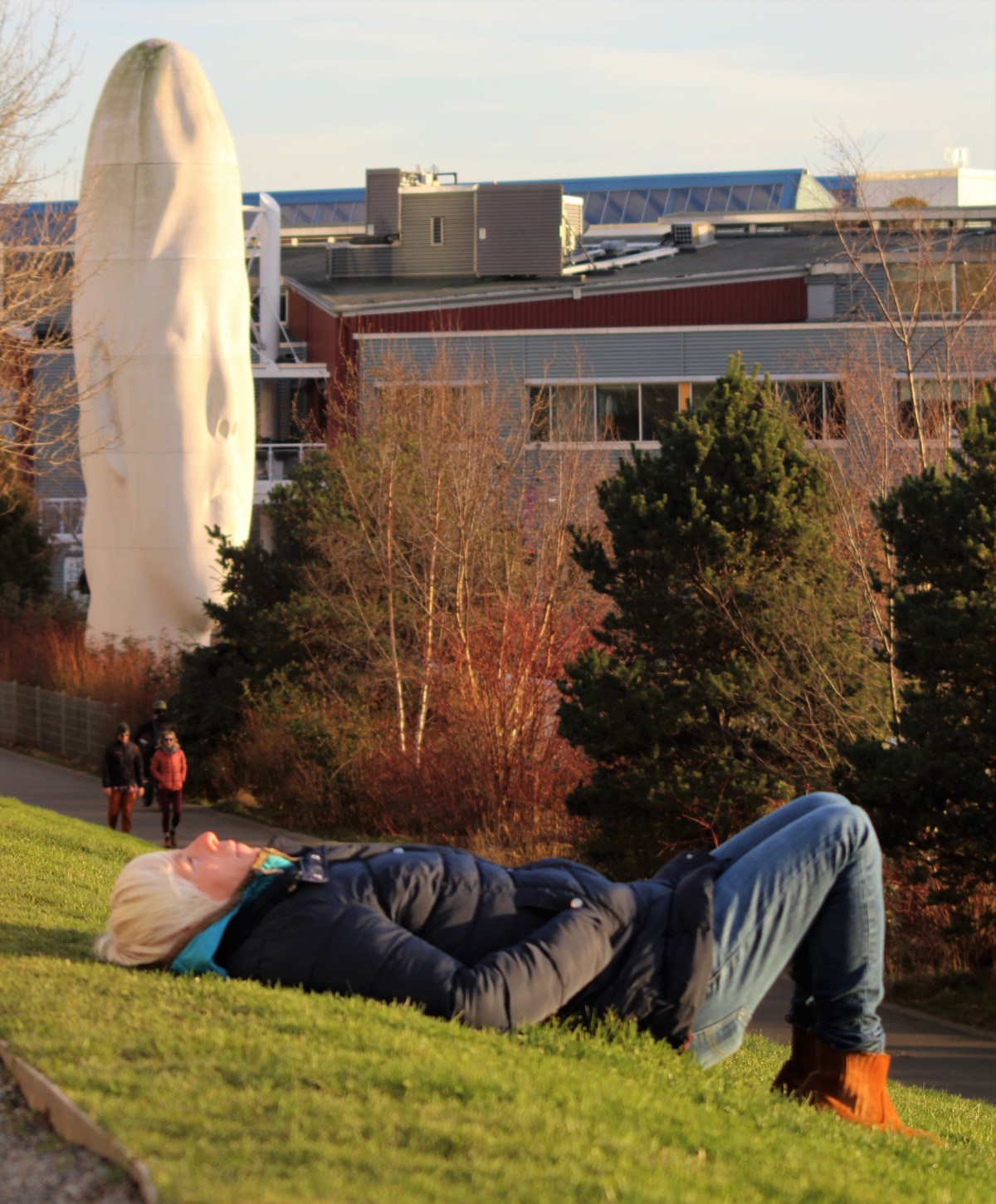
This woman was luxuriating in Olympic Sculpture Park last week with “Echo” by Jaume Plensa in the background, echoing the color of her hair.

Recent population and birthrate articles finally identify a true childfree motivation

Lately I read with keen interest and a bit of bemusement about China’s first reported population decline from a high of over 1.4 billion people. I feel keen interest because of my strong opinions on the environment and bemusement because of the hand-wringing among worried opinion-havers that followed the news. Demographers, columnists and policy people are full of ideas and speculation about what the sharp and ongoing drop in births means for China, for the world, and for humanity.

China’s population decline

My view is that a country with extreme overcrowding and hypercompetition in education and work is now taking its foot off the accelerator toward resource depletion and military conflict. This is generally a good thing. And the worst-case scenario is that China will become like Japan: older, yes, but also long-lived, healthy, rich and deeply influential in the world.

Young people in China now have a chance to say no to one more burden in a context of hypercompetition in education and work, which some view as “a pointless hamster wheel, even a tool of control and repression. Last year the term “tangping,” or “lying flat,” went viral on Chinese social media. It was China’s version of the Great Resignation that began in the United States around the same time. Young people were quitting the rat race with all of its pain and stress. The government began censoring the term.”

South Korea women saying no to dating, marriage and motherhood

In a related, more extreme case of declining parenthood, women in South Korea are saying no to dating, sex, marriage and motherhood. Men are portrayed in the article solely as perpetrators of gender-based crimes who have no voice or impact on reproductive trends. But they also are saying no to breeding, as it takes two to tango. South Korea has a fertility rate that seems to be steadily approaching zero.

“Civilizational collapse” opinion

A NYT columnist who sees decadence in other people’s choices and moral failings in not reproducing blames “workism,” which elevates work and achievement above all other things in life. I agree that workism is a plague but it’s not the whole story in declining births. This is getting closer but still not there.

Also, this writer’s mind is polluted with Catholicism and he sees every societal trend and TV show he watches as a sign of the biblical end times and the wickedness and corruption of our souls. Instead of the rest of us having 3 children apiece, I’d suggest he have 12 more of his own and see if that stops his complaining. It is refreshing however to see a conservative writer begin to question capitalism, since capitalism seems to accompany fertility declines.

The writer opines against workism as being anti-fertility. Yet I have to point out that having kids yokes you permanently to the workism cycle. When you don’t have kids, you don’t have to grind yourself down in the relentless competition and feel you have no option but to train your kids to do the same.

Instead of fearing civilizational doom, I look forward to a bright future where fetuses are raised on an as-needed basis in vats of nutrient goo. Or perhaps incubated in computers. Perhaps Catholics can perform a blessing over the goo so that the humanoid life form that crawls out is still considered holy.

A prime reason: opportunity costs

Finally, I found an article that hit on an explanation that’s juicy and real:

The opportunity costs of having a child are too high.

Life is too good to sacrifice large chunks of it to a (current) nonbeing. The author is demographer Lyman Stone and he examines several explanations analysts have offered for why the birth rate declines everywhere, under seemingly all circumstances, and does not rebound.

He starts with a rare acknowledgment of uncertainty:

“And while their paper isn’t an exhaustive treatment of other presumed barriers to parenthood, they do suggest the conventional wisdom is lacking.”

Then he hits on something important:

“The opportunity cost of parenting—income, education, experiences, or career opportunities—forgone by having a child seem to be rising in an era of increasing affluence.

This insight cannot be underscored heavily enough. American incomes are at record highs, and standards of living are better than they were in decades past. Assuming would-be parents are opting out of having kids exclusively because of financial pressures misunderstands the dynamic at play.

The authors note that while women under 30 tend to see fertility falling the sharpest, “the decline is generally widespread across demographic subgroups, which gives reason to suspect that the dominant explanation for the aggregate decline is likely to be multifaceted or society-wide.” Building off the work of the late Sara McLanahan, Tomas Sobotka, and Suzanne Bianchi, they speculate that young adults in the U.S. are now much closer to what was already observed in Europe—preferences around childbearing, career, and opportunity costs have indelibly changed compared to prior generations. It’s worth noting that a 2018 poll of individuals who have chosen not to have children found the most frequently-cited reason for their decision was a desire for more leisure time. ”

THIS is why people turn away from having children: they take a balanced view of their future, realize that life is wonderful and having kids would take away 99 out of 100 of their current favorite things and future hopes. They recognize that all costs are opportunity costs, and parts of life are too good to give up for the sake of children.

Yes, financial pressures are real. Yes, people will always want more societal help and support when raising kids. And of course, they will accept free money from the government and several months of guaranteed parental leave. But people had huge numbers of children back when they were poorer and traditional gender roles were ironclad. Now, as life gets better and more equal, people still turn away from breeding. The trend is inexorable and, in my view, it’s a good thing.

Get fixed while you can

Half of pregnancies are unplanned, aka “oops babies.” So if people were more informed and aware, the birth rate would be plummeting even faster.

This is why, each night, in a gratitude ritual, I give my testicles an affectionate little pat and mentally thank the gentle nurse practitioner who severed the flow of the vas deferens with a titanium clip and prevented the little spermatozoa from ever, ever finding their way to an egg.

The childfree life is the way, the truth and the light and people all around the world are discovering this, for both negative reasons and positive ones, and making a future of their own choosing without the burden of babies.

About the photo

A smokestack in the SODO neighborhood of Seattle being reclaimed by nature.

I visited Minneapolis and it kind of sucked

I spent Christmas with my family in Minneapolis for the first time in four years. I expected to suckle contentedly at the tender bosom of family. Instead my weeklong stay was a mixed bag and a bit sad and disappointing.

The Good
I liked seeing the family after last visiting over a year ago. Many of my large close and extended family have changed. Kids have grown and developed, traditions have remained strong, and everyone survived covid except for my 99 year old grandma.

The Bad
The Weather
During my stay the weather was brutally cold, hardly rising above 0 F, with wind chills far below that. The news featured many exhortations to stay home and not spin out and die on the icy and snow covered roads. People mostly took this advice and stayed home, sheltering away from the lethal cold. The week reminded me of pandemic isolation. I did not leave the house much. It was a bit depressing and bleak, though pretty to look at. Interestingly the people who live there also hate the extreme winters and complain a lot and say they want to leave.

While I was there the Star Tribune published an article on how Minnesota continues to lose people who leave for other states. Experts interviewed for the article seemed flummoxed as to why this is happening.

Shooting at the mall
I visited the Mall of America with my dad so we could get some exercise (walking around Lake Nokomis was not an option because of the bitter cold). Before we could log a mile, a muffled voice came over the intercom that we could hardly hear. We realized everyone was rushing into the stores for some kind of lockdown. We were herded into the back of a bra store where we sheltered for an hour because of a shooting.

Twitter and messages from family gave us hints: groups of teenagers got in a dispute and shot and killed one of their own. After the shooters fled, they picked up food at White Castle. When arrested, all of them refused to talk to investigators.

This was sad. It came in the wake of another act of inhumanity that was on my mind: the killing of four students in their beds in Idaho by a PhD student living in Washington State. And just this morning I learned of the mass murder-suicide of 8 in a home in Utah. It occurred to me that the shooting among teenagers was less evil but of a more common type, and it involved cultural acceptance of violence. The Moscow, Idaho killings were extremely evil and infamous but also extremely uncommon. The Utah killings were relatively uncommon but also less infamous. Despite the scale of the Utah massacre, it hardly made the national news.

Kids and young people are dead, perpetrators are going to prison for life. Futures are derailed and denied. It’s all very sad.

Tantrum from my brother
I’ve seen so much positive transformation and growth in some family members. They have put troubled pasts behind them and started families and businesses and made an impact in life and in their own families.

Other family members have remained the same or regressed:

My brother threw a tantrum, including shouting and slamming doors, when someone gently asked him to shovel snow from a small stretch of sidewalk.

Later, when I gently asked him to stop touching me, he spazzed completely and and shouted, “DON’T EVER FUCKIN TALK TO ME AGAIN, GO BACK TO OREGON, I NEVER LIKED YOU ANYWAY! YOU FUCKIN PIECE OF SHIT. YOU FUCKIN PIECE OF SHIT” and so on. Then he threw a shoe box size gift box at me.

I marveled at this. I am fairly disgusted but also fascinated by meltdowns and sudden, extreme displays of emotion. This display was typical of him since age 5, but still striking.

I also monitored my own reactions. When he started shouting, I happened to be sitting in a meditative posture under a blanket with my legs crossed, clasping a mug of hot tea. I had spent hours in this posture in formal meditation, alone and in groups, watching my own mind and its ceaseless proliferation of thoughts, memories, feelings and bodily sensations. I was in the ideal state not to react but to simply observe the outburst and then to decide how to respond. In another odd and beneficial coincidence, within five minutes of the outburst I had come across this article on defusing family spats over the holidays.

One good bit of advice from the article is this: “When subjects “engage in highly charged emotional outbursts,” it can be helpful to stay silent for a beat or two, advised Noesner. When people fail to get a response, they often calm down to verify that the negotiators are still listening. “Eventually, even the most overwrought people will find it difficult to sustain a one-sided argument and will return to meaningful dialogue,” he said.”

I can’t say I employed any other piece of advice besides nonengagement. I could have taken an active approach and asked, “Do you mean it when you say you never want to talk to me again?” But it’s hard to keep the “principles of humanistic psychology” in mind when someone is shouting and throwing things at you like a goddamn ape.

The incident reminded me of other encounters with acquaintances and strangers, both male and female, in recent years (both before and after covid isolation) where they melt down and shout, “I’LL FUCKIN KILL YOU! I’LL FUCKIN KILL YOU! I’LL FUCKIN KILL YOU!” over some kind of perceived trivial slight. It is truly striking to watch this kind of display and it makes me believe all the more firmly in our shared ancestry with chimps.

I also gained a greater appreciation of what ACT (acceptance and commitment therapy) theorists mean when they say that a goal of values-based therapy is to “expand one’s behavioral repertoire” in response to inputs (stimuli). I now see how someone can fly off the handle when a small conditioned stimulus is introduced, just like a rat reacting to a tone under Pavlovian conditioning. When you select your response from an array of options, based on values and memory and choice, you are less like a rat and more like a full person.

Despite my monklike pose while waiting out the tantrum, I was not immune to a physiologic reaction. I monitored myself and noticed that while my brother’s voice was raised and his face contorted in rage, my heart started pumping harder and I felt a familiar flush in my face as blood welled up. I managed to just notice these reactions and remark on them with interest but no effort at suppression. In the language of fear and anxiety, I was exercising top-down control of the amygdala using attentional control directed by my prefrontal cortex, consciously dismissing a threat even as my nonconscious brain activated a defensive motivational state:

“We know that the discordance between what one says about one’s feelings and how one’s body is reacting in the face of a threat is a natural consequence of brain organization. Bodily responses are products of survival circuits that operate nonconsciously, and working memory, which is crucial to self-reports about consciousness, does not have direct, inside-the-brain access to the implicit systems that control these responses. Working memory acquires information about these states indirectly, by monitoring their noticeable consequences.”

All of which gives me more respect than ever for the work done by the nonconscious circuits of the brain. Not to mention respect for “Anxious,” a masterwork by Joseph LeDoux that I also was reading at the time.

I have come a long way in understanding people and responding to them in a way I choose. I dismiss the tantrums of my brother. But I wonder what effect he had on me when I did not have knowledge of emotion and psychology, when I was smaller than him and feared his rage and unpredictability. I am certain it left a mark and made the small child in me think that even close family members cannot be counted on and can become dangerous and threatening within a second. Perhaps I can judge the impact on me by how much I just vented. I could say I’m JUST LIKE this guy, who vented copiously and hot after the fact

when he was emotionally impacted, or realistically maybe this guy.

I also don’t know what he is capable of. After all, people own guns and kill family members all the time and I hardly know this person nowadays. He has over the years consistently taken several steps up the continuum of domestic violence and abuse. I wonder if it’s part of my I moved way the fuck across the country as soon as I could. That, and the awful cold.

In sum:
I think I will visit my home state once every two or three years and only during the warm months. I will not give my brother a chance to use violence against me. I will keep studying fear, anxiety and emotion. And I will probably avoid going into a shopping mall unless I absolutely have to.

About the photo
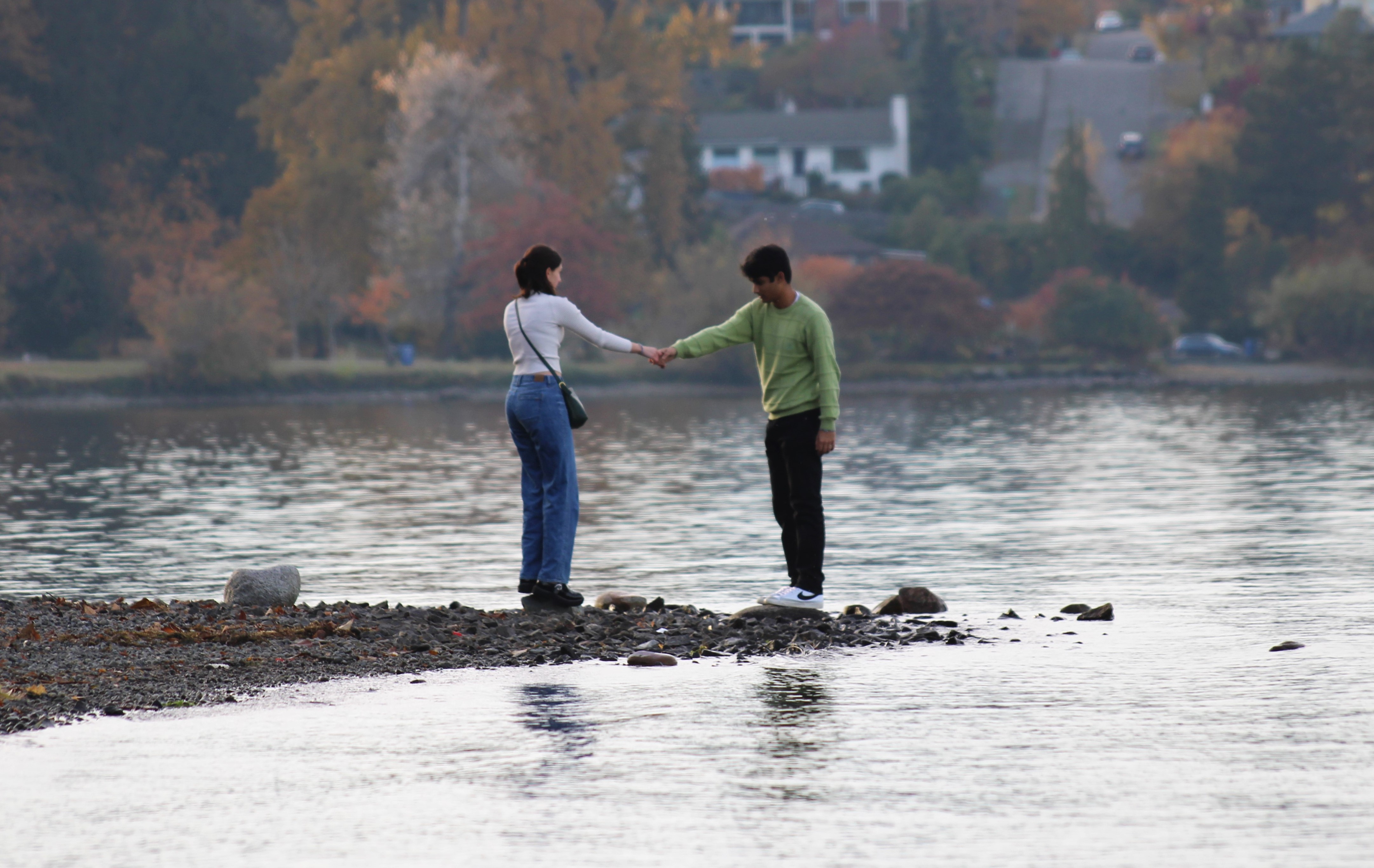
A couple at Seward Park, Seattle. (I could not have taken my camera out in Minneapolis’s bitter cold even if I had wanted to.)

More animals found in autumn in Seattle

I found a huge purple sea star in one of the pocket beaches in Olympic Sculpture Park.

These beaches are designed and managed to improve habitat and ecosystem functions while still letting many people enjoy them. The tide was low and I looked around and realized the five armed echinoderm was situated in a bed of hundreds of marine snails. When this sea star wants to eat, it just has to displace itself a few inches in any direction and drill into one of these fat morsels.

I also found a small bat flapping about on the ground in midafternoon in Seward Park. I wonder why it was disoriented – injury, cold shock, or affliction with white nose fungus?

Other sightings that day included Steller’s jays, spotted towhees, bald eagles, common mergansers, dark eyed juncos, chickadees, cormorants and a huge flock of coots on Lake Washington.

On a nighttime bike ride I saw Orion rise next to the Space Needle like the mythic hunter was about to strike the tower and would soon dominate the winter night. A busker was nearby playing the Tatooine cantina theme from "A New Hope." This brought on fond associations. Then I listened to him play the first Christmas music of the season. A drunk lady coming out of a concert flopped over right in front of the musician so he had to stop. I cruised home on my bike and enjoyed the slick streets and the spectacle of two idiot drivers who had just smashed into each other, probably while drunk.

I feel I’m ready for winter. I own more wool this time. The other day I slept for 13 hours, which alarmed me since I missed all the day’s daylight but I also felt deep appreciation for not having children to wake me up and I made up for the lost daylight with that nighttime bike ride. Some acquaintances have expressed how life is over now that it’s cold and they are going to roll over and give up for five months. Those people are needlessly giving power over their psyche to external, natural circumstances and they should consider getting out there on foot or on a bike looking for living things to prevent feeling that the cold and dark oppresses them. Go look at slugs and leaves as they continually cycle and change.